

4x4 Folding Table Buying Guide

A spare room becomes an office on Monday, a craft station on Wednesday, and a guest dining area by the weekend. A permanent desk or large dining table would solve one problem while creating another, limited floor space. A 4x4 folding table can be the practical middle ground, but only if the buyer understands what “4x4” usually means, how much weight the structure can handle, and how to prevent tip-overs during setup and storage.
Table of Contents
- Understanding the True 4x4 Folding Table Format
- Materials, Construction, and Real Weight Limits
- Top Use Cases for Home, Garage, and Events
- Key Features to Evaluate Before You Buy
- Setup, Safety, and Maintenance Best Practices
- Pros, Cons, and Smart Space-Saving Alternatives
- Frequently Asked Questions About Folding Tables
Understanding the True 4x4 Folding Table Format
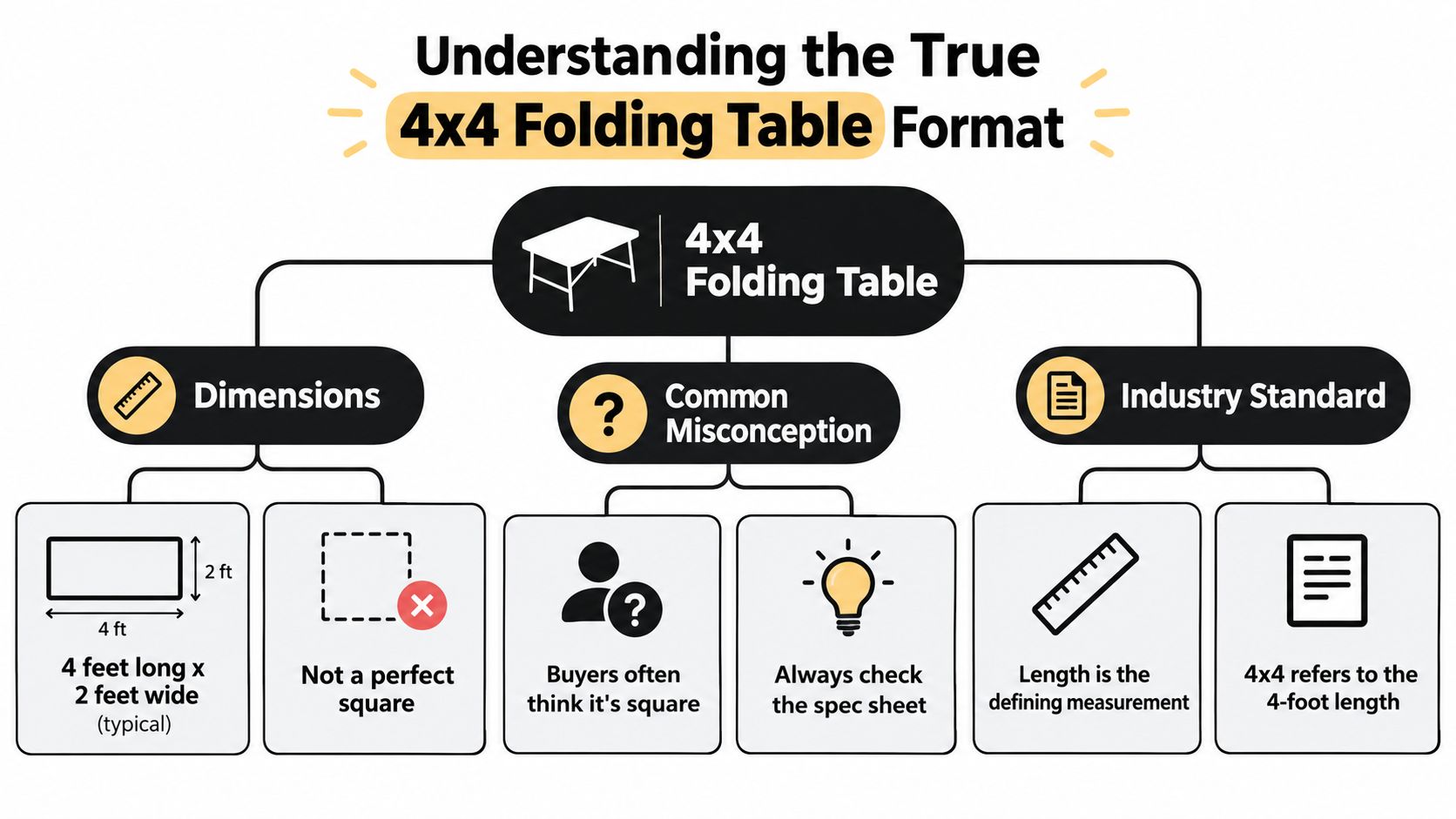
The first buying mistake happens before material, price, or leg design enters the conversation. A 4x4 folding table usually isn't a four-foot square. In the folding-table market, the term commonly refers to a 4-foot rectangular table, often measuring 48 inches long by 24 inches wide, according to this folding table size guide.
Why the name causes confusion
The “4” generally points to the 4-foot length, not two equal dimensions. A true square model does exist, but it should be listed explicitly as a 48-inch by 48-inch folding table. The product title alone isn't enough. Buyers should open the specification sheet and confirm length, width, height, folded size, and weight before ordering.
Standard rectangular folding tables are commonly offered in 48, 60, 72, and 96 inches in length, with typical heights of 29 to 30 inches, as documented in the same industry sizing reference. A 4-foot table sits at the compact end of that range, which makes it easier to move through narrow rooms, store in a closet, and repurpose as needs change.
Where the rectangular footprint works best
The 48-inch by 24-inch format is more useful than it looks. It can serve as a registration counter, a temporary desk, a children's craft table, a compact display, or a small gathering surface. In many common arrangements, it seats about four people, although the available legroom and chair width will determine whether that feels comfortable.
The format also fits the realities of micro-living. A small apartment, garage, or multipurpose bedroom doesn't need another permanent object taking up floor area. A folding table can open for a project, then stand vertically against a wall when the room needs to change function.
Buying rule: Treat “4x4” as a search term, not a guaranteed shape. The dimensions in the specification sheet decide what arrives at the door.
The 4-foot rectangular version is the smallest mainstream banquet-style format, so it isn't the right choice for a full conference setup or large family meal. It is better viewed as a portable utility surface, one that bridges the gap between a flimsy TV tray and a bulky full-size banquet table.
Materials, Construction, and Real Weight Limits
A folding table's load rating applies to a defined test condition, not every setup in a garage, apartment, or dining room. Static load capacity usually assumes weight is distributed evenly across the tabletop. A vise, cast-iron cookware, or heavy tool near an edge creates concentrated pressure on the surface and frame. That risk matters in hybrid workspaces too, where monitors, printers, and storage bins can shift the center of gravity.
A folding table capacity guide from Suitable Furniture lists a 4-foot by 2-foot plastic table at about 200 pounds, a 6-foot by 2.5-foot metal table at 300 pounds, and an 8-foot by 3-foot wood table at 400 pounds, as shown in this folding table capacity comparison. These figures show how capacity can increase with table size and construction, but they do not make every model safe for uneven or moving loads.
The surface matters, but the frame matters more
Commercial tables often pair an HDPE tabletop with a powder-coated steel frame. HDPE, or high-density polyethylene, handles moisture and cleaning chemicals well. Steel carries much of the load through the legs and support rails. One commercial example measuring approximately 48.2 inches by 24 inches by 29 inches weighs roughly 20.4 pounds, uses a 2.1-inch-thick top, and carries an ANSI/BIFMA tabletop rating, according to this commercial folding table specification.
A thick top does not guarantee a stable work surface. Leg spread, hinge quality, cross-supports, and frame stiffness determine how much the table flexes. A narrow leg stance can make a strong tabletop feel unstable, particularly when someone leans on a corner or reaches across it. In a small apartment, that corner pressure can also cause a lightweight table to shift or tip, so keep heavy equipment centered and lock every leg before use.
Capacity comparison
| Material Type | Typical Weight Capacity | Best Use Case |
|---|---|---|
| Plastic or HDPE | About 200 pounds for a 4-foot by 2-foot example | Household projects, registration, crafts, and light event use |
| Metal | About 300 pounds for a 6-foot by 2.5-foot example | Events, hospitality, workshops, and repeated setup |
| Wood composite or wood | About 400 pounds for an 8-foot by 3-foot example | Heavy-duty work, larger displays, and institutional use |
| Metal and plywood square table | 485 pounds for a listed 48-inch by 48-inch model | Indoor dining, crafts, and sturdier multi-use setups |
The square metal-and-plywood example measures 48 inches wide by 48 inches deep and 30.125 inches high, with a stated capacity of 485 pounds, according to this 48-inch square folding table listing. Do not treat that specification as typical of every 4-foot table. It shows why buyers must compare the tabletop, leg design, bracing, and published rating instead of judging by size alone.
A separate plastic folding table guide places many 4-foot by 30-inch tables between about 13 and 18 pounds, while better-built commercial plastic models are often listed in the 300 to 750 pound static-load class. Those ratings still require even distribution. Dynamic movement, corner loading, or a person sitting on the table can create far more stress than the same weight spread across the surface.
For a garage workstation or craft table carrying concentrated equipment, choose a model with a 500-pound static rating or higher to gain more margin than a light-duty residential table. Follow the manufacturer's instructions, keep loads low and centered, and never use a folding table as a permanently anchored workbench. Pair practical DIY projects with appropriate equipment by consulting this DIY home improvement tools guide.
Top Use Cases for Home, Garage, and Events
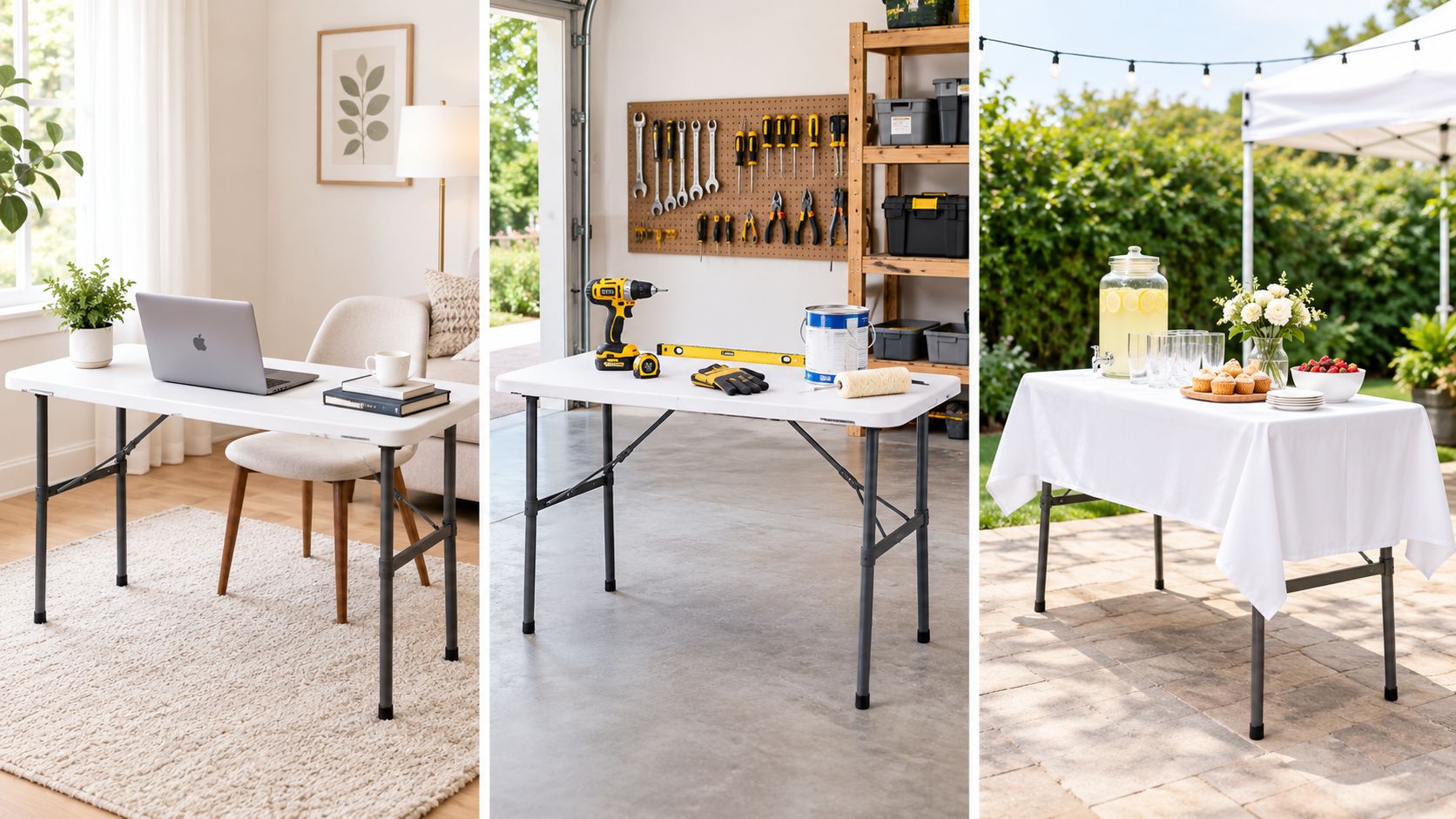
A 4-foot folding table earns its storage space by solving several household problems without becoming permanent furniture. In a compact apartment, open it near an outlet for laptop work, then fold it away before dinner. The same surface can handle gift wrapping, sewing, household sorting, or a temporary repair job.
Hybrid work without a permanent office
A 48-inch tabletop gives a remote worker room for a monitor, keyboard, notebook, and charging accessories without dedicating an entire room to office furniture. Set it against a wall and use it as a temporary workstation. Clear the surface and move it aside when the room needs to serve another purpose.
Standard folding-table height works with many dining or office chairs, but it may not suit long work sessions. Your knees, elbows, and monitor should sit in comfortable positions. If the table is too high or low, add a monitor riser or choose a better chair rather than accepting shoulder and wrist strain.
Safety matters in a small workspace. Keep the laptop and monitor centered, route cables away from the legs, and lock every leg before placing equipment on the surface. A child or pet bumping one corner can shift an unsecured table, especially on smooth flooring.
Garage and craft projects
In a garage, use the table for sorting hardware, assembling small projects, or preparing materials before transferring them to a permanent bench. It also works for fabric cutting, model building, painting, and seasonal projects. Wipe spills promptly, and keep sharp tools, solvents, and hot equipment away from the edges.
The format suits supervised children's crafts because it creates a defined activity area without taking over a room. Store supplies separately so cleanup includes clearing the tabletop and folding the legs, not merely pushing materials underneath.
Events and small gatherings
The 4-foot format fits registration counters, compact displays, buffet support, and small gatherings. It works for a community event, garage sale, school activity, or backyard setup where a full banquet table would waste floor space. Keep heavy items centered, prevent guests from leaning on the edge, and do not use the tabletop as a seat.
For outdoor entertainment, the table can hold accessories such as a portable projector. This portable projector for camping guide can help with planning a compact outdoor viewing setup. Protect the table from unstable ground, wind, and moisture, and secure lightweight equipment before the event begins.
A folding table also makes a practical gift for college students, new homeowners, crafters, and DIYers. Choose one with a published load rating, secure leg locks, manageable carry weight, and dimensions that fit the recipient's storage area. These details matter more than a sales label or decorative finish.
Key Features to Evaluate Before You Buy
The best 4x4 folding table isn't the one with the most impressive title. It's the one whose construction matches the job. A craft user needs a washable, stable surface. A garage user needs stronger frame support. A tailgate user may prioritize carry handles and lower weight over maximum capacity.
Surface and frame selection
HDPE plastic is the practical all-rounder. It resists moisture, cleans easily, and suits crafts, events, household projects, and temporary workspaces. A plastic tabletop is usually the first choice when frequent wiping and easy transport matter more than a furniture-grade appearance.
Plywood or wood composite creates a more substantial feel and can be preferable for indoor dining, display work, or projects where a rigid surface matters. A metal-and-plywood square table listing demonstrates how a heavier construction can support a stated 485-pound capacity, but buyers should compare the complete frame and not judge by the top material alone.
Powder-coated steel is a strong frame choice for repeated use. The coating helps protect the steel from ordinary wear and moisture exposure, although it doesn't make every table permanently weatherproof. Aluminum frames can reduce carrying weight, but the manufacturer's load rating and joint design remain more important than the metal name.
Load rating and leg design
A product page should state whether the rating applies to evenly distributed static load. If it doesn't, the specification is incomplete for serious work. A table used for tools, cookware, or equipment should have more capacity than the expected evenly spread load, because point loading and leaning create harsher forces.
Legs deserve a close inspection. Wishbone-style legs can create a broad support stance, while straight gravity-lock legs may fold and deploy. Neither design automatically wins. The better option is the one with secure locks, a stable leg spread, firm hinges, and feet that sit evenly on the floor.
Portability and certification
Carry handles make a noticeable difference when the table moves between a closet, garage, patio, and vehicle. A lighter table is easier to transport, but low weight shouldn't excuse a vague capacity rating or loose frame.
Look for ANSI/BIFMA references when the manufacturer provides them, then confirm the exact model covered by the rating. Buyers should also check folded thickness, latch design, edge protection, and whether replacement hardware is available.
| Priority | Strong choice | Warning sign |
|---|---|---|
| Durability | HDPE top with powder-coated steel frame | Thin top with no frame details |
| Stability | Positive leg locks and wide support stance | Legs that rely only on friction |
| Heavy use | Clearly stated distributed-load rating | Capacity omitted or described vaguely |
| Storage | Carry handle and secure folded profile | No latch, handle, or folded dimensions |
| Cleaning | Moisture-resistant, nonporous surface | Finish that requires delicate treatment |
Setup, Safety, and Maintenance Best Practices
A folding table isn't foolproof. The U.S. Consumer Product Safety Commission warns that children shouldn't move or play with mobile folding tables, because tip-overs can cause serious injuries and deaths. The agency's folding table safety notice states that only adults should move these tables.
Safe deployment
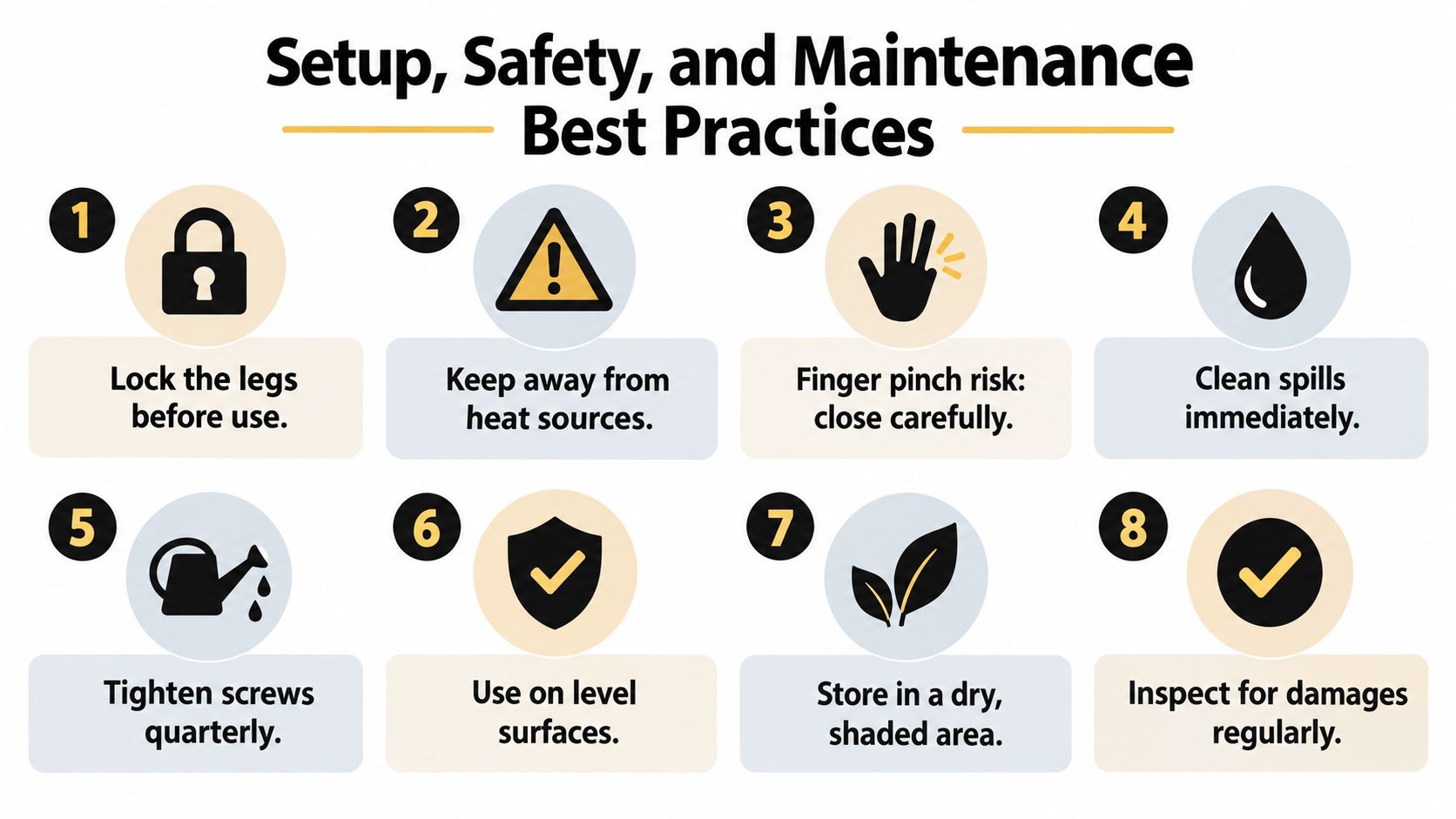
Setup should happen on a flat, stable surface with enough room to open the legs without striking furniture or people. One adult should control the folded table, keep hands clear of hinges, extend each leg fully, and engage every lock before placing anything on the top.
A quick check catches most avoidable problems:
- Inspect the frame: Look for bent legs, cracked plastic, loose fasteners, or damaged hinges.
- Open the legs fully: Don't use the table if a leg stops short or sits unevenly.
- Engage the locks: Press or slide each locking mechanism into its designed position.
- Test stability: Apply gentle pressure near the center, then check that all feet remain planted.
- Load gradually: Place heavier items near the center and spread weight across the tabletop.
- Control folding: Keep fingers away from hinges and close the table slowly.
Safety standard: Children should stay away during setup, folding, and movement. A table that feels light can still tip when a child pulls on its edge.
Heat, water, and storage conditions also affect service life. The safety guidance illustrated in the required folding table setup and maintenance visual should be treated as practical handling guidance, not decoration.
Cleaning and storage
Wipe spills promptly, especially around hinges and frame joints. Use the cleaning method specified by the manufacturer, avoid abrasive pads on plastic or laminated surfaces, and don't allow standing water to remain on the tabletop.
Store the table folded and secured in a dry, shaded area. A damp garage can encourage corrosion on exposed hardware, while direct sunlight can age some plastics and finishes. Before each use, check screws and fasteners, inspect the leg locks, and remove the table from service if the frame has developed a serious bend or the top no longer sits securely.
Pros, Cons, and Smart Space-Saving Alternatives
The standard 4-foot rectangular folding table solves a specific problem well: it creates a useful surface without demanding permanent floor space. Its strongest advantages are portability, flexible placement, compact storage, and broad household usefulness. It can move from a work area to a gathering space without requiring installation.
The trade-offs are just as clear. A folding frame usually looks more utilitarian than a finished dining table, and the surface may not provide the long-term ergonomic adjustment of a dedicated desk. The compact width also limits how much equipment, food, or paperwork can remain spread out at once.
Where the format wins
A 4x4 folding table makes sense when the room changes jobs often. It's a strong choice for renters, apartment dwellers, occasional hosts, students, crafters, and homeowners who need a temporary project surface. The table earns its keep when storage is available and the user values flexibility more than built-in style.
The 48-inch by 48-inch square version is a better fit for users who need equal seating or a more central craft layout. The 48-inch by 24-inch rectangular version is easier to place against a wall and generally takes less floor depth.
Alternatives for tighter spaces
A wall-mounted drop-leaf desk beats a folding table when a work surface must stay available every day but floor space is severely limited. It takes more installation effort and offers less mobility, but it can create a cleaner permanent workspace.
An ultralight camping table is better for travel, picnics, and tailgates. One listed aluminum example weighs about 2 pounds, unfolds to 16 by 14 by 11.8 inches, and carries a maximum load capacity of 110 pounds, as shown in this portable camping table specification. That compact engineering makes it easy to carry, but the much smaller surface isn't a substitute for a home craft or dining table.
Modular nesting tables suit homes that need several small surfaces rather than one long worktop. They can separate around a room or stack together, although they usually won't provide the same continuous area for cutting fabric, assembling projects, or serving food.
The right choice depends on the room's dominant problem. If the problem is occasional surface shortage, choose the folding table. If it's a permanent workstation, choose a drop-leaf desk. If it's travel, choose the compact camping model.
Frequently Asked Questions About Folding Tables
Is a 4x4 folding table actually square?
Usually, no. In common market usage, a 4-foot folding table often means a 48-inch by 24-inch rectangular table, not a 48-inch by 48-inch square. A square model should state its equal width and depth clearly in the product specifications.
Can a folding table stay outside in the rain?
A table with an HDPE top and coated frame can handle ordinary moisture better than untreated wood, but outdoor exposure still depends on the manufacturer's instructions. Rain can reach hinges, fasteners, and frame joints, so the table should be dried before folding and stored in a dry, shaded location rather than left outside indefinitely.
How should stubborn stains be removed from an HDPE top?
Start with a mild household cleaner and a soft cloth. Test any stronger product in an inconspicuous area first, avoid abrasive tools, and follow the manufacturer's care instructions. Harsh scrubbing can dull the finish even when the plastic itself resists moisture and common cleaning chemicals.
Will a standard tablecloth fit?
A tablecloth made for a 4-foot rectangular table should be selected for the actual tabletop dimensions, not the “4x4” name. A cloth designed for a 48-inch by 24-inch table won't drape correctly over a 48-inch square model. Buyers should measure the tabletop and account for the desired drop on each side.
How should the table be stored?
After cleaning and drying, fold the legs completely, engage the transport latch if provided, and store the table vertically in a closet or against a wall. The folded thickness varies by model, so the manufacturer's folded dimensions should be checked before choosing an under-bed or narrow-closet storage location.
What should buyers check before ordering?
The essential checks are tabletop length and width, open height, folded dimensions, table weight, leg-lock design, material, and evenly distributed load rating. A buyer should also verify whether the listed capacity applies to the exact model rather than a larger table in the same product family.
Granted Solutions brings together practical home essentials, space-saving products, gadgets, and gift-worthy problem solvers for changing everyday needs. Visit Granted Solutions to explore useful home and improvement picks, with free shipping, secure checkout, and a 30-day return policy.
Leave a comment