

Gifts for People with Back Pain That Actually Help

A bad back can make a simple gift feel weirdly high-stakes. The shopper wants something thoughtful, but not something gimmicky, bulky, or clearly destined for a return. That's why gifts for people with back pain work best when they match the recipient's actual routine, not just the top row of a search result.
The category is bigger than many realize. A major global burden study in The Lancet reported that in 2020, low back pain affected 619 million people worldwide and accounted for 7.7% of all years lived with disability, with prevalence projected to rise to 843 million by 2050 (The Lancet burden study). That scale is the reason practical, comfort-first gifts keep making sense, from ergonomic supports to heat tools to strain-removal services.
Table of Contents
- Why Gifting for Back Pain Is Harder Than It Looks
- Understanding the Person Behind the Pain
- Product Categories That Actually Move the Needle
- Side-by-Side Comparison of the Top Gift Types
- The Often-Overlooked Gift of Removing Strain
- Smart Gifting Tips and What to Avoid
- Putting It Together and Finding the Right Gift
Why Gifting for Back Pain Is Harder Than It Looks
A shopper opens a dozen tabs and sees lumbar pillows, massage guns, seat cushions, heating pads, and posture correctors. Every listing looks persuasive, and that's exactly the problem. A gift that sounds “supportive” on paper can be useless if it doesn't fit the recipient's chair, schedule, pain pattern, or patience for setup.
The better way to think about gifts for people with back pain is simple. Start with the person, not the product. Someone who sits for long stretches all day needs a different gift than someone whose back tightens up after gardening, lifting a child, or standing in the kitchen.
That's why generic wellness gadgets disappoint so often. They're bought for the idea of relief, not for the way the recipient moves through a day. A useful gift meets a real trigger, then disappears into the routine without becoming another piece of clutter.
Practical rule: the best back-pain gift is the one the recipient will use on an ordinary Tuesday, not the one that looks impressive in a holiday cart.
Back pain also isn't a niche complaint, which changes the gifting logic. Sources cited by physical-therapy and pain-management sites report that roughly 80% of U.S. adults will experience back pain at some point in their lives, while about 30% of American adults currently suffer from back pain (U.S. back-pain prevalence figures). That means this isn't a gift for a special edge case. It's a practical category with broad relevance.
The smart move is to treat the recipient's routine like a filter. Long commute, desk job, physically busy home, or recurring flare-ups each point toward a different kind of gift. Once that lens is in place, the shortlist gets a lot shorter and a lot better.
Understanding the Person Behind the Pain
The first mistake shoppers make is assuming back pain is one thing. It isn't. Some people get stiff from sitting, some get tight from lifting or stress, and some cycle through flare-ups that make any extra strain a bad idea. The right gift depends on which pattern the recipient lives with most often.
Match the gift to the trigger
A posture-driven pattern usually shows up after long hours in a chair, car, or couch. That points toward ergonomic supports, especially lumbar cushions and chair accessories that help the spine stay in a more neutral position.
A muscle-driven pattern feels different. It often shows up as tightness after activity, tension later on, or that “locked up” feeling after travel. That's where heat tools and gentle massage devices make more sense.
Flare-driven pain is the hardest to guess at from the outside. In that case, it's smarter to choose lighter, more flexible gifts, or even support that reduces strain elsewhere in the day so the recipient has less to manage.
Use the recipient's day as the clue
A remote worker usually needs a different solution than a warehouse worker, even if both say their back hurts. The remote worker may benefit most from chair support, while the physically active person may respond better to recovery tools or strain-reducing help around the house.
That's the true buying test. Look at where the person spends time, what makes the pain worse, and whether they want help during the workday or after it. The more ordinary the routine, the more useful the gift becomes.
Product Categories That Actually Move the Needle
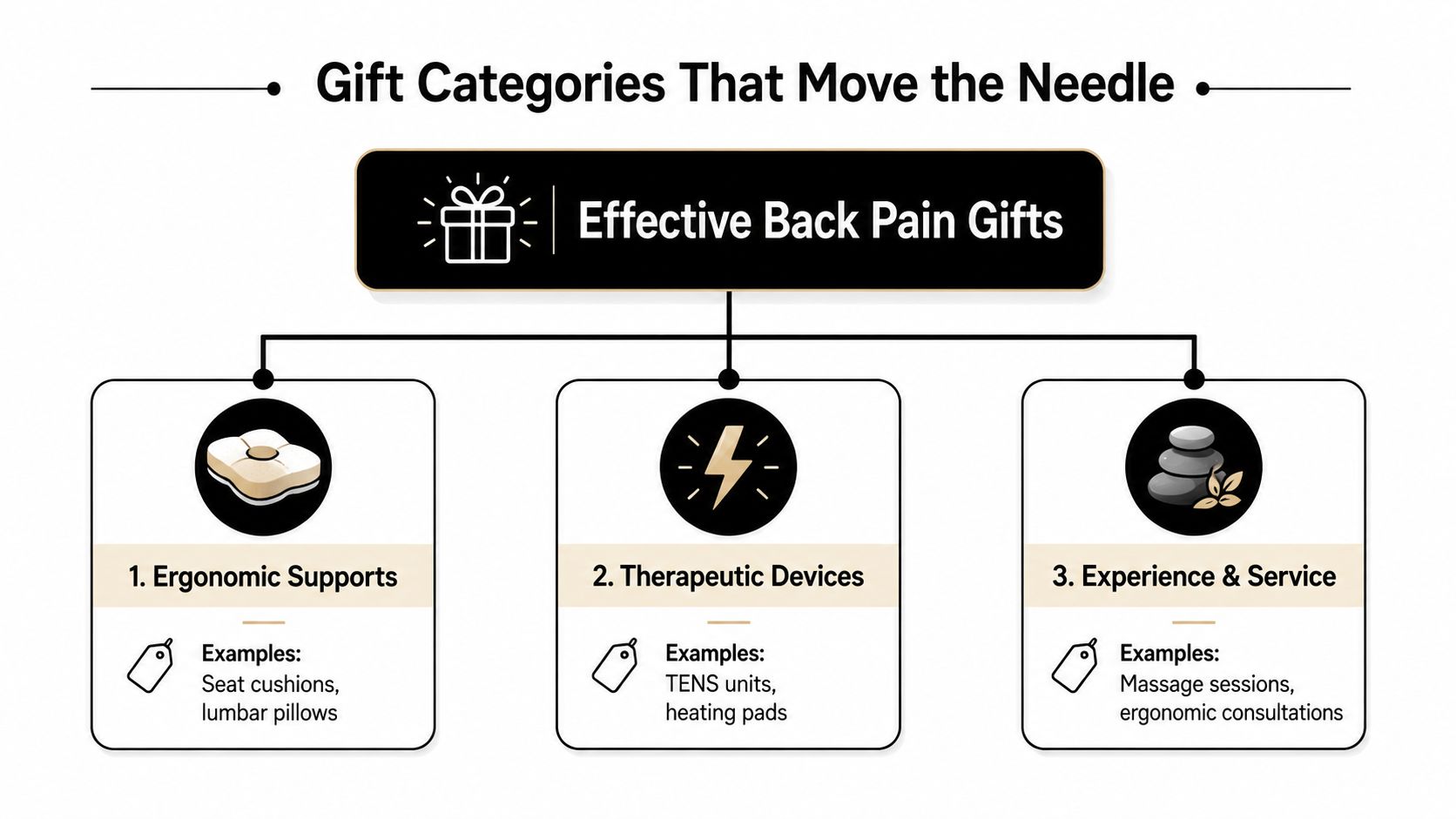
The strongest gift categories are the ones that make daily sitting, standing, and recovery less annoying. That usually means one of three buckets, ergonomic supports, therapeutic devices, or self-care tools. Shoppers waste money when they buy for novelty instead of use.
Ergonomic supports are the safest starting point
A good lumbar support or ergonomic chair accessory is the most broadly useful option for someone who sits a lot. The point is neutral spinal alignment, not a fancy shape or brand name. Fit matters more than flash, because a support that's too large, too flat, or too high can shift pressure to the wrong place.
For a practical example, a lumbar pillow that suits the chair's depth is far more helpful than one with extra features nobody asked for. If the recipient works from home or spends long stretches in a car, this category usually beats decorative gifts and novelty massagers. A focused internal guide on this topic is available at the ergonomic lumbar support pillow collection.
Best-fit rule: if the person sits for hours, buy support first and extras second.
Therapeutic devices should be easy, not complicated
A portable TENS unit or heat-and-massage pad makes sense when the recipient wants relief they can build into a routine. The technical reason is straightforward. TENS targets signaling, while heat can help with muscle guarding and local comfort.
The useful version of this gift is the one with simple controls, adjustable settings, and auto-shutoff. If it's awkward to use on a chair, sofa, or office setup, it probably won't get used enough to matter. A compact, consistent tool is better than a device that tries to do everything and ends up doing nothing well.
Recovery tools work best when the pain is muscular
Foam rollers earn their place because they're simple, reusable, and easy to keep near a bed, couch, or workout space. They're especially sensible when the recipient's pain feels tied to tightness rather than sitting posture alone. A related gift guide describes foam rollers as a useful self-care tool for muscle tightness and trigger points (foam roller guidance).
A massage chair pad can also be a strong mid-tier choice for someone who wants hands-off relief at home or at a desk. The key is to keep expectations realistic and the setup easy, which is why this massage chair pad overview is worth checking before buying a more expensive gadget.
Side-by-Side Comparison of the Top Gift Types
The fastest way to choose is to compare the main gift types by how they fit daily life. Some gifts are better for desks. Others work better on the couch or in the car. A few only make sense if the person already likes self-massage or recovery routines.
Comparing Top Back-Pain Gift Types
| Gift Type | Best For | Portability | Intensity | Typical Price Range | Key Feature to Check |
|---|---|---|---|---|---|
| Lumbar support or ergonomic cushion | Long sitting, desk work, commuting | Medium | Low | Not specified | Fit to chair depth and torso height |
| TENS unit or heat-and-massage pad | Temporary relief, office or home use | Medium to high | Adjustable | Not specified | Adjustable intensity or temperature, auto-shutoff |
| Foam roller or recovery tool | Muscle tightness, home recovery | High | User-controlled | Not specified | Texture, size, and ease of cleaning |
A lumbar support wins when the problem is static sitting. A TENS unit or heat pad wins when the person wants quick relief without changing the whole workspace. Recovery tools win when the recipient already does stretching, mobility work, or self-care at home.
That's why the “best” gift depends on where the recipient spends time. A commuter may appreciate something that works in the car. A home worker may want a support that stays on a chair all day. Someone with a more active routine may value a recovery tool they can grab after chores or exercise.
The wrong choice usually comes from buying for intensity instead of fit. Big numbers and dramatic claims can look persuasive, but the true test is whether the recipient can use the gift without friction. If setup feels annoying, it probably won't become part of the routine.
The Often-Overlooked Gift of Removing Strain
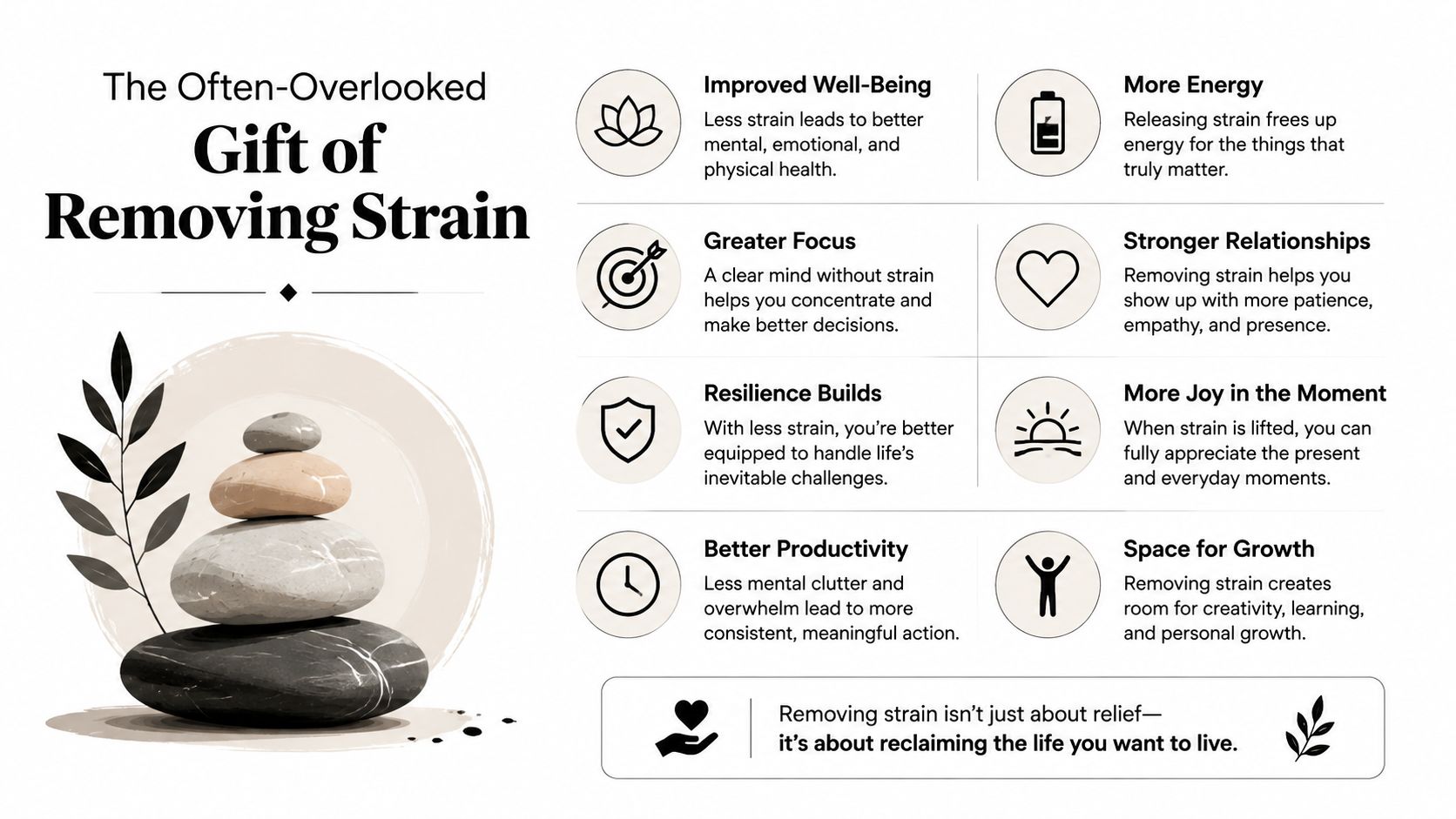
A lot of the best gifts for people with back pain are not products at all. They're services that remove bending, lifting, standing, or repetitive housework from the recipient's week. That kind of gift can matter more than another gadget, especially when pain spikes from ordinary chores.
A gift that saves energy is still a real gift
House cleaning, meal delivery, laundry pickup, grocery runs, or a coupon book for snow shoveling and heavy lifting all reduce physical load. Those gifts are especially smart for people whose back pain flares when life gets busy. They don't add another item to store, clean, or learn.
For a busy parent, the best gift may be a few weeks of task relief rather than a device. For a remote worker, it may be a service that cuts down after-work strain so the evening isn't spent catching up on chores. For a retiree, it may be the kind of help that keeps the home manageable without making the person feel managed.
The budget can match the relationship. A small gesture can be a homemade coupon book or one helpful service. A more generous gift can cover a larger set of tasks or a recurring support service. The point isn't to impress. It's to remove friction.
The most thoughtful option is often the one that gives the recipient one less thing to lift, carry, or clean.
This is the category most gift guides underplay. They list it, but they don't treat it like a first-class option. That's a mistake, because back pain is tied to function, not just comfort. A gift that cuts strain in the actual routine can beat a product that only looks therapeutic on paper.
A useful internal read for this angle is how posture support works at a desk, because desk strain and home strain usually overlap in real life.
Pair the service with a small, useful item
A service gift feels even better when it's paired with something simple. A heating pad cover, a soft wrap, or a small note turns the gesture from practical to personal without trying too hard. That combination says, “The goal is to make your day easier,” which is exactly the right message.
Smart Gifting Tips and What to Avoid
The safest back-pain gifts are the ones that respect fit, comfort, and ease of use. A lot of returns happen because the giver ignored one of those three things. A little checking up front saves money and avoids awkwardness later.
Check fit before style
A cushion or lumbar support should match the chair depth and the recipient's torso height. If it's too bulky, it can push the body forward. If it's too flat, it won't do much at all.
Devices should be easy to adjust. Fixed-intensity tools sound simple, but they're often the first thing people abandon. Adjustable settings give the recipient control, which matters when pain changes from day to day.
Avoid gifts that feel overly aggressive
Deep-tissue devices are not a safe default choice for every recipient. People with sensitive backs often prefer gentler tools, more support, or lower-intensity relief. Bigger is not better here.
Also skip anything that feels like a diagnosis wrapped in ribbon. The gift should say support, not injury. Tone matters because a thoughtful present can land badly if it feels clinical or presumptive.
- Choose adjustable settings: The recipient should be able to dial a device down, not fight it.
- Check cleaning needs: Removable, washable parts make daily use easier.
- Match the space: If the person uses a small chair, car seat, or compact desk setup, oversized gear becomes a nuisance.
- Add one personal touch: A handwritten note or a simple comfort item makes the gift feel deliberate, not random.
The cleanest shortlist is usually the one that fits the person's space and routine without demanding a redesign of their day. That's the standard worth using.
Putting It Together and Finding the Right Gift
The decision gets easier when it follows three steps. First, name the pain pattern, posture, muscle tightness, or flare-prone discomfort. Second, decide whether a product or a service will remove more strain. Third, narrow the list to two or three realistic options that fit the person's actual routine.

A lumbar support is the cleanest bet for someone who sits a lot. A heat or TENS option fits someone who wants quick, controlled relief. A strain-removal service is often the smartest gift when the recipient is already overloaded by everyday tasks.
Granted Solutions makes it easier to shop for practical, problem-solving gifts without guessing through a cluttered marketplace. Browse Granted Solutions for ergonomic, wellness, and everyday picks that fit real routines, then choose a gift that feels useful on day one and still makes sense a month later.
Leave a comment