

Home Essentials for First Home: A Practical Buyer Guide

The first night in a new home rarely looks like the photos. There are taped boxes in the hallway, an echo in rooms that still feel borrowed, and a sudden realization that the house needs far more than furniture. A bed without sheets, a bathroom without a shower curtain, or a kitchen without a trash can can make closing day feel less like a fresh start and more like an overnight camping trip.
The smart approach to home essentials for a first home isn't buying everything at once. It's choosing the items used every day, handling safety and utilities immediately, and delaying purchases that only make the rooms look finished. The guide below uses a room-by-room list, a buy-now-versus-wait system, and a 90-day setup rhythm so the home becomes functional before it becomes decorated.
Table of Contents
- The First Few Days in a New Home
- What First-Year Spending Actually Looks Like
- Room by Room Essentials Worth Buying First
- What to Buy Now, Soon, or Skip for Later
- Safety and Air Quality Basics Every First Home Needs
- Moving Day and First Week Setup Checklist
- Your First 90 Days as a Homeowner
The First Few Days in a New Home
The first few days should answer one question: Can everyone sleep, wash, eat, clean up, and stay safe? If the answer is yes, the home is progressing, even if half the boxes remain sealed.
Utilities belong at the top of the list. Services should be transferred or activated before arrival, including electricity, water, gas where applicable, internet, and television. Household accounts, billing details, and mailing addresses also need updating. Moving guidance from NerdWallet's new-home checklist recommends setting transfer or cutoff dates and scheduling installation appointments for services that can't move automatically.
A personal essentials bag should stay with the household instead of going on the moving truck. It needs medications, first-aid supplies, chargers, toiletries, a change of clothes, important documents, snacks, water, toilet paper, paper towels, basic tools, cleaning spray, trash bags, and pet supplies where needed, as recommended by OpenDoor's moving guide.
The first-night standard
The first room to finish is the bedroom, not the living room. A mattress, mattress protector, sheets, pillows, a lamp, and a laundry hamper create a usable place to recover after moving. The bathroom needs a shower curtain, towels, toilet paper, a bath mat, a plunger, and a toilet brush before anyone worries about matching colors.
The kitchen only needs enough equipment to prepare simple meals and wash up. A pan, basic utensils, dish soap, a sponge, dish towels, food storage, and a trash can do more work during the first week than an expensive countertop appliance.
Practical rule: If an item solves a problem every day, buy it before an item that only improves a room's appearance.
Safety checks should happen before the first full unpacking session. Residents should test smoke and carbon monoxide alarms, inspect exterior doors and windows, locate the electrical panel and main water shut-off, and photograph existing damage. A move-in checklist from ConsumerAffairs also recommends documenting broken lights, damaged locks, trip hazards, and water leaks on arrival.
The goal isn't a finished home. It's a home that supports normal life while the household learns what the space needs.
What First-Year Spending Actually Looks Like
First-time buyers often budget for furniture and forget the operating costs of ownership. Appliances, furnishings, repairs, yard equipment, window coverings, cleaning tools, lighting, and safety products arrive in waves, often after the purchase itself has already consumed most of the available cash.
A National Association of Home Builders study found that new home buyers spend $4,254 on appliances in total, compared with $2,500 for existing-home buyers and $1,442 for non-moving owners. The same analysis found that new home buyers spend $5,122 on furnishings during the first year after buying. The NAHB spending analysis makes the practical point clear: the first year carries a heavier setup burden than staying in place.
A second NAHB-backed analysis reported first-year spending of $26,882 on appliances, furnishings, and remodeling or repairs for buyers of newly built homes. Buyers of existing homes spent $18,673, while non-moving homeowners spent $9,457. For newly built-home buyers, the same analysis recorded $4,344 on appliances and $8,254 on furnishings.
A realistic spending lens
| Category | Typical Range (USD) | Priority Level |
|---|---|---|
| Appliances | $1,442 to $4,254 in the NAHB comparison | Buy based on missing functions |
| Furnishings | $3,894 to $8,254 in the cited comparison | Buy sleeping and seating basics first |
| Repairs and remodeling | Included within first-year combined totals | Address safety and water issues first |
| Safety and operating supplies | Qualitative planning category | Buy immediately |
| Decor and upgrades | Qualitative planning category | Wait until daily needs are clear |
These figures aren't a personal budget, because household size, home condition, location, and existing possessions vary. They are a warning against treating the shopping list as a small add-on after closing. Function comes before finish, especially when the home lacks working appliances, storage, lighting, or basic maintenance equipment.
The first-year total also explains why a staged plan works better than a single shopping trip. A household can buy the items that make the home livable, observe how each room is used, and then spend on storage, patio furniture, decor, or specialty equipment with better information.
Room by Room Essentials Worth Buying First
A useful room-by-room list should measure frequency of use, not visual impact. The product that earns its place is the one that removes a daily inconvenience, supports hygiene, or prevents a small problem from becoming an urgent purchase.
Kitchen
The kitchen needs tools for preparation, cooking, cleaning, and storage. A chef's knife, cutting board, sheet pan, pot, pan, measuring cups, spatula, and basic utensils cover most early meals without filling cabinets with specialty equipment.
Dish towels, dish soap, a sponge, a trash can, and food-storage containers matter just as much as cookware. Without them, meals create immediate cleanup and storage problems. A coffee maker, air fryer, stand mixer, or high-end blender can wait until the household determines which appliances it will use.
A practical home essentials checklist can help organize the kitchen list before shopping. The key is to build a small working kit, not a showroom kitchen.
Bedroom
Sleep affects every other part of the move. A mattress protector, sheets, pillows, a lamp, an alarm clock, and a laundry hamper should arrive before decorative pillows, art, or a second nightstand.
The lamp deserves attention because overhead lighting doesn't always provide comfortable bedside light. A hamper keeps clothing from spreading across the floor, while a protector helps preserve the mattress during the hectic period when drinks, boxes, and cleaning supplies move through the bedroom.
Bathroom
The bathroom becomes urgent the moment the first person needs a shower. A shower curtain and liner, bath mat, towels, toilet brush, plunger, toilet paper holder, and toilet paper belong in the first shopping wave.
A plunger shouldn't be treated as an embarrassing emergency purchase. It costs little compared with the stress of discovering a blockage after stores close. The same logic applies to spare hand soap and a small supply of cleaning products.
Living room
The living room needs one comfortable place to sit, a side table, and a floor or table lamp. A throw blanket adds warmth without requiring a full furniture set.
A large sectional, accent chairs, media console, and decorative shelving can wait. Furniture should follow the room's traffic pattern, not force the household to work around a rushed purchase.
Laundry and cleaning
Cleaning equipment earns its place quickly. A vacuum, mop, broom, all-purpose cleaner, laundry basket, and detergent handle the tasks that keep an occupied home usable.
The first vacuum doesn't need every attachment. It needs to work on the home's floors and fit somewhere accessible. A broom and dustpan still matter for quick spills, entryway dirt, and areas where dragging out a vacuum feels excessive.
Entry and outdoor areas
A doormat, key hook, hose, and basic tool set solve small problems before they become repeated annoyances. The tool set should include screwdrivers, pliers, a tape measure, a utility knife, and a hammer.
Outdoor purchases should match the property. A hose makes sense where outdoor water access exists, but elaborate yard equipment should wait until the household understands the yard's maintenance needs. The same rule protects buyers from spending on patio furniture, planters, and storage pieces that don't fit the space.
What to Buy Now, Soon, or Skip for Later
A three-tier system keeps a first home from absorbing every spare dollar. Buyer priorities increasingly favor practical layout and storage over excess size. A 2025 to 2026 buyer survey cited by Rocket Mortgage's starter-home analysis found that 58% prioritized an efficient layout, 50% named smart storage, and 56% named a spacious primary bedroom as top features.
Tier one means buy now
Buy the items that have no workable substitute:
- Sleep: Mattress, basic bedding, and mattress protection.
- Hygiene: Shower curtain, towels, toilet paper, and bathroom cleaning tools.
- Operation: Light bulbs, trash cans, basic cookware, dish soap, and a sponge.
- Protection: Smoke alarms, carbon monoxide alarms where applicable, and an ABC fire extinguisher.
- Response: First-aid supplies, flashlights, batteries, chargers, and a basic tool set.
These purchases support normal living or reduce avoidable risk. Delaying them usually creates discomfort rather than savings.
Tier two belongs soon after
A vacuum, decent bedding, coffee maker, laundry upgrades, and patio seating can improve the home once the urgent gaps are closed. This group should be guided by observed use. If bare floors collect dirt quickly, the vacuum moves up. If mornings depend on coffee, the coffee maker earns a place sooner.
Tier three can wait
Accent rugs, smart speakers, bar carts, decorative shelving, and specialty appliances rarely solve a first-week problem. They can be considered after the household measures the rooms, learns the routines, and confirms that the purchase won't crowd limited storage.
Budget test: A purchase should move up a tier only when delaying it creates a repeated daily problem, a safety concern, or a clear maintenance risk.
Safety and Air Quality Basics Every First Home Needs
Safety equipment should be installed before the home feels settled. A first home needs working smoke alarms on every level and in sleeping areas, carbon monoxide alarms where fuel-burning appliances or attached garages create a risk, an ABC fire extinguisher, a basic first-aid kit, and a GFCI tester for outlets near water.
The HUD smoke alarm standard specifies at least one working smoke detector per unit and on each level. Placement matters because people need warning before smoke reaches a sleeping area or blocks an exit. Testing each device after moving in is more useful than assuming a recently purchased alarm works without checking it.
Moisture needs a measurement
Indoor humidity should stay within the commonly recommended 30% to 50% relative humidity range, according to guidance summarized by the Asthma and Allergy Foundation of America. Higher humidity makes condensation, mold growth, and dust mites more likely, while very dry air can become uncomfortable.
A hygrometer gives the household a reading instead of a guess. A bathroom exhaust fan should run during and after showers, and a dehumidifier makes sense in moisture-prone areas. Water-damaged surfaces should be dried within 24 to 48 hours to reduce the chance of mold growth, as the same public-health guidance explains.
For practical maintenance ideas, home air quality guidance can sit alongside the home's own HVAC and moisture-control instructions. HVAC filters should be checked regularly and replaced according to the equipment and filter manufacturer's directions, rather than following an invented universal schedule.
Ten-minute monthly check
Once a month, residents should test alarms, inspect visible leaks, check that exits remain clear, look for damp spots, confirm the fire extinguisher is accessible, and review the first-aid kit. Heavy furniture and televisions should be secured to suitable anchor points, and ladders or tools should be used only on stable surfaces.
This small routine protects the home without turning ownership into a full-time job.
Moving Day and First Week Setup Checklist
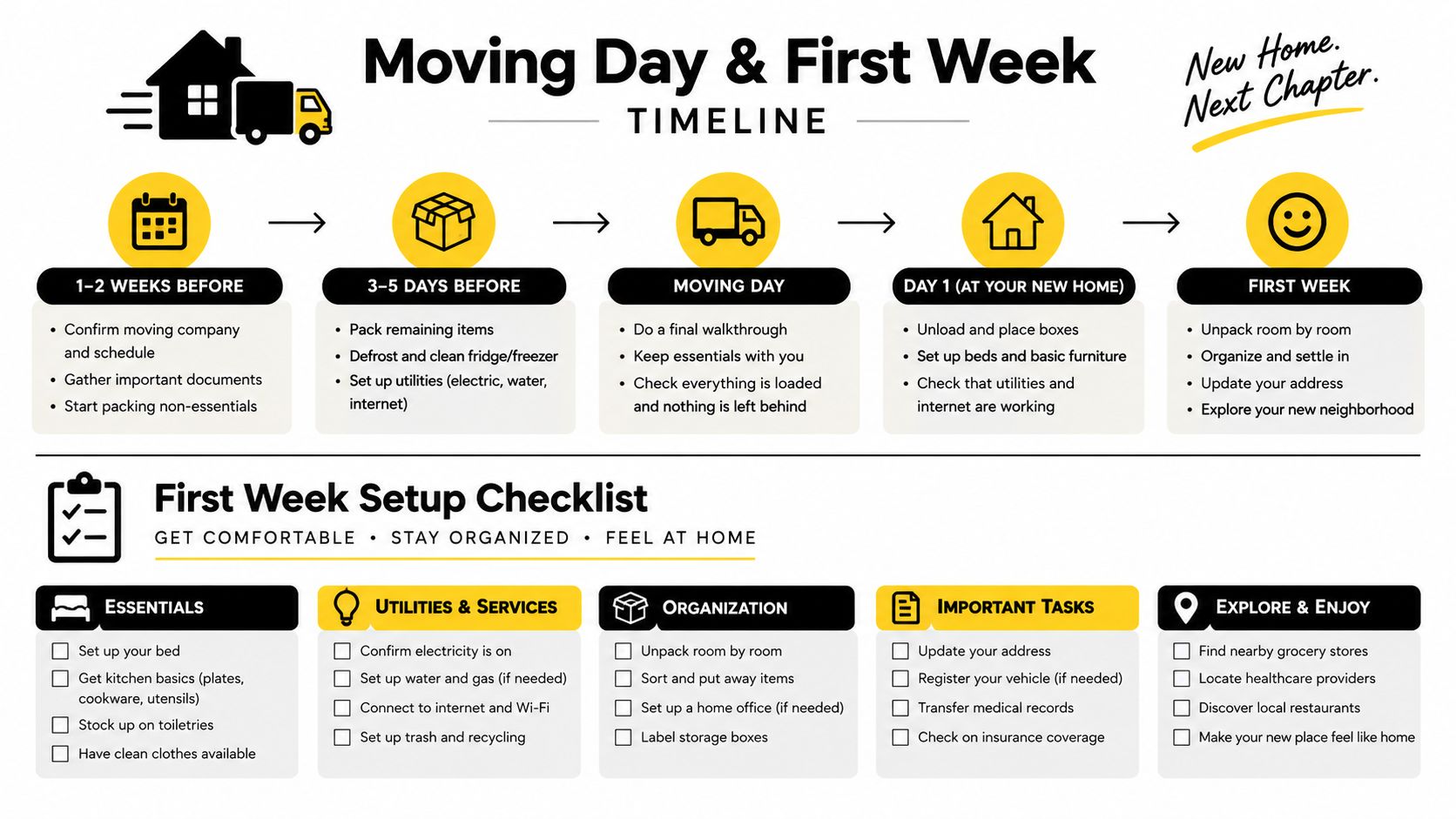
A move goes better when tasks follow the order in which the home becomes usable. The first day is about access, safety, sleep, and sanitation. Later days are for comfort and organization.
Moving day
Confirm utilities before unloading boxes. Locate the breaker panel and main water shut-off, test every smoke and carbon monoxide alarm, and keep the personal overnight kit accessible. Sheets, toiletries, chargers, a change of clothes, medications, snacks, water, toilet paper, paper towels, and cleaning spray should not disappear inside a labeled box that won't be opened until next week.
The first cleaning pass should focus on the kitchen and bathrooms. Wipe counters, cabinet interiors, toilet surfaces, tubs, sinks, and high-touch handles before furniture blocks access.
Days two through five
Set up trash and recycling stations early so packing material doesn't spread through the home. Secure exterior doors and windows, then place the bed, bathroom supplies, and basic kitchen equipment before arranging secondary furniture.
Curtains or temporary privacy coverings matter more than decorative wall art during the first week. Pantry staples should follow once the kitchen is clean, with simple foods that don't require a fully equipped cooking area.
Residents considering a connected entry system can review smart door lock installation guidance, but the immediate priority remains a secure, functioning door that every occupant can operate.
Days six and seven
Confirm mail forwarding and update important accounts with the new address. Vehicle registration or other local administrative tasks may also need attention, depending on the household's circumstances.
Create a short repair list from the move-in inspection. Schedule small fixes rather than allowing loose handles, dripping taps, broken lights, or damaged seals to become permanent features. A written list separates urgent problems from improvements that can wait.
Your First 90 Days as a Homeowner
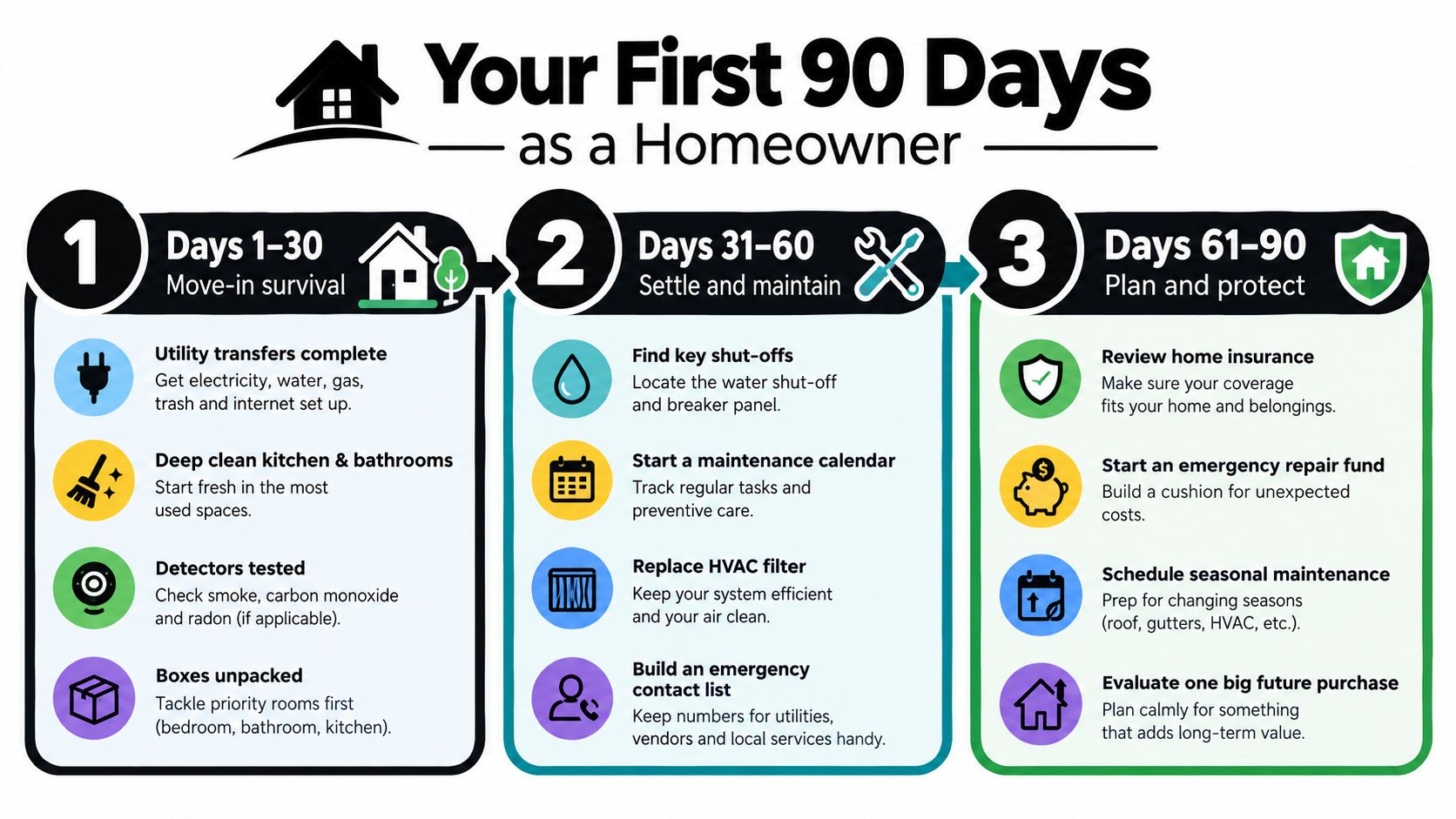
A 90-day plan keeps your first home from becoming a pile of unfinished tasks. It also gives each purchase a place in the budget, so every weekend does not turn into an emergency shopping trip.
Days one through thirty focus on survival
Create a written inventory of what the home already contains before buying more. This prevents duplicate purchases and shows which items belong in the buy-now tier. Paper goods, basic cleaners, toilet supplies, cookware, bedding, and trash cans should cover the immediate gaps.
Buy only what you need to sleep, wash, eat, clean, or handle a basic household problem. Leave decoration and secondary furniture until the unopened boxes are gone.
Days thirty-one through sixty create operating habits
Test plumbing shut-off valves carefully, inspect or replace HVAC filters according to the equipment guidance, and seal obvious drafts. Add bathroom and bedroom items that daily use has proved necessary. Build a compact tool kit and record recurring maintenance tasks while the home's systems are still new to you.
By this point, you should know which storage areas are overloaded and which rooms need better lighting. Use that information before buying furniture. A practical fix usually matters more than filling an empty corner.
Days sixty-one through ninety protect the investment
Add seasonal maintenance reminders, record appliance model numbers and serial codes, review insurance coverage, and start a repair and replacement fund. Wait on one larger purchase until the home has shown what it genuinely lacks.
When the buy-now tier is complete, Granted Solutions is one option for the tools and everyday accessories that fill the remaining gaps. A first home does not need to look finished. It needs to be safe, functional, and flexible enough to become familiar.
The Granted Solutions collection covers home products, tools, gadgets, and everyday problem-solvers for later upgrades. Browse Granted Solutions after the basics work and you can choose additions deliberately.
Leave a comment