

Home Gym Equipment for Small Spaces: The Complete Setup

The dumbbells are wedged beside the sofa, the exercise mat is rolled behind a door, and the only open floor appears to disappear as soon as a bench enters the room. That's the common scenario for many apartment dwellers. The problem usually isn't motivation or even square footage. It's buying equipment based on its stored dimensions while ignoring the space needed to use it safely.
Effective home gym equipment for small spaces starts with a floor plan, not a shopping cart. Adjustable weights, resistance bands, folding benches, compact cardio tools, and wall-mounted systems can support varied training, but only when the room leaves enough clearance for lunges, presses, rows, and transitions. The recommendations below focus on that practical difference between equipment that fits and equipment that works.
Table of Contents
- Why Small Space Home Gyms Actually Work
- Measuring Your Space for Real Movement Clearance
- Choosing the Right Compact Equipment Categories
- Smart Layout and Storage Solutions
- Safety Flooring and Noise Management
- Budget Planning and Shopping Checklist
Why Small Space Home Gyms Actually Work
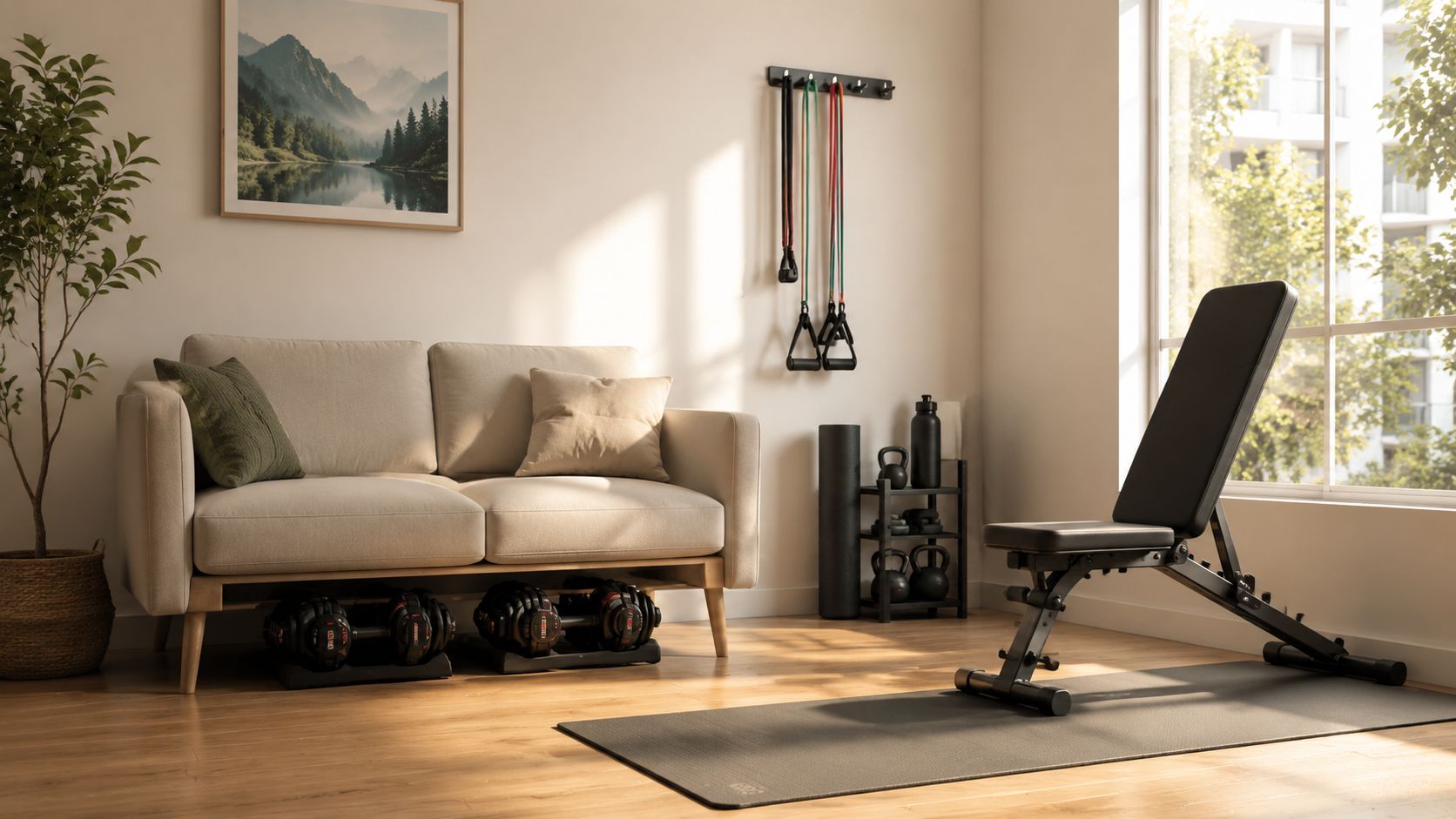
A cramped corner can look useless until the bulky, single-purpose gear is removed from the equation. A pair of adjustable dumbbells under a sofa, a folding bench against a wall, and a mat that rolls into a closet can create a training area that appears only when needed. The room remains a living room or bedroom instead of becoming a permanent equipment warehouse.
The market reflects that change. One independent report places the global compact fitness equipment market at about US$13.0 billion in 2023, with a projection of US$12.88 billion in 2025 and a 6.32% CAGR through 2033. The same report identifies home use as the dominant segment, accounting for 65% of total market share in 2023. These figures come from the compact fitness equipment market report, which also connects demand with space-saving home use.
Smaller rooms encourage better buying decisions
A large gym makes it easy to accumulate equipment that performs one job. A small apartment forces a sharper question: how many movements does this item support, and where does it go afterward? That pressure often leads to better choices, such as adjustable dumbbells instead of multiple fixed pairs, a folding bench instead of a permanent station, or bands that fit in a drawer.
Compact layouts also reduce the psychological barrier to starting. Equipment that's visible, accessible, and quick to clear away is more likely to become part of a normal routine. A bench that blocks a wardrobe or a machine that requires furniture to move first creates friction before the workout begins.
Practical rule: The best compact setup is the one that can be deployed quickly, used safely, and stored without turning the rest of the home into a gym.
The shift toward modular, foldable, and vertical-storage designs matters because serious training doesn't require every traditional gym category. A carefully chosen anchor piece can cover pressing, pulling, squatting, hinging, and core work, while smaller accessories extend mobility and conditioning options. The room's limitations become a filter that removes clutter instead of limiting progress.
Measuring Your Space for Real Movement Clearance
Measure the room before choosing equipment, but don't stop at the product footprint. A bench may occupy a narrow rectangle when folded, yet pressing from it requires room around the bench for setup, adjustment, and safe movement. The same applies to dumbbell rows, reverse lunges, overhead work, and any exercise that requires the user to change position.
Start by marking the usable area, not the room's total dimensions. Exclude furniture that won't move, radiators, low shelves, and pathways that must remain open. Then note the door swing. A piece that fits behind a door may make the door unusable, while a wall-mounted station can interfere with the opening radius.
Measure the active workout zone
A small-space layout should account for three layers:
- Stored footprint: The area occupied when the equipment is folded, stacked, or put away.
- Operating footprint: The area occupied while the equipment is set up.
- Movement clearance: The open area needed for the person using it.
That third measurement is where most bad purchases happen. A UK apartment guide reports that dumbbells alone can fit in a 1.5 m x 1.5 m area, while dumbbells plus a bench need about 2 m x 2 m. The guide places a bike at 2 m x 2.5 m, a rowing machine at 2 m x 3 m, and bodyweight or kettlebell training at about 2 square metres. A 3 m x 3 m space can support barbell work with a short bar. These dimensions are detailed in the small-space home gym apartment guide.
Check height, reach, and travel paths
Ceiling height matters for overhead presses, standing shoulder work, and pull-up systems. The user's full reach, the equipment's height, and the weight's travel path all need clearance. A setup that works for floor presses may fail for standing presses if a light fixture or ceiling fan occupies the movement path.
Mark the intended exercise positions with painter's tape. Place a rectangle where a bench will sit, then add room for the user's head, feet, elbows, and dumbbell path. For lunges, mark forward and backward steps rather than measuring only the starting stance. For rows, leave enough space to hinge without striking a wall or furniture. For a bike or rower, account for the user's body moving through the stroke, not just the frame resting on the floor.
A benchmark review of 16 home-gym products compared compact equipment by active footprint, storage profile, and versatility. Its central lesson is practical: folding, stacking, and vertical storage reduce floor occupation, but clearances still determine whether the equipment works in real use. The compact exercise equipment review supports measuring ceiling height, door swing, and movement space before buying.
Floor-plan test: If a person can't perform the intended movement with arms, feet, and equipment fully extended, the setup isn't ready, regardless of how neatly the products store.
Choosing the Right Compact Equipment Categories
The strongest compact gym usually has one versatile anchor and a few accessories that expand its use. Buying several small products can still create clutter if each item serves only one movement. The comparison below focuses on exercise variety, storage burden, and the kind of training each category supports.
| Equipment Type | Space Needed | Exercise Variety | Price Range |
|---|---|---|---|
| Adjustable dumbbells | Small stored footprint, larger active zone for pressing and lunging | High for strength, conditioning, and unilateral work | Varies by load and construction |
| Resistance bands | Drawer, hook, or small wall area | High for pulling, pressing, mobility, and accessory work | Usually low to moderate |
| Folding bench | Stored vertically or against a wall, with larger operating area | Moderate to high when paired with weights | Varies by stability and adjustability |
| Compact bike | Dedicated operating zone with access around the frame | Focused cardio with limited strength coverage | Moderate to high |
| Rowing machine | Long operating zone and substantial storage length | Cardio, pulling endurance, and full-body conditioning | Moderate to high |
| Multifunction station | Larger fixed footprint and clearance around attachments | High strength variety from one anchor | Moderate to high |
| Wall-mounted or suspension system | Wall or door anchor plus open movement zone | High bodyweight, core, pulling, and unilateral variety | Low to moderate, depending on hardware |
Strength tools deserve the first decision
Adjustable dumbbells are the best primary choice for users who want conventional strength training in limited space. They replace a collection of fixed pairs and support presses, rows, squats, hinges, carries, and split-stance work. The trade-off is handling. Some designs feel bulky, and dropping them can damage floors and disturb neighbors.
Resistance bands win on storage and portability. They work well for warmups, mobility, upper-body pulling, glute work, and travel. They're less satisfying as the only strength tool for someone who wants heavy, stable loading across every major pattern. A practical guide to exercise selection and technique is available through this resistance band workout resource.
Cardio requires a permanent commitment
A bike can work in a 2 m x 2.5 m area, while a rower may need 2 m x 3 m, according to the apartment-space measurements cited earlier. Rowers offer more full-body involvement, but their length creates a storage problem. Bikes are easier to place, though they provide a narrower training function.
A foldable cardio machine makes sense only when cardio is a top priority and the owner has a realistic storage location. Folding the machine after every session sounds convenient, but moving a heavy frame through a small apartment can become a chore. If the machine stays unfolded, the buyer should treat its operating footprint as permanent.
Multifunction systems can be the wrong kind of compact
Wall-mounted systems and compact all-in-one stations can deliver broad strength coverage from one anchor. They're useful when the user wants cables, pull-up work, or structured resistance without collecting several independent tools.
The drawback is that “compact” doesn't mean invisible. Fixed anchors need wall structure, attachment clearance, and room for the user to move around them. A smaller, flexible combination of adjustable dumbbells, bands, a mat, and a folding bench often delivers better exercise coverage per square foot for apartments. The space-saving strength training analysis is useful for weighing an anchor station against a modular setup.
Smart Layout and Storage Solutions
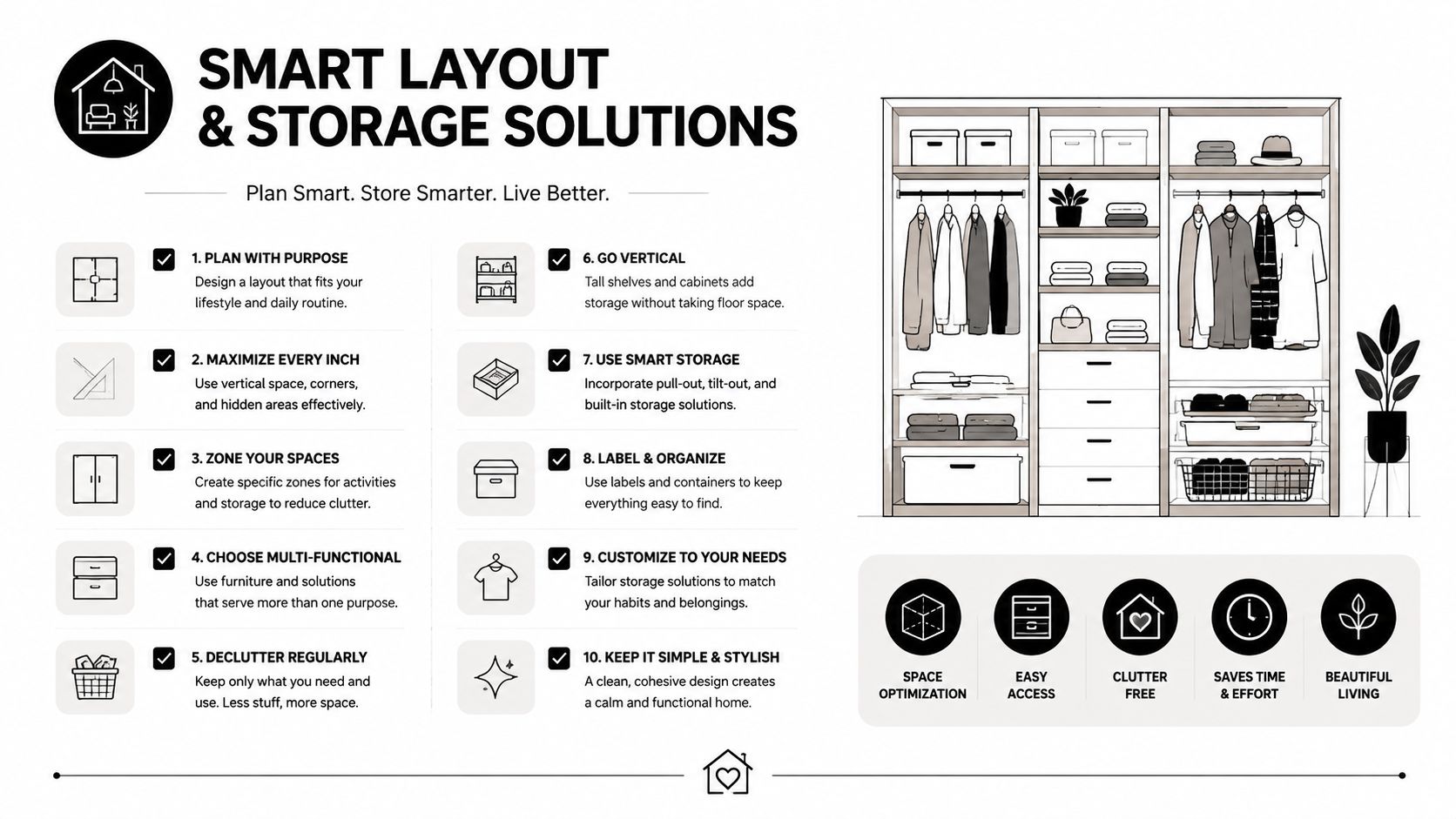
Equipment selection fails when storage blocks daily life. A home gym in a living room must disappear without requiring a furniture-moving project. A bedroom corner needs to preserve wardrobe access. A studio apartment needs zones that can change function without leaving weights in the walking path.
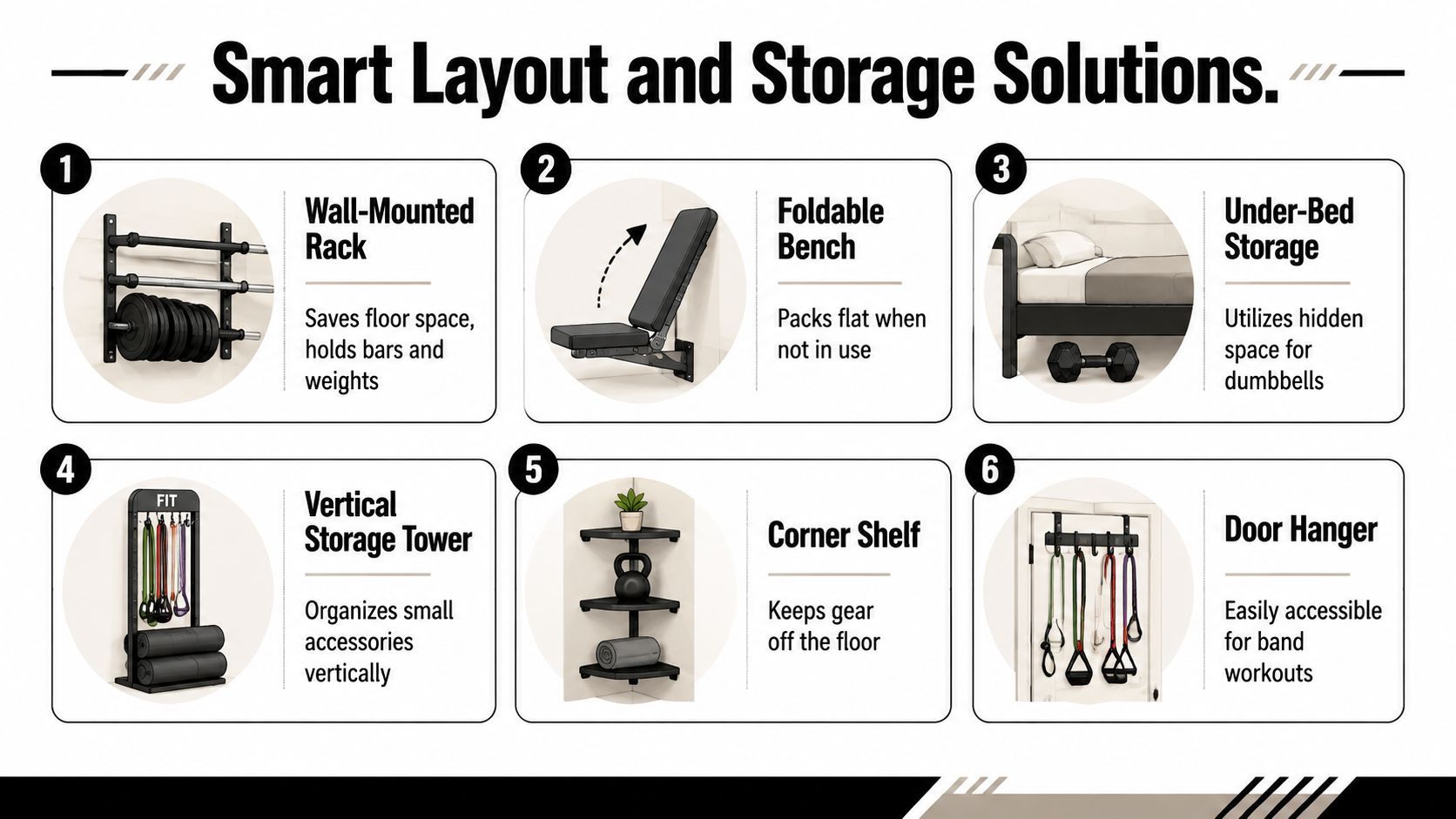
Start with the wall, then use the floor. Wall-mounted storage keeps bands, mats, and small accessories visible but out of the way. A narrow vertical tower can hold several categories without spreading equipment across the room. Under-bed storage works for low-profile dumbbells and flat accessories, provided the items can be removed without dragging them across the floor.
Build zones instead of a permanent gym
A useful small-space layout separates equipment by movement:
- Floor zone: A mat for mobility, core work, stretching, and bodyweight exercises.
- Strength zone: Adjustable dumbbells and a bench placed where pressing and hinging have clear paths.
- Anchor zone: A secure wall or door point for bands or suspension work, with the active area kept open.
- Storage zone: A shelf, closet section, or vertical tower for items that shouldn't remain underfoot.
A wall-mounted organizer can make this arrangement easier to maintain, especially when bands, handles, straps, and small tools otherwise collect on the floor. The wall-mounted organizer guide offers a practical reference for using vertical surfaces without sacrificing the room's main function.
Make transitions short
Circuit training exposes poor layouts quickly. If the user must cross the room to move from dumbbell work to floor work, the session becomes disjointed. Place the mat near the weights, keep the bench on an edge rather than in the center, and position accessories within reach of the anchor point.
For a shared living room, the bench can stand vertically beside a cabinet while dumbbells occupy a low storage tray. In a bedroom, a folding bench can sit along the wall opposite the bed, leaving the center open. In a studio, a storage ottoman or closet shelf can conceal bands and mats while the main floor remains available for movement.
Storage rule: Equipment should have a named home. If an item has nowhere to go, it eventually becomes an obstacle.
Use wall mounting only when the wall, fasteners, and anchor hardware can safely support the intended load. Renters should favor removable storage, door-based systems designed for the purpose, and furniture that conceals gear without damaging the property.
Safety Flooring and Noise Management
Apartment training needs a surface that protects the floor and controls impact. A thin decorative mat may feel comfortable for stretching, but it won't provide the same protection beneath adjustable weights or a bench. The right flooring depends on whether the routine involves floor work, static lifting, cardio, or impact.
Rubber flooring is the strongest general choice for strength areas because it resists scuffing and cushions equipment contact. Interlocking rubber tiles work well when a defined zone needs broader coverage. A denser protective platform makes sense beneath heavier equipment, but it can add height and become a trip point if its edges aren't managed.
Match the surface to the exercise
A yoga-style mat suits mobility, core work, and bodyweight training. It gives the user a defined surface and helps prevent hands and knees from sliding. For dumbbells and benches, a thicker rubber mat or tile offers better protection and stability.
The floor should stay level, dry, and free of loose edges. Equipment shouldn't sit on a rug that shifts during a split squat or bench setup. A mat can reduce vibration, but it can't compensate for dropping weights. Controlled placement protects the floor and reduces the shock transmitted through the building.
Keep neighbors in the plan
Noise is a selection issue, not just a behavior issue. An apartment-noise guide estimates that adjustable dumbbells used without dropping them produce about 35–45 dB, while resistance bands remain under 30 dB. Those figures are reported in the apartment home gym noise guide. Both options are therefore among the quieter choices for shared buildings when used with control.
Bands, bodyweight work, and slow tempo exercises are easier to manage than jumping, running, or repeated impact. A bike can be neighbor-friendly when it sits on a stable mat, while a rower may create more mechanical movement and require careful placement. Users should also check lease rules and building policies before installing wall anchors or using equipment that generates vibration.
Apartment standard: No dropped weights, no unsecured wall hardware, and no high-impact routine above a sleeping area when a quieter alternative can deliver the same training purpose.
Budget Planning and Shopping Checklist
A smart budget starts with the training goal and the active footprint. The cheapest product isn't a bargain if it gets stored in a closet because the room can't support its movement path. The most expensive compact machine isn't good value if it covers only one type of workout and remains difficult to move.
Prioritize the first purchase
For general strength training, adjustable dumbbells usually deserve priority because they cover many movement patterns without a fixed rack. Add a mat for floor work, then consider bands for mobility, pulling variations, and accessory exercises. A folding bench comes next if pressing, supported rows, and step-up variations fit the available clearance.
Cardio should come earlier only when it drives the user's routine. A bike or rower needs a dedicated operating zone, so its purchase should follow a floor-plan test rather than a promotional promise. Multifunction systems deserve consideration when the user wants a permanent anchor and has verified wall or floor clearance.
Use a three-level checklist
Start with essentials:
- Mat suited to the intended floor work.
- Adjustable weights or resistance bands.
- Storage solution that keeps equipment off walking paths.
- Tape measure for checking active clearance.
Add useful expansion items:
- Folding bench with a stable base.
- Door or wall anchor designed for the equipment.
- Additional bands or handles for exercise variety.
- Protective rubber tiles for a defined strength area.
Buy only after the room proves it can support them:
- Compact bike or rowing machine.
- Multifunction station.
- Permanent wall-mounted system.
- Larger equipment with a fixed operating footprint.
Before checkout, record the stored dimensions, operating dimensions, movement clearance, storage location, floor protection, and noise implications. Product quality matters most at contact points, hinges, adjustment mechanisms, handles, and anchors. Buyers comparing starter options can use this home gym essentials guide under 100 as a planning reference, then verify every item against the room rather than buying by category alone.
A compact home gym should feel easy to enter and easy to clear. If a product fails either test, it isn't solving the space problem.
Granted Solutions brings together practical exercise and fitness products, home essentials, and problem-solving accessories for people building functional spaces without unnecessary clutter. Visit Granted Solutions to find compact gear that suits the room, the routine, and the way the home works.
Leave a comment