

Pet Water Fountain for Cats: 2026 Buying Guide

A cat walks past a freshly filled bowl, gives it a quick glance, and heads for the faucet instead. That scene frustrates new cat owners because the water looks perfectly clean, yet the cat acts as if it isn't there. A pet water fountain for cats can help, but it also adds a pump, filters, noise, electricity, and a cleaning job to the household.
The right question isn't whether fountains are universally better than bowls. It's whether a particular cat prefers moving water, and whether the owner will keep the machine clean. The best purchase is the fountain that fits both personalities.
Table of Contents
- Why Your Cat Ignores the Water Bowl and What a Fountain Actually Does
- The Honest Hydration Story Behind Cat Water Fountains
- Key Features That Actually Matter When Buying
- Setting Up and Placing the Fountain the Right Way
- Daily and Weekly Maintenance Without the Hassle
- Common Problems and How to Fix Them
- Choosing the Right Fountain and Where to Shop
Why Your Cat Ignores the Water Bowl and What a Fountain Actually Does
Many cats don't hate water. They just dislike a bowl that smells stale, collects hair, sits too close to food, or forces their whiskers against a narrow rim. Some cats also find still water less interesting than a moving stream. A fountain makes drinking more noticeable through motion, sound, and a constantly changing surface.
Moving water can feel fresher and more oxygenated, which may appeal to a cat's natural preference for running sources. A broad, shallow drinking area can also reduce whisker contact compared with a deep, narrow bowl. That doesn't mean every cat will accept a fountain. Some will investigate it once, then return to the old bowl without hesitation.
What happens inside a fountain
Most cat fountains use four basic parts:
- Reservoir: Holds the water supply and reduces the need for constant refilling.
- Pump: Moves water through the system. Electric models need a safe nearby outlet, while some battery-powered versions trade power convenience for battery management.
- Filter: Usually captures hair, food particles, and other debris. A filter improves the water experience, but it doesn't replace cleaning.
- Spout or bubbler: Creates a stream, cascade, or gently moving pool for the cat to drink from.
The pump draws water from the reservoir, pushes it through the filter, and sends it back over the drinking surface. That cycle creates the visual and audible movement cats may find appealing. It also means every part that touches water can collect saliva, fur, food residue, minerals, and microorganisms.
Practical rule: A fountain is a preference experiment, not a guaranteed hydration solution.
A cat that drinks from a bathroom tap is a strong candidate. A cat that ignores new toys, dislikes mechanical sounds, or already drinks comfortably from a wide ceramic bowl may be perfectly happy without one. Placement matters too. A fountain beside a litter box or in a busy hallway can fail even when the product itself works well.
The sensible approach is to treat a fountain as a trial. Keep the existing bowl available, choose a model that's easy to clean, and watch actual drinking behavior rather than assuming the water level dropped because the cat drank it. Evaporation, splashing, and pump circulation can all make the reservoir look emptier.
The Honest Hydration Story Behind Cat Water Fountains
The research doesn't support the idea that every cat will drink dramatically more from a fountain. In one peer-reviewed study, cats offered a circulating fountain drank 31.6 ± 13.5 mL/kg/day, compared with 22.9 ± 10.2 mL/kg/day from a standard bowl, and the difference was statistically significant at P = 0.0381. The study is available in the Journal of Feline Medicine and Surgery research report.
That same study also recorded 24-hour mean water disappearance of 25.3 ± 19.7 mL/day from control bowls and 108.0 ± 56.0 mL/day from fountains. Water disappearance isn't identical to drinking, because splashing and evaporation can contribute. The authors still concluded that a fountain was unlikely to create a large or reliable hydration improvement for every cat.
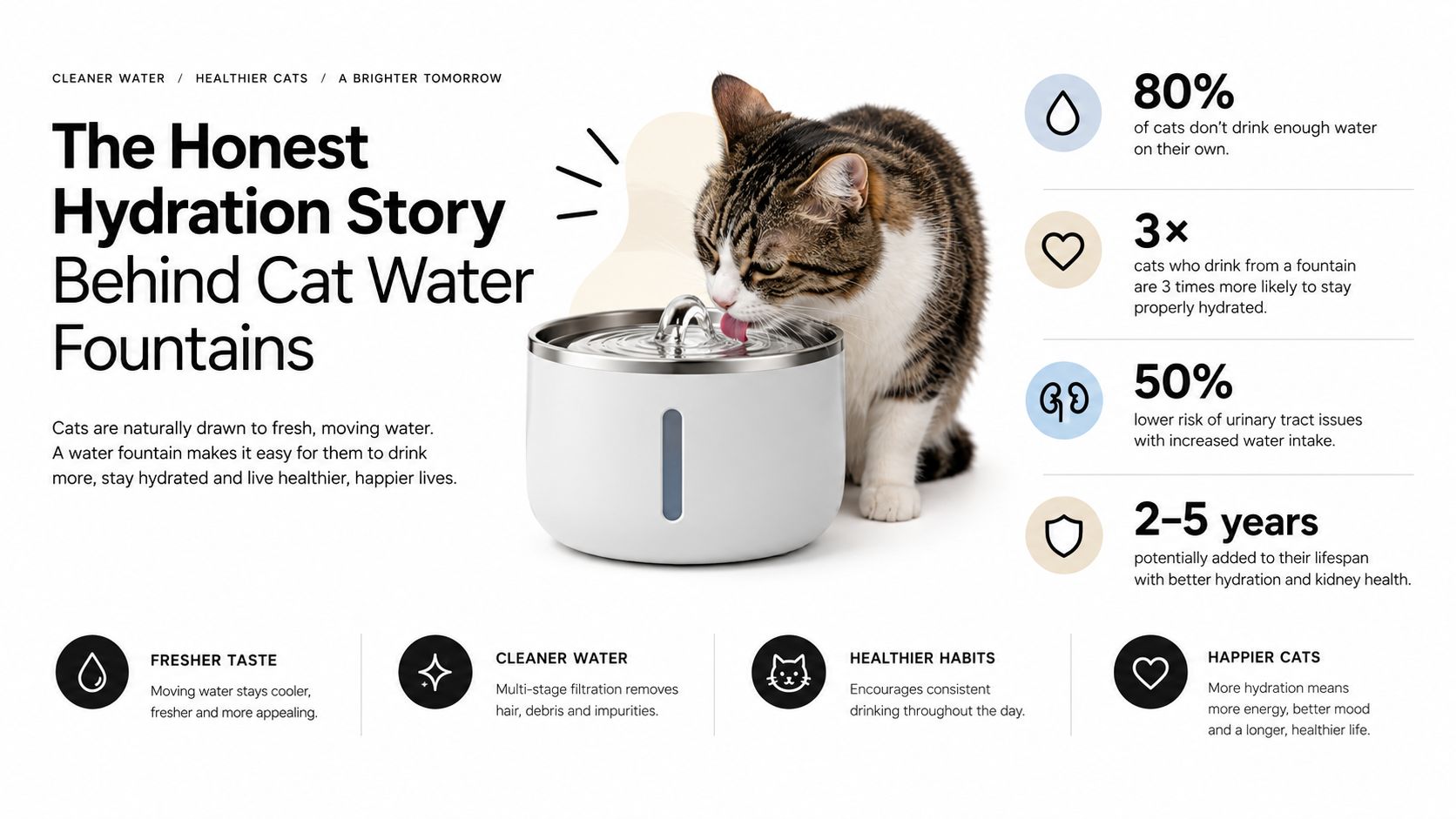
A later crossover study found no meaningful group-level difference between still, circulating, and free-falling water. The reported averages were 27.48 ± 5.85 mL/kg/day for still water, 26.33 ± 7.34 mL/kg/day for circulating water, and 26.14 ± 6.49 mL/kg/day for free-falling water, with P = 0.942, as summarized in this review of cat fountain hydration research.
What the evidence means at home
The practical conclusion is straightforward. Some cats respond to movement, sound, or cleaner-tasting water, while others don't care. Bowl location, household stress, food moisture, and individual preference can matter more than the pump.
A fountain may be a useful nudge for a cat that already shows interest in taps or moving water. It shouldn't be presented as a treatment for kidney disease, urinary problems, or chronic dehydration. Cats with concerning changes in drinking or urination need veterinary attention, and wet food can contribute substantial moisture when it suits the cat's diet.
A fountain can encourage drinking in an individual cat, but it isn't a medical intervention. The buyer should expect a possible behavioral improvement, not a guaranteed health outcome.
Key Features That Actually Matter When Buying
The most attractive fountain isn't necessarily the best one. A glossy display, app connection, or elaborate stream means little if the pump is noisy and the basin takes too long to scrub. Buyers should judge the machine by the chores it creates after the novelty wears off.
Six criteria worth comparing
Capacity matters most in multi-cat homes or when owners spend long periods away. A larger reservoir reduces refilling, but it also becomes heavier to carry and takes more space on the floor or counter.
Filter type affects taste, debris control, and recurring purchases. Carbon filters are common, but proprietary cartridges can become inconvenient if local stores don't carry them. Before buying, the owner should check whether replacement filters are easy to order.
Material determines how easily residue can be seen and removed. Stainless steel is durable, scratch-resistant, and easy to inspect. Ceramic offers weight and a home-friendly appearance. Plastic is lighter and often cheaper, but owners of cats prone to chin irritation may prefer a non-porous drinking surface.
Noise is a deal-breaker for timid cats and light sleepers. A gentle bubbler or ramp-style cascade is usually safer than a forceful jet. Reviews should be checked for pump noise, splashing, and vibration, not just claims about quiet operation.
Power source affects placement and safety. A corded pump provides steady operation but needs a protected outlet and cable management. Battery-powered designs offer more flexibility, though battery charging becomes another household task.
Ease of cleaning deserves priority over nearly every decorative feature. The pump should open without a fight, the impeller should be reachable, and the drinking surface should have no narrow channels where slime can hide.
| Household Size | Recommended Capacity | Filter Type | Best For |
|---|---|---|---|
| One cat | Compact reservoir | Standard carbon filter | Small homes and first-time trials |
| Two cats | Larger reservoir | Replaceable carbon filter with accessible refills | Shared drinking areas |
| Several cats or pets | High-capacity reservoir | Multi-stage or easily sourced filter system | Busy households and fewer refills |
Match the fountain to the cat
A skittish cat needs low vibration, low splash, and a quiet water path. A cat that paws at taps may enjoy a visible stream. A messy drinker needs a broad basin and a stable, heavy base. A cat that already drinks from a shallow dish may not need anything more elaborate than a quiet circulating surface.
The owner's routine matters just as much. A fountain that requires full disassembly but has an attractive design can quickly become unused equipment. Filters also carry a hidden cost, and some products depend on replacement pumps that are difficult to source.
Buy for cleanability first, capacity second, and spectacle last.
A fountain should open easily, expose the pump, and let the owner see residue before it becomes a problem. A simple stainless steel or ceramic model with widely available filters is often a smarter purchase than a feature-heavy unit with proprietary parts.
Setting Up and Placing the Fountain the Right Way
A good setup can determine whether a cat accepts the fountain. The machine should be introduced as a new drinking option, not placed directly in the cat's face and expected to work immediately.
A clean first setup
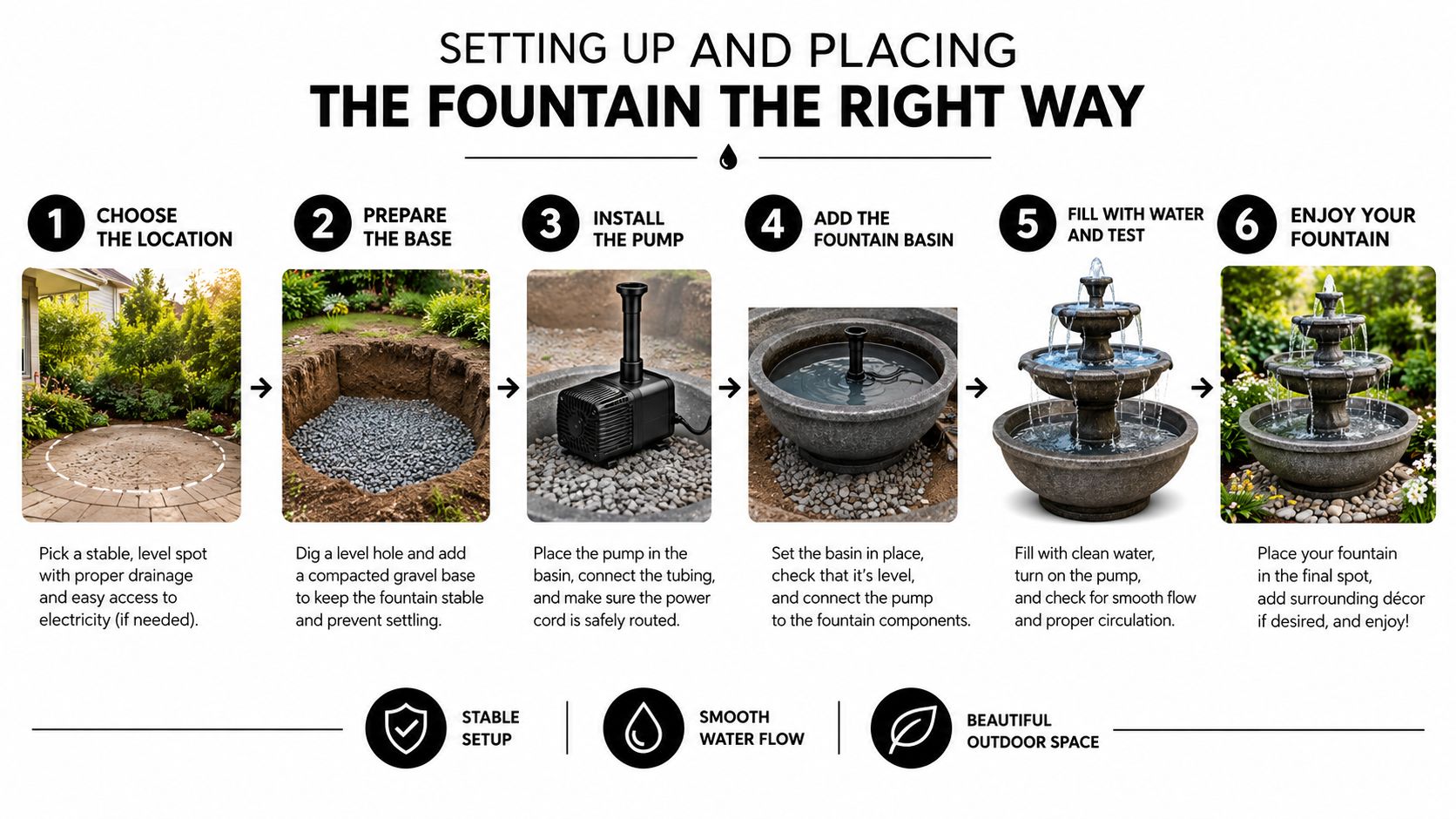
- Unbox and rinse every removable part. Manufacturing dust and packaging residue shouldn't enter the reservoir.
- Soak the filter for 10 to 15 minutes to activate the carbon and remove loose particles.
- Fill the reservoir with cool filtered or tap water according to the product instructions.
- Install the pump and filter correctly. A loose filter or poorly seated pump can cause weak flow and extra noise.
- Prime the pump by hand if needed. Some pumps need water around the impeller before they circulate smoothly.
- Connect the unit to a GFCI outlet. Keep the plug and connection away from spills, and don't run the cable where a cat can chew it.
Choose a location the cat already trusts
The fountain belongs on a flat, stable surface near a resting or nap area, not in a hidden corner. It should stay away from food bowls, litter boxes, and high-traffic hallways. Cats often prefer separate food and water areas, so placing the fountain beside dinner can work against the intended benefit.
The old bowl should remain in place during an introduction period of about two weeks. A small amount of wet food dabbed on the spout may attract interest, provided the area is cleaned afterward. Signs of use include damp whiskers, paw prints near the basin, or a consistently lower water line, although splashing can imitate drinking.
Keep the water level above the pump's minimum line. Never overcrowd the outlet behind furniture, and leave enough space to unplug the unit quickly. A pet-safe mat beneath the fountain can protect flooring from enthusiastic paws and accidental splashes.
Daily and Weekly Maintenance Without the Hassle
A recirculating fountain isn't self-sanitizing. Saliva, food debris, hair, minerals, and microorganisms enter the system during ordinary use, and biofilm can form on the basin, tubing, and pump even when a filter is installed. Stainless steel makes inspection and cleaning easier, but it doesn't stop bacteria from persisting.
The routine is manageable if it becomes automatic. Each day, the owner should check the water level, add fresh water when needed, and wipe hair or food from the rim. A veterinary review recommends changing the water daily and washing the fountain at least once or twice a week, as explained in this cat and dog fountain maintenance guide.
A practical cleaning rhythm
The weekly reset should include full disassembly, warm soapy water for the basin and bowl, and a small brush for the pump impeller. An old toothbrush works well for fur and mineral deposits. The pre-filter sponge should be rinsed, and every part should be checked for slime before reassembly.
Carbon filters generally need replacement every 2 to 4 weeks, although usage and the number of drinking animals affect the interval, according to this filter replacement guide for cat fountains. The manufacturer's instructions take priority when they specify a different schedule.
| Material | Weekly Deep Clean | Filter Replacement | Avg Filter Cost | Pump Replacement |
|---|---|---|---|---|
| Plastic | Full wash and pump scrub | Every 2 to 4 weeks | Check model-specific pricing | Check model-specific pricing |
| Stainless steel | Full wash with close residue inspection | Every 2 to 4 weeks | Check model-specific pricing | Check model-specific pricing |
| Ceramic | Full wash, with careful handling of glazed areas | Every 2 to 4 weeks | Check model-specific pricing | Check model-specific pricing |
The table avoids invented prices because filter and pump costs vary by brand, design, and availability. The core ownership burden is the recurring purchase and the time spent cleaning, not just the checkout price.
For food-storage habits that reduce crumbs and debris around drinking areas, owners can also review these best pet food storage containers. The fountain itself still needs its own cleaning schedule.
A fountain that takes roughly a few minutes to inspect daily and a short weekly reset is realistic. A design that requires tools, awkward seals, or inaccessible pump parts is likely to be neglected.
Common Problems and How to Fix Them
Most abandoned fountains don't fail because the concept is useless. They fail because the pump gets dirty, the placement is wrong, or the cat is asked to tolerate too much noise.
A loud pump usually needs inspection before replacement. Hair around the impeller can restrict movement, while mineral scale can make the motor vibrate. Cleaning the impeller, soaking removable pump parts in diluted white vinegar when the manufacturer allows it, and rinsing thoroughly can restore smoother flow.
Troubleshoot the actual cause
- Slimy basin: Disassemble the entire fountain and clean the pump, seals, channels, and underside of the lid. If odor remains after cleaning, an aged silicone seal may need replacement.
- Cat ignores the fountain: Move it near a favored resting place and try room-temperature water. A quiet, shallow flow can work better than a forceful stream.
- Water splashes onto the floor: Lower the water level below the maximum line or switch to a gentler spout. A stable mat can contain small spills.
- Weak flow: Check the filter, impeller, and intake opening. Hair and mineral deposits often restrict circulation.
- Motor stops or the outlet trips: Unplug the fountain, inspect for water around the electrical connection, and check for scale or a damaged cable before using it again.
Hard water can shorten pump life by leaving deposits inside the motor housing. Regular descaling helps, but a failing motor should be replaced rather than tolerated. Owners dealing with persistent fur around the fountain may find a dedicated pet hair remover tool for carpet useful for the surrounding area.
A fountain should be quiet enough that the cat can approach it without hesitation.
If cleaning doesn't remove noise, odor, or poor flow, the problem may be the design rather than the owner's routine. A simple replacement is better than allowing a stressed cat to avoid water altogether.
Choosing the Right Fountain and Where to Shop
The best fountain depends on the owner's tolerance for chores as much as the cat's drinking style. A low-maintenance owner should choose a simple ceramic or stainless steel model with accessible filters and a pump that comes apart easily. A multi-cat household needs more capacity, a stable base, and a quiet system that won't turn shared drinking into a noisy event.
A design-focused shopper can choose a fountain that blends with the home, but appearance should remain secondary to washable surfaces and replacement-part availability. The cheaper option isn't always cheaper if filters are difficult to find or the pump becomes disposable.
Fountain types by household
| Fountain Type | Best For | Price Range | Yearly Filter Cost |
|---|---|---|---|
| Basic plastic bubbler | First-time trials and compact spaces | Varies by model | Depends on replacement schedule and filter price |
| Stainless steel circulation fountain | Owners prioritizing inspection and durability | Varies by model | Depends on replacement schedule and filter price |
| Ceramic fountain | Design-conscious homes and owners who prefer a heavier base | Varies by model | Depends on replacement schedule and filter price |
| High-capacity multi-cat fountain | Multiple cats or pets sharing one station | Varies by model | Depends on replacement schedule and filter price |
Exact pricing changes by brand, capacity, filter design, and retailer, so a responsible comparison should use the current product page rather than invented budget bands. The owner should calculate recurring filter purchases before deciding that a fountain is inexpensive.
A fountain also shouldn't be considered in isolation from the rest of the pet routine. Owners comparing automated care products can use this guide to choose an automatic pet feeder, while keeping drinking and feeding areas separate when the cat prefers that arrangement.
The clearest buying paths are simple. Choose stainless steel or ceramic for easier inspection and a more durable drinking surface. Choose a larger reservoir for multiple cats. Choose a quiet, low-flow design for a nervous cat. Choose a basic model with common filters if ongoing maintenance already feels burdensome.
Granted Solutions brings together practical pet products, including cat water fountains and related everyday accessories, in a curated online collection. Visit Granted Solutions to compare useful options for a cat's drinking routine and choose a fountain that fits the household's space, budget, and maintenance tolerance.
Leave a comment