

Pool Floats with Shade Buying Guide for Sunny Days

The sun is high, the pool is inviting, and someone has finally found the perfect floating position. Then the heat catches up. Bare shoulders start to feel hot, the glare becomes tiring, and the choice is either to leave the water or keep shifting around to find a little shade.
Pool floats with shade solve that everyday problem by combining buoyancy with overhead cover. They're designed for longer, more comfortable time on the water, whether the user is an adult reading in the pool, a family sharing an island, or a host creating a more relaxed backyard setup. Shade isn't just a decorative extra. It can become part of a broader sun-protection routine, especially during extended outdoor sessions.
The right choice depends on more than color or shape. Canopy construction, UV labeling, float stability, published load limits, user age, and storage needs all affect how useful a design will be. The following guide breaks those decisions into clear steps, so shoppers can compare options without treating every shaded float as interchangeable.
Table of Contents
- Introduction Why Shade Changes Your Pool Day
- Understanding the Main Types of Pool Floats With Shade
- How Shade and UV Protection Actually Work on the Water
- Key Features to Evaluate Before You Buy
- Choosing the Right Float for Kids Adults and Parties
- Safety Setup and Maintenance Tips That Extend Float Life
- Final Takeaways and Where to Shop at Granted Solutions
Introduction Why Shade Changes Your Pool Day
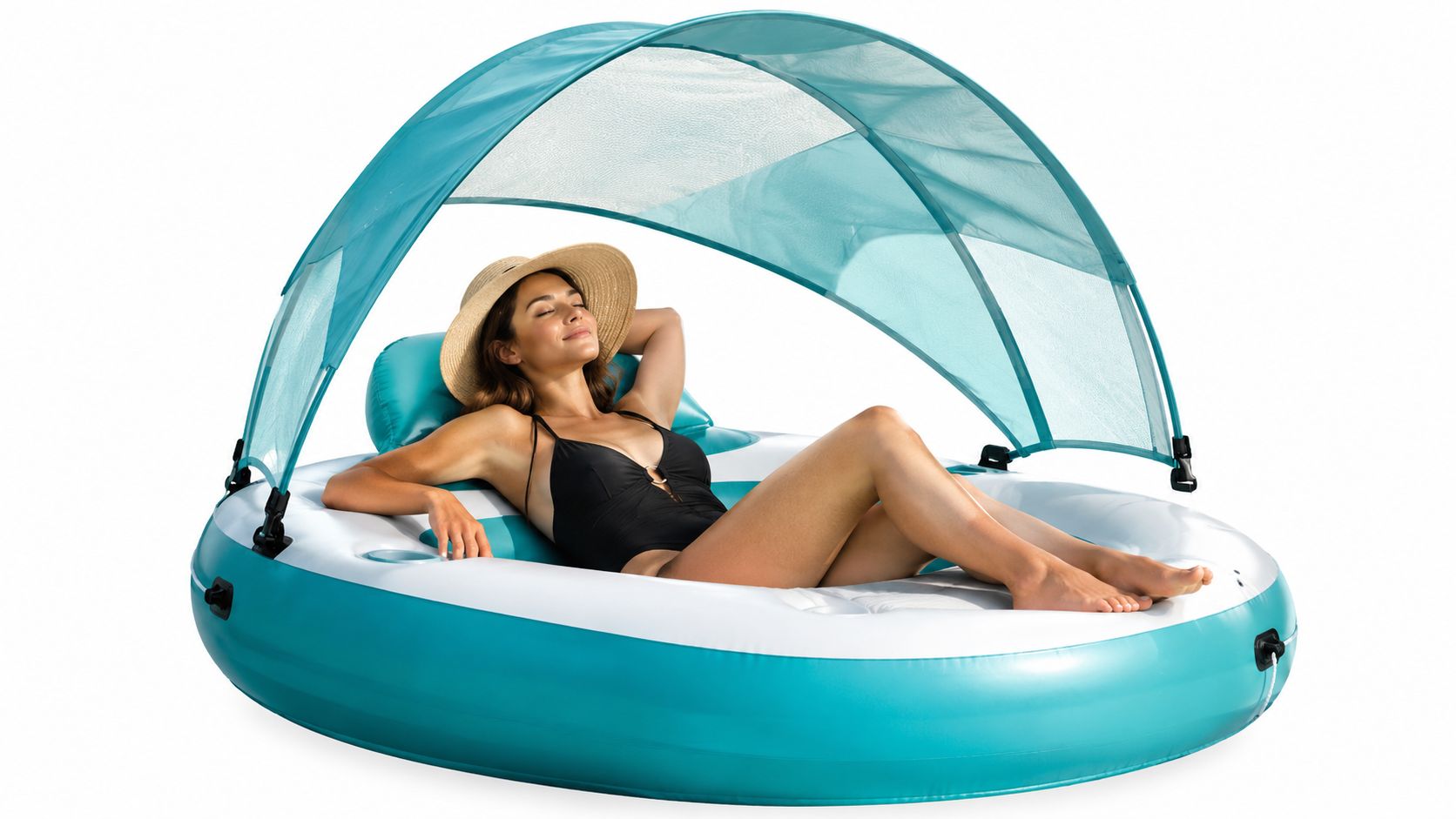
A shaded float changes how a pool session feels. Someone reading, chatting, or resting can remain supported on the water while a canopy limits direct overhead sun. The result is closer to an outdoor lounger than a basic inflatable raft, with comfort built into the floating position.
Shade also belongs in a wider sun-safety routine. Australian sun protection guidance recommends using protection when the UV Index reaches 3 or above, combining shade with clothing, sunscreen, a hat, and sunglasses. The ARPANSA guidance on shade and sun protection presents a canopy as one layer, not a substitute for the others.
The comfort problem is more than heat
Direct sunlight can make a float uncomfortable before anyone wants to leave the pool. A canopy creates a more manageable resting area, while cup holders, handles, reclining backrests, and adjustable covers reduce trips to the pool edge for small essentials.
The canopy material and frame affect that experience. A tightly fixed cover may provide consistent overhead shade, while an adjustable panel lets users follow the sun. The added structure can also catch wind, so a stable base and sensible positioning matter as much as the fabric claim. Children may need a lower, more stable design, while adults often prioritize back support, usable space, and capacity.
Product variety reflects these different needs. Major marketplace listings show many shapes and feature combinations, rather than one standard pool float. The Amazon pool float canopy listings offer a useful view of that range.
A practical buying order keeps the decision clear: identify the shade structure, examine its material and UV wording, check stability and capacity, then match the float to its user and pool setting.
Understanding the Main Types of Pool Floats With Shade
Most shaded floats fit into three useful design families. Each one handles coverage, movement, airflow, and space differently, much like the difference between a beach umbrella, a reclining chair, and a covered outdoor daybed.
Canopy floats with integrated covers
An integrated canopy float has a shade panel attached to the main float. The cover may fold, retract, detach, or adjust depending on the design. This format suits solo loungers who want shade available without carrying a separate accessory.
The canopy usually sits close enough to the user to provide focused overhead coverage. That can make the float feel private and comfortable, although the structure may catch wind and require careful positioning. Adjustable fabric is useful when the sun moves across the pool because the user can change the angle rather than constantly reposition the whole float.
Umbrella-style floats
Umbrella-style designs place a raised shade element above the seating area. The shape feels familiar, similar to a patio umbrella mounted on a floating chair. The overhead cover can create a more open, airy feel, but its higher profile may also be more affected by wind.
This style works well for someone who wants a defined seat and a visible shade point rather than a full canopy enclosure. Buyers should look for a secure attachment system and enough base width to offset the weight and wind-catching area above the water.
Covered loungers and islands
Covered loungers and islands are the most substantial option. They're designed for broader reclining surfaces, shared use, or a more structured floating experience. Some product formats resemble small floating cabanas or gazebo-like platforms, while others use a simple fabric roof over a wide inflatable base.
The category has moved beyond basic rafts into multi-use leisure platforms with shade, cup holders, handles, and adjustable covers. Retail examples now include floating canopy structures and specialized floating pool gazebos, showing how shade has become a central part of the design rather than an afterthought.
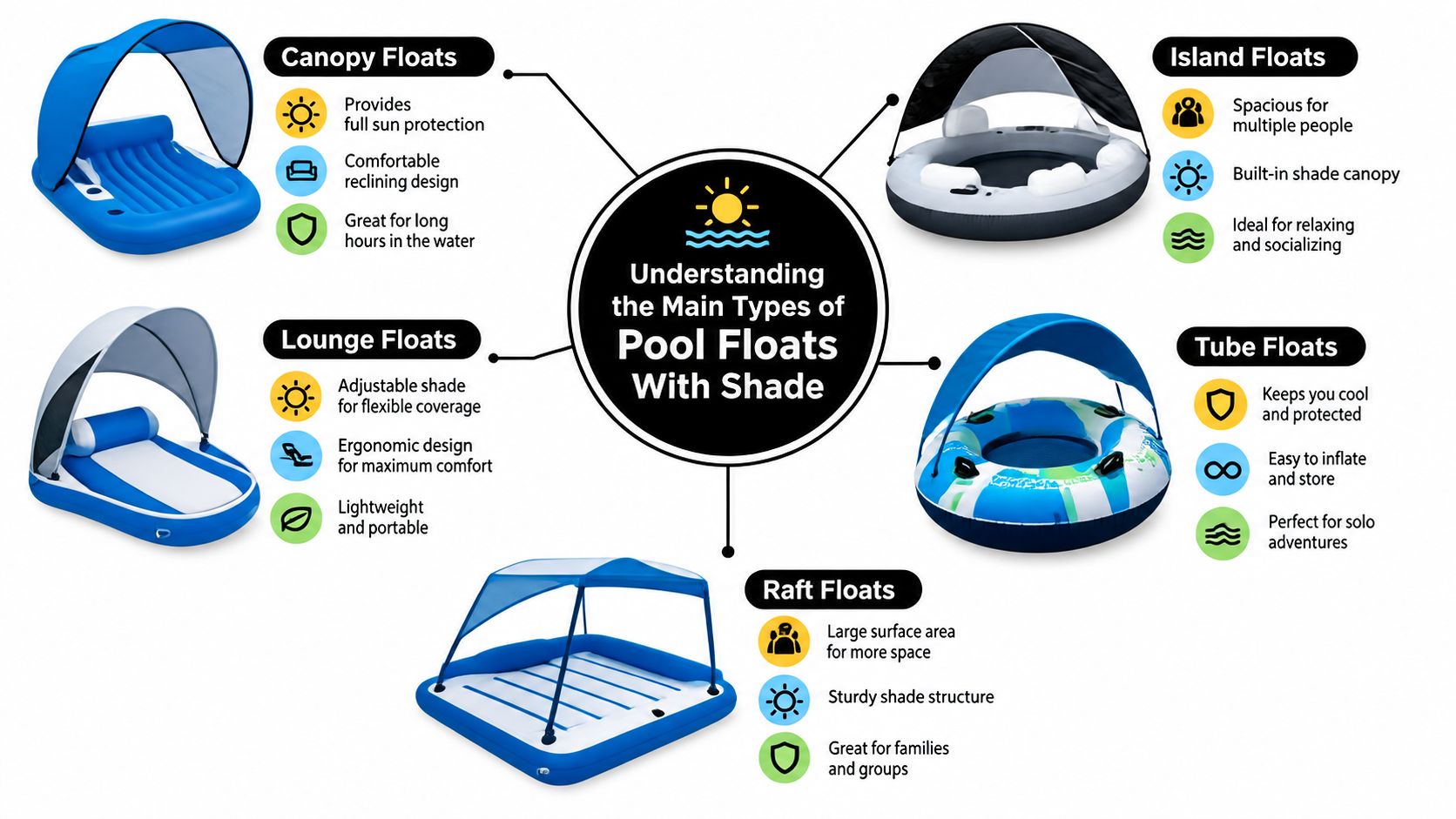
A narrow pool may favor a compact canopy lounger, while a larger pool or relaxed gathering may suit an island. The best architecture is the one that gives enough shade without making the float difficult to turn, store, or control.
How Shade and UV Protection Actually Work on the Water
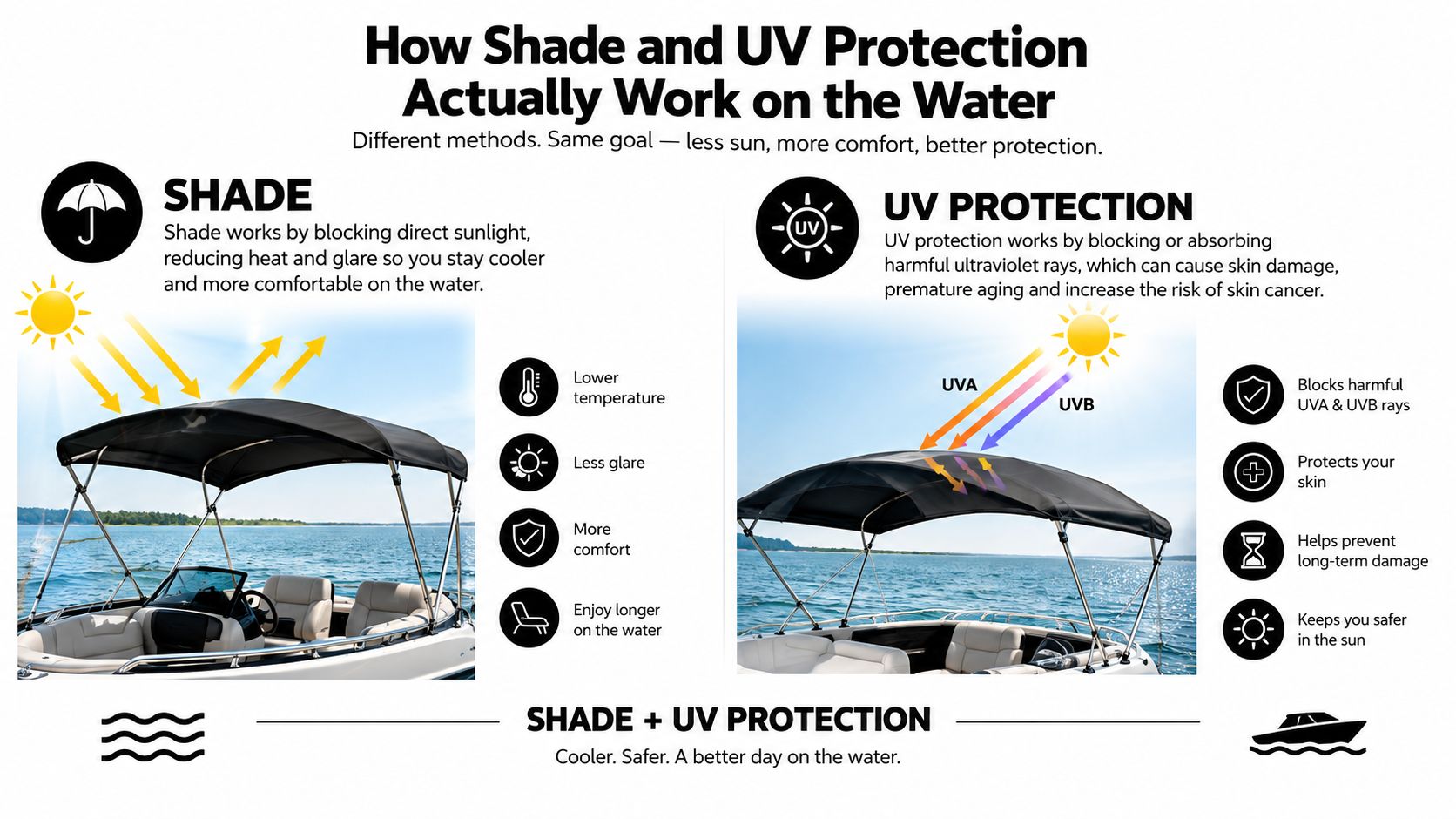
A canopy creates shade, but shade and UV protection aren't identical claims. Fabric density, construction, ventilation, and testing all influence how much radiation passes through or around the cover.
UPF 50+ is one of the clearest labels shoppers may encounter. Under standard textile testing conventions, UPF 50+ blocks at least 98% of UV radiation, according to the product information referenced by this UPF 50+ pool float guide. The label applies to the tested fabric, so it shouldn't automatically be interpreted as complete protection for every part of the body or every angle of sunlight.
Why canopy material deserves attention
A breathable canopy can make a float more pleasant during a long session. Mesh or ventilated panels allow air to move through the shaded area, reducing the trapped, stuffy feeling that can occur under a tightly enclosed cover. The best design balances fabric coverage with airflow rather than treating maximum enclosure as the only goal.
Not every shade attachment offers the same UV performance. The UV Standard 801 textile brochure explains that shade beneath a regular sunshade may provide about 15% UV protection, while a sunshade made with special UV-protective material may provide roughly 40% to 80% protection. Those figures illustrate why a simple roof and a tested protective textile shouldn't be treated as equivalent.
How to read a credible claim
A useful product listing should identify the rating, the canopy material, and any relevant test information. EN 13758-1 specifies a method for measuring erythemally weighted UV transmittance across 290 nm to 400 nm, covering both UV-B and UV-A radiation, as described by the EN 13758-1 textile standard.
A canopy still leaves exposed areas, and reflected light can reach the user from the water and surrounding surfaces. Sunscreen, protective clothing, a hat, and sunglasses remain relevant parts of the routine. Buyers should view the float as a mobile shade station, not as a complete substitute for sun-care habits.
Key Features to Evaluate Before You Buy
A good product page should answer four practical questions: Does the canopy protect and breathe, does the float support the user, will it remain stable, and can it be managed after the pool day? Appearance matters, but those questions determine whether the float becomes a reliable favorite or an awkward inflatable that stays in storage.
Start with the canopy
Look for adjustable or removable construction when the pool receives changing sunlight. A UPF rating is more useful than a vague phrase such as “sun shade,” and textile test information gives the claim more context. Mesh panels can improve airflow, while a tightly woven roof may provide a more enclosed shaded area.
Then examine attachment points. A canopy connected to the float should fold or detach without forcing the user to wrestle with the structure during setup.
Check support and stability
Buoyancy depends on displaced water volume, while stability depends on how the float distributes mass across the water. Guidance on the physics of buoyancy in pool floats explains why a broad footprint and a low center of gravity can reduce tipping. Wider side pontoons and a substantial inflatable base can also help resist rolling when the canopy catches wind above the waterline.
A float that looks large isn't automatically stable. A buyer should check the base shape, seating position, handles, and instructions for wind or anchoring. The intended pool setting matters too. A sheltered backyard pool is different from an exposed lake where wind can move a canopy more easily.
Confirm the load rating
Published capacity matters more than visual size. A CRIVIT pool-float manual lists maximum loads of 100 kg for several models and 80 kg for another model, as shown in the CRIVIT float documentation. The figures demonstrate why shoppers should use the manufacturer's stated limit and account for everyone and everything placed on the float.
Compare the formats quickly
| Feature | Canopy Float | Umbrella Style | Covered Lounger |
|---|---|---|---|
| Coverage | Focused overhead shade | Raised, open shade | Broad overhead coverage |
| Airflow | Depends on mesh and canopy shape | Usually open around the sides | Depends on enclosure and ventilation |
| Stability focus | Attachment and base balance | Wind control and wide footprint | Buoyancy distribution and low seating |
| Best fit | Solo relaxation | Casual seated lounging | Shared use or extended lounging |
| Storage | Often easier with removable cover | Can require careful folding | Usually bulkier |
Portability deserves its own check. A removable canopy can simplify storage, while a larger island may need more inflation time and a dedicated place to dry. Buyers comparing pool equipment may also benefit from practical guidance on automatic pool cleaners, since both products require realistic storage and setup planning around the pool.
Choosing the Right Float for Kids Adults and Parties
The right shaded float depends on the person using it, not just the number of cup holders or the color of the fabric. An adult recliner, a family island, and a child-oriented seat solve different problems and create different supervision requirements.
Adult loungers
Adults generally benefit from a supportive backrest, a stable seating well, handles, and an adjustable canopy. A lower seating position can feel more secure, especially when the float has a broad base and the user wants to read, rest, or keep a drink nearby.
Comfort also includes exit and entry. A float that's difficult to climb onto may be frustrating even if its canopy looks excellent. A buyer should consider whether the design suits the user's mobility, the pool edge, and the amount of space available for turning.
Children and younger users
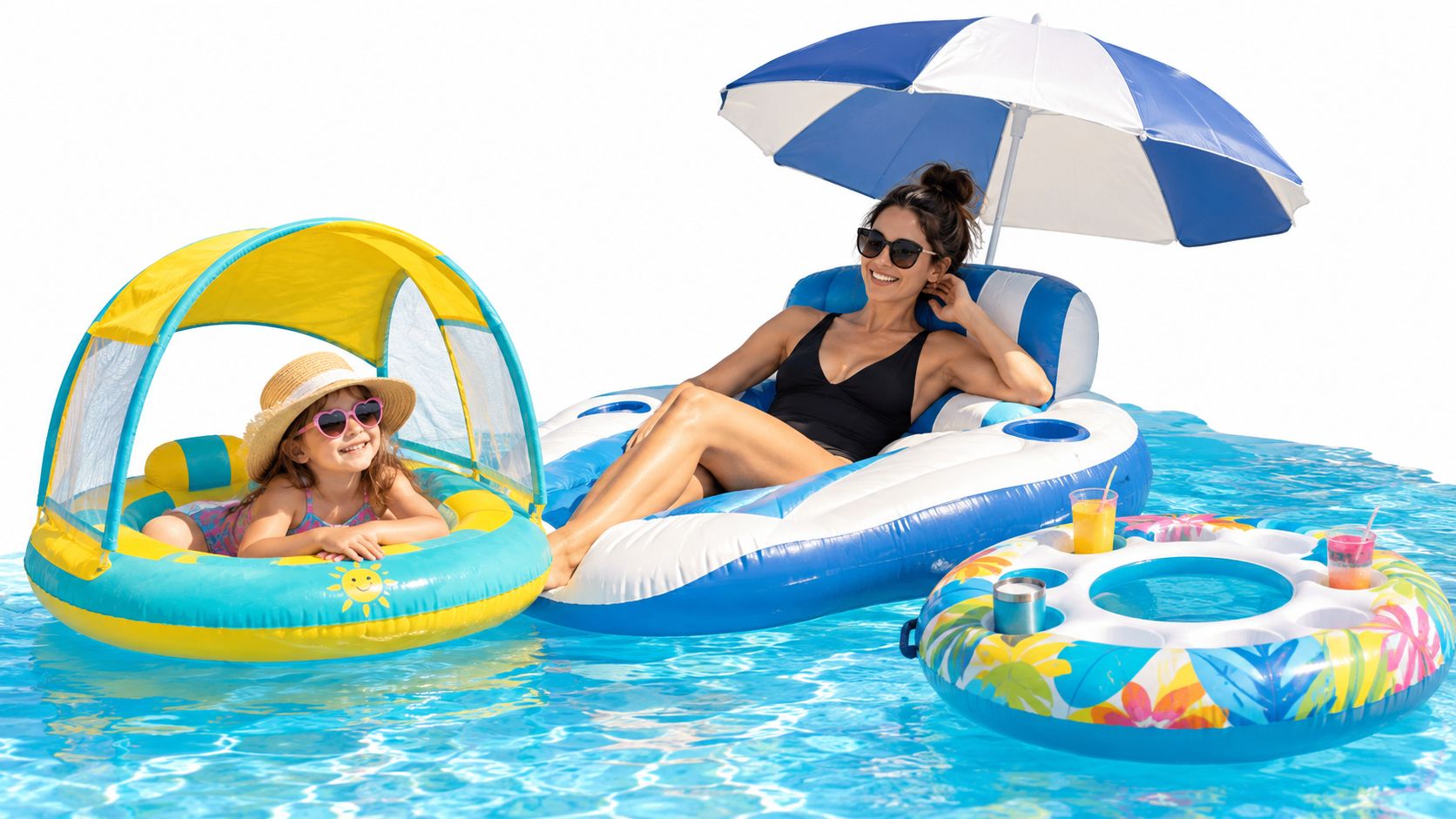
Child and baby floats require closer attention to age guidance, fit, weight limits, and flip-over risk. Current product coverage includes no-flip baby floats with canopies, 3-in-1 formats, and designs with added support features, but a canopy doesn't make a float a life-saving device.
A seat should fit the child as directed by the manufacturer, and adults should remain close enough to respond immediately. Baby neck floats should be avoided. For toddlers and young children, the product listing should be checked for age suitability, body support, restraints if provided, and the manufacturer's instructions.
Families and party hosts
A covered island can suit a family that wants shared shade, but the capacity must be verified rather than guessed. More people create more movement, and shifting weight can affect balance. A party host may prefer several individual shaded loungers instead, because separate floats make it easier for users to spread out and reduce crowding.
As a gift, a shaded float works best when the recipient's pool type and storage space are known. A compact canopy lounger can suit a frequent pool user, while a larger covered design may appeal to a household that hosts outdoor gatherings. Useful accessories such as a hand pump, repair kit, waterproof storage bag, or poolside towel can make the gift feel more complete without choosing a float based on novelty alone.
Family rule: A canopy improves comfort, but adult supervision, proper fit, and the manufacturer's capacity instructions still control safe use.
Safety Setup and Maintenance Tips That Extend Float Life
A shaded float lasts longer when its setup matches the design. Before inflating it, inspect the seams, valves, canopy attachments, and fabric for visible damage. A slow leak or loose connection can become a larger problem once someone climbs aboard.
Inflate the base until it feels firm and supportive, without forcing in extra air. Manufacturer instructions take priority because materials and air chambers handle pressure differently. After inflation, test the float in shallow water without fully climbing onto it. Check whether the canopy shifts the balance or makes boarding awkward.
Use the float deliberately
Wind needs special attention. A canopy adds surface area above the water, much like a small sail, so gusts can push the float or turn it. Move the float to a sheltered area when conditions become gusty. Use an approved tether or anchoring method exactly as directed. Improvised ropes and attachment points may damage the float or create an entanglement hazard.
Check the load limit before every shared session. Published product limits can differ, and the CRIVIT documentation gives examples of maximum loads of 100 kg and 80 kg. Those examples show why a float's appearance cannot replace its manufacturer's specifications. Children also need continuous, close adult supervision, even when a float includes a seat, canopy, or stability features.
Safety reminder: Pool floats support water recreation. They are not life-saving devices and do not replace direct supervision.
Shade should form one layer of sun protection, not the entire plan. When the UV Index is 3 or above, combine it with clothing, sunscreen, a hat, and sunglasses, following ARPANSA sun-protection advice. Water can also reflect light into areas the canopy does not cover, so exposed skin still needs attention.
Clean and store after use
Rinse the float with clean water after each pool session to remove chlorine, salt, sunscreen residue, and dirt. Let the canopy dry completely before folding it, especially around seams and attachment points. Folded damp fabric can develop odors and deteriorate over time.
Deflate and store the float in a cool, dry place away from sharp objects and prolonged direct sunlight. A small repair kit can handle minor punctures, but damaged seams, valves, and structural attachments require more careful assessment before reuse.
The same routine applies to related pool equipment. These pool cleaner maintenance guidance practices reinforce the value of rinsing, drying, and storing equipment properly after use.
Final Takeaways and Where to Shop at Granted Solutions
The best pool float with shade balances five decisions: shade format, fabric protection, stability, user fit, and care requirements. An integrated canopy suits focused solo lounging, an umbrella-style design offers an open seated experience, and a covered island provides more room for shared relaxation. None of those formats is universally best.
A careful buyer checks whether the canopy has a clear UV rating, whether the fabric allows airflow, and whether the base can stay balanced when the cover catches wind. The manufacturer's age, size, and load instructions should guide family purchases, while adults should use shade alongside broader sun-protection habits.
Granted Solutions curates practical, gift-friendly products for everyday life, including outdoor items designed around comfort and convenience. Shoppers can browse the Sports and Outdoor collection while comparing features that fit their pool, storage space, and intended user. The store also offers free shipping, secure checkout, and a 30-day return policy, giving shoppers more flexibility when choosing useful seasonal gear.
Granted Solutions offers practical outdoor finds that make sunny pool days more comfortable, including problem-solving products suited to families, hosts, and gift shoppers. Visit Granted Solutions to explore the Sports and Outdoor collection and choose a shaded float that matches the user, pool setting, and storage needs.
Leave a comment