

UV Sterilizer Wand Guide for Safer Everyday Use

A phone picked up on a café table, a keyboard shared at home, or travel gear handled throughout the day can leave people wanting an extra layer of cleanliness without spraying liquid onto every surface. A handheld UV sterilizer wand seems like a quick answer, but a simple question, “Does it work?” leaves out the part that matters most when the device is held in someone's hand.
The better question is whether it works safely and consistently in real use. Distance, exposure time, beam angle, surface texture, and the wand's safety features all affect the outcome. A device may deliver useful UV-C exposure under controlled conditions while still creating avoidable risk if someone points it toward eyes or skin.
This guide explains UV-C light in plain English, shows why performance varies, and outlines practical habits for phones, remotes, keyboards, and other hard, nonporous items. It also offers a buying framework for shoppers comparing portable cleaning gadgets, travel accessories, and giftable home tools.
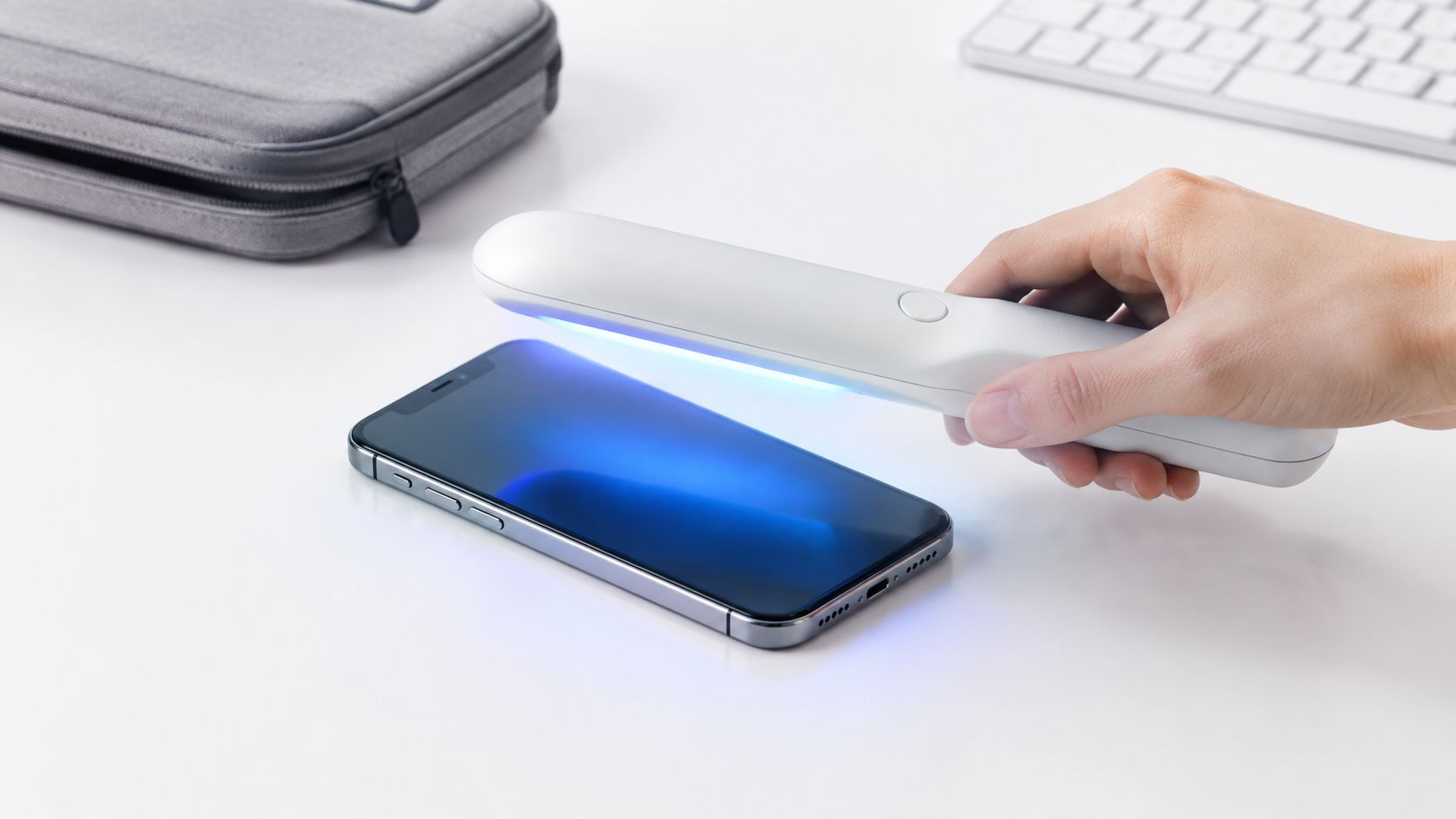
Table of Contents
- Introduction to UV Sterilizer Wands for Everyday Peace of Mind
- What a UV Sterilizer Wand Is and How It Works
- How Effective UV Sterilizer Wands Really Are in Real Life
- Safety Tradeoffs Every User Should Understand
- How to Use and Maintain Your Wand for Best Results
- How to Choose the Right UV Sterilizer Wand at Granted Solutions
- Final Takeaways and Your Next Step With Granted Solutions
Introduction to UV Sterilizer Wands for Everyday Peace of Mind
A UV sterilizer wand can look reassuringly simple. A person holds the device above a phone, waves it over a keyboard, and expects invisible light to handle what a quick wipe might miss. That expectation is understandable, especially for items that are awkward to spray, such as electronics, luggage handles, game controllers, and travel accessories.
The uncertainty starts when product listings use broad words such as “sterilize” or “kill germs” without explaining the conditions behind those claims. A wand doesn't bathe every part of an object equally. Light needs a clear path, and the delivered dose depends on how close the lamp is, how long it stays over an area, and whether the beam reaches the surface directly.
A practical way to think about the device is as supplemental surface support, not a replacement for ordinary cleaning. Dirt, oils, folds, seams, and shadows can block light. A fast pass across a textured sofa won't provide the same exposure as a slow, direct pass over a flat phone screen.
The safety question deserves equal attention. The FDA's UV wand safety communication warns that certain consumer UV wands can emit unsafe UV-C levels capable of injuring eyes or skin within seconds. That makes model design and user behavior more important than a universal yes-or-no verdict.
Practical rule: A UV wand is only as useful as the light that reaches the target, and only as responsible as the way the operator handles it.
For shoppers looking for practical problem-solving gadgets, the right choice starts with honest expectations. A well-described product, clear safety controls, secure checkout, free shipping, and an easy returns policy can make ownership less complicated. The Granted Solutions collection is designed for that kind of everyday decision-making, helping shoppers compare useful gadgets and home essentials without relying on hype.
What a UV Sterilizer Wand Is and How It Works
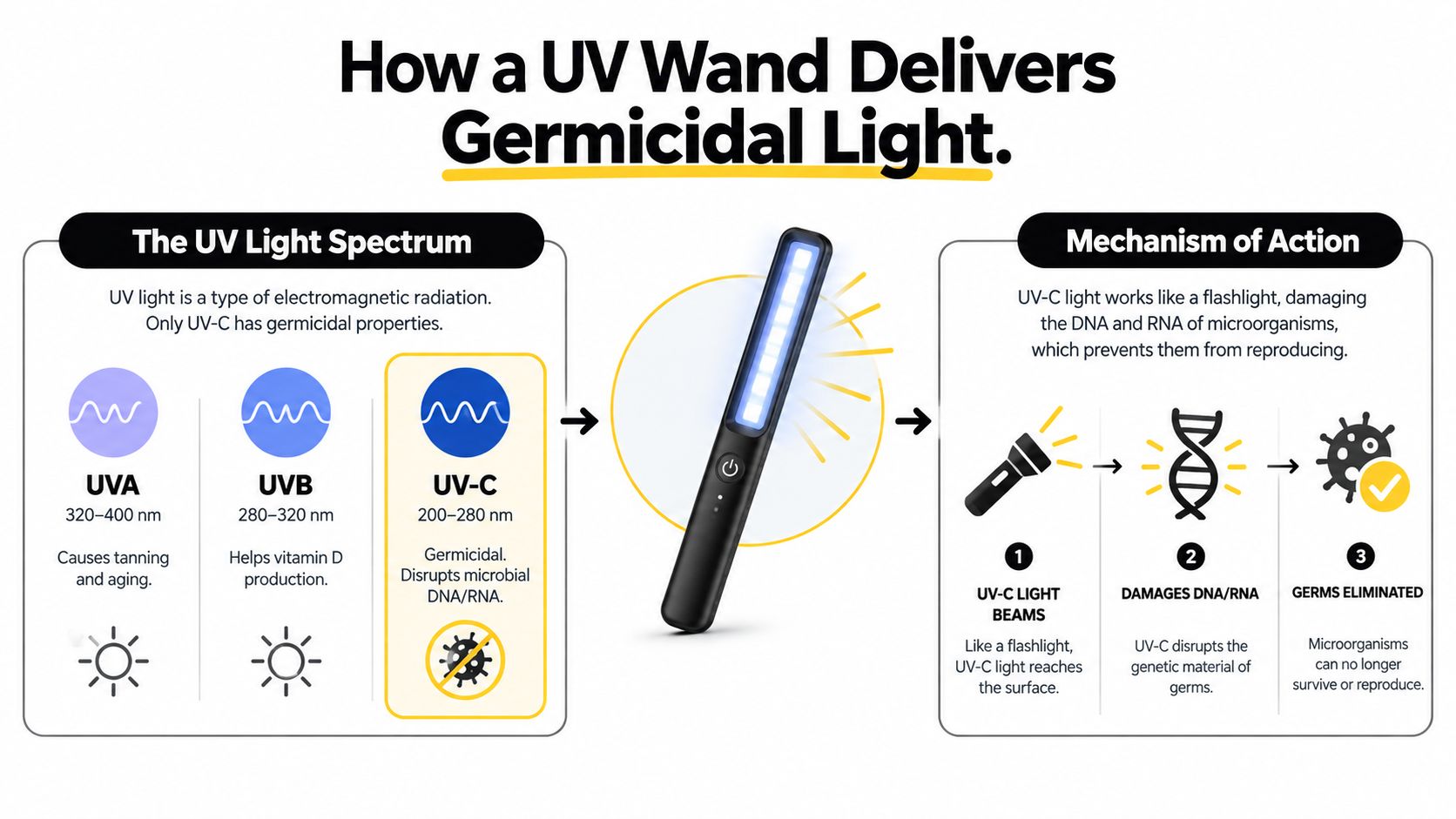
UV light is part of the electromagnetic spectrum, much like visible light, infrared, and sunlight. A UV-C wand uses a shorter, higher-energy band of ultraviolet light. Public-health guidance places UVC between 100 and 280 nanometers, with 254 nm commonly referenced in safety and exposure documents from the Centers for Disease Control and Prevention.
The wavelength matters because germicidal performance isn't determined by brightness alone. A household flashlight can look bright, yet its visible beam isn't the same as UV-C. A useful analogy is a focused flashlight aimed through a narrow doorway. The right kind of light must pass through the opening, reach the surface, and remain there long enough to deliver a meaningful dose.
The three variables behind exposure
A wand's practical output depends on three connected variables:
- Wavelength: The lamp needs to produce UV-C rather than ordinary blue or visible light.
- Intensity: Irradiance describes how much UV-C reaches a target at a given position.
- Exposure time: The surface needs enough dwell time to receive the intended dose.
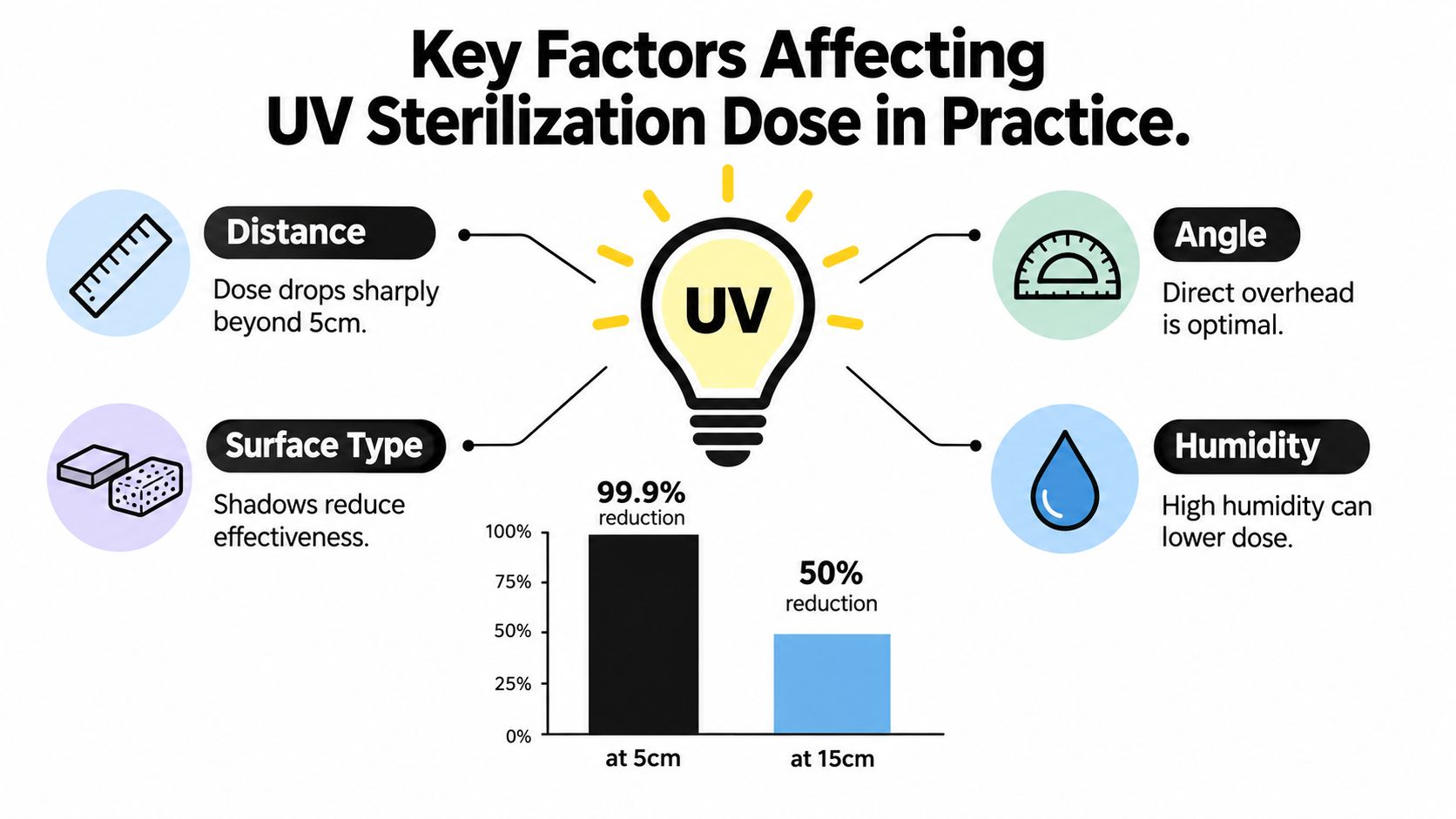
Distance changes the second variable sharply. Moving a lamp farther away spreads the beam over a larger area, so less energy reaches each point. Tilting the wand can create the same problem because an angled beam may illuminate the target unevenly or miss areas behind raised edges.
A UV sterilizer wand also has a line-of-sight limitation. It can't reliably reach the underside of a phone case, the bottom of a keyboard gap, or a crease hidden behind a button. The word “sterilizer” in a product name therefore shouldn't be treated as a guarantee that every part of an object receives an equivalent treatment.
Why flat objects are easier
Smooth, exposed surfaces are easier to address because the operator can keep the wand close and direct the lamp straight at the target. Phones, remote controls, and selected parts of a keyboard fit this pattern better than porous fabric, deep upholstery, or cluttered surfaces with many shadows.
That doesn't make a wand a complete cleaning method. A dry, clean surface presents fewer physical obstacles than one covered with dust or residue. The technology works best when the device, the target, and the operator's movements all support a clear, controlled exposure.
How Effective UV Sterilizer Wands Really Are in Real Life
Real-world results vary because a wand doesn't deliver a fixed dose everywhere. The target's distance, the angle of the beam, the product's irradiance, and the surface's shape all change how much UV-C reaches a specific spot.
A peer-reviewed evaluation found the strongest performance under optimal conditions with direct beam exposure at a short target distance of 12.7 cm. The same research found that greater distance and indirect beam angles reduced kill rates, showing why a quick diagonal sweep can underperform compared with a close, controlled pass. The published study is available through PubMed.
Humidity and drying time can also influence outcomes. In that study, the best kill rates for a vegetative microbe occurred at 40–65% relative humidity and 21–24°C, under the tested conditions described in the research published by the National Library of Medicine. Those findings don't translate into a universal household timing rule, but they do show that environmental conditions can matter alongside the lamp and the operator's technique.
Product output isn't interchangeable
A home-use survey found wide differences between handheld products. At 200 mm, some wands reached the ICNIRP exposure limit of 30 J m^-2 in under 1 minute, while others required 1–3 minutes or more than 10 minutes. At 20 mm, seven of eighteen handheld wands achieved viral inactivation in under 1 second, while six needed hours for a 90% reduction, according to the survey of home-use UV disinfection products.
Those results are a warning against copying a single exposure time from one model to another. Wavelength output, irradiance, lamp design, distance, and target geometry all influence the result. A product that performs well at close range doesn't automatically offer the same performance across a wider area.
Surface shape changes the practical answer
A phone screen is relatively straightforward because the surface is smooth and exposed. A remote with recessed buttons demands more deliberate positioning. A fabric couch, woven bag, or cluttered countertop introduces shadows and uneven angles that make coverage difficult to judge.
Direct light over a flat surface is a more realistic use case than a fast wave over a large, irregular object.
The safest interpretation is modest but useful. A UV-C wand may support routine surface care when the operator follows the product's instructions and maintains controlled exposure. It shouldn't be treated as proof that every hidden, porous, or shadowed area has received the same treatment.
Safety Tradeoffs Every User Should Understand
The strongest UV-C exposure often requires the wand to be close, direct, and active for longer. Those same conditions can increase the operator's exposure if the beam reaches an unprotected hand, face, or reflective surface. Efficacy and safety aren't separate topics. They can rise together.
The FDA warns that certain UV wands can emit unsafe UV-C levels that may injure eyes or skin within seconds. The warning applies to specific devices and designs, so shoppers shouldn't assume that every handheld wand has the same output or protection.
The exposure risk is easy to underestimate
A person may focus on the phone beneath the lamp and forget where the beam is going. Glossy screens, mirrors, metal fixtures, and other reflective surfaces can redirect light. Academic testing has also identified scatter radiation from handheld devices, which means the operator can't judge safety only by looking at the central beam.
The direct-beam findings discussed earlier create a difficult tradeoff. Keeping the wand positioned correctly may improve the target's exposure, but careless positioning can place the operator closer to the same UV-C field.
The product should never be pointed at eyes, faces, or uncovered skin. Children and pets shouldn't handle it, and a user shouldn't treat a motion sensor or shutoff feature as permission to ignore the safety instructions.
Features that reduce avoidable mistakes
A careful buyer can look for design features that interrupt unsafe use:
- Motion sensors: These can stop or reduce output when the wand moves away from the intended position.
- Auto shutoff: Automatic stopping limits unattended operation and reduces the chance of prolonged exposure.
- Shielding: A physical guard can help keep the active beam directed toward the target.
- Timers: A visible countdown helps the operator avoid guessing about dwell time.
- Child locks: A lockout can reduce access in homes where children may find the device.
A feature list can't replace a clear manual or responsible handling. Product descriptions should identify the UV-C wavelength, operating controls, charging method, and warnings in language that a buyer can understand.
Households comparing other air and home-care tools may also benefit from understanding how different technologies address different problems. A useful comparison appears in this guide to an ion air purifier, but air treatment and handheld surface exposure shouldn't be treated as interchangeable functions.
How to Use and Maintain Your Wand for Best Results
A repeatable routine matters more than speed. The operator should begin with the surface itself, not the lamp. Loose dirt, dust, and residue can block direct exposure, so ordinary cleaning should come first when the material allows it.
The following habits create a controlled workflow:
- Prepare the target. Remove clutter and wipe the surface using a compatible cleaning method. Let any moisture dry before using the wand, unless the device instructions state otherwise.
- Position the lamp. Hold it at the manufacturer's stated operating distance, keeping the beam as direct and close as the design allows without bringing the device into contact with the surface.
- Move slowly. Scan in steady, overlapping passes instead of making one quick wave. Overlap helps reduce untreated strips between passes.
- Respect dwell time. Keep the lamp over each area long enough to follow the product's directions. A large surface may need separate zones rather than one rushed sweep.
- Address shadows deliberately. Change the target's position or make a separate pass only when doing so doesn't expose the operator. Never angle the device toward a person to reach a hidden area.
Safe handling belongs in every pass
The operator shouldn't look at the active lamp or direct it toward anyone. Skin should remain covered, and the device should stay away from children and pets during operation and storage.
Handling habit: If the user can't clearly control where the beam is going, the surface isn't a suitable target for a handheld wand.
Maintenance protects consistency. The lamp window should remain clean and free of smudges, because residue can interfere with the light reaching the target. Batteries should be charged or replaced according to the product directions, and the wand should be stored in a dry, secure place.
A quick inspection before use can reveal a cracked housing, loose guard, damaged cable, or unusual flickering. Any sign of physical damage should be treated seriously. For small device surfaces and tight spaces, a complementary tool such as a 5-in-1 tech hygiene cleaning pen may be more suitable than forcing UV-C into a gap the beam can't reach.
How to Choose the Right UV Sterilizer Wand at Granted Solutions
The best model depends on the target, the setting, and the operator. A traveler who wants to treat selected hard surfaces needs portability and a dependable power source. A household user may care more about a stable grip, a clear timer, and safety controls. A gift buyer should prioritize understandable instructions and features that make careful use easier.
Compare the features that affect ownership
| Feature | What to Look For | Why It Matters |
|---|---|---|
| UV-C wavelength | A clearly identified UV-C output and supporting product information | Confirms that the device is designed around the relevant germicidal band rather than ordinary visible light |
| Irradiance | Manufacturer details describing output at a stated distance | Helps explain why two wands may require different exposure routines |
| Size and portability | A comfortable handle, protective guard, and travel-friendly design | Makes controlled positioning easier during home or travel use |
| Power source | Rechargeable battery or replaceable batteries, with clear charging information | Prevents interruptions and helps the buyer plan use away from an outlet |
| Coverage area | A lamp width and operating guidance that match the intended target | Reduces the temptation to rush across a surface that needs separate passes |
| Timer controls | A visible timer or automatic cycle | Supports consistent dwell time and reduces guesswork |
| Safety features | Motion sensing, auto shutoff, shielding, and child lock options | Helps limit accidental exposure during normal handling |
| Build quality | A stable housing, protected lamp window, and accessible instructions | Supports safer storage and long-term everyday handling |
| Value | A useful feature mix rather than the lowest listed price | Keeps the decision focused on suitability, not an isolated price tag |
A simple decision matrix
| Intended use | Feature mix to prioritize | What to question |
|---|---|---|
| Travel | Compact body, rechargeable power, protective design, clear controls | Can the operator position it steadily without rushing? |
| Home electronics | Directable lamp, timer, safety shutoff, comfortable grip | Does the design suit phones, remotes, and keyboards rather than large fabric areas? |
| Gift giving | Simple instructions, visible safety features, dependable storage | Will the recipient understand the limits and safe handling requirements? |
| Small accessories | Controlled coverage, suitable distance guidance, easy maintenance | Can the light reach the exposed surface without forcing awkward angles? |
A listing should explain more than a lamp color or a broad “germ-killing” label. Buyers should look for wavelength information, usage guidance, exposure warnings, battery details, and a realistic description of suitable surfaces. Reviews can reveal whether controls are intuitive, but they shouldn't replace manufacturer safety information.
For shoppers comparing compact care tools for accessories, the portable UVC cleaner for dentures and jewelry offers a useful reminder that enclosed or purpose-built formats may suit certain objects better than an exposed handheld beam. The right choice is the one that matches the surface and makes safe use straightforward.
Final Takeaways and Your Next Step With Granted Solutions
A UV sterilizer wand can be a convenient supplemental tool for selected hard, exposed surfaces. Its usefulness depends on a direct path between lamp and target, a suitable distance, enough dwell time, and a product whose output and safety controls are clearly described.
The evidence doesn't support a universal promise that every wand treats every object equally. Research found stronger results with direct exposure at a short distance of 12.7 cm, while increased distance and indirect angles reduced kill rates, as reported in the peer-reviewed UV-C wand study. Product testing also found substantial variation between handheld models, so the instructions for the specific device should guide operation.
The core buying filters are practical:
- Distance: Can the operator keep the lamp positioned correctly?
- Dwell time: Does the device make timing clear?
- Safety: Does it include shielding, motion sensing, or auto shutoff?
- Maintenance: Can the lamp window, battery system, and housing be kept in good condition?
- Use case: Is the wand appropriate for the intended smooth, exposed surface?
A thoughtful gift shopper can pair a UV-C gadget with other everyday organization or tech-care accessories, while a busy household can use it as one part of a broader cleaning routine. The goal isn't speed at any cost. The goal is controlled, informed use.
Granted Solutions curates practical gadgets, home essentials, and gift-worthy tools for everyday problems, including compact products that support cleaner, more organized routines. Visit Granted Solutions to explore the selection, compare useful features, and shop with free shipping, secure checkout, and a 30-day return policy.
Leave a comment