

Devices for Pain Relief: A Complete Buyer's Guide

A stiff neck at breakfast. A lower back that tightens halfway through the workday. Sore shoulders after a long drive or a weekend project. Many people deal with that moment the same way. They reach for another pill and hope it takes the edge off.
That routine gets old fast. Medication can be useful, but plenty of shoppers want devices for pain relief that fit normal life better, especially for recurring aches that keep showing up in the same spots. They want something they can use on the couch, at a desk, after a workout, or before bed without turning every flare-up into a bigger production.
The good news is that pain-relief devices aren't a fringe category anymore. The hard part is sorting useful tools from overhyped gadgets. A smart buyer needs to know which device matches which kind of discomfort, what the evidence supports, and which features matter for home use.
Table of Contents
- Why Devices Are Changing How We Manage Pain
- How Pain-Relief Devices Actually Work
- Understanding TENS Therapy and Its Clinical Evidence
- Comparing TENS, EMS, Heat Therapy, and Massage Devices
- Safety Considerations and Realistic Expectations for Home Use
- How to Choose the Right Pain-Relief Device for Your Needs
- Making the Switch to Device-Based Pain Management
Why Devices Are Changing How We Manage Pain
By the third time a sore back ruins an ordinary day, the question stops being “What can I take?” and becomes “What can I use, right here at home, without rearranging my life?” That is the reason pain-relief devices keep gaining attention.
Analysts at DelveInsight describe a growing pain management devices market, with demand pushed by chronic pain, home-use treatment, and wider adoption of non-surgical options. Shoppers should read that trend plainly. These products have moved well beyond novelty status.
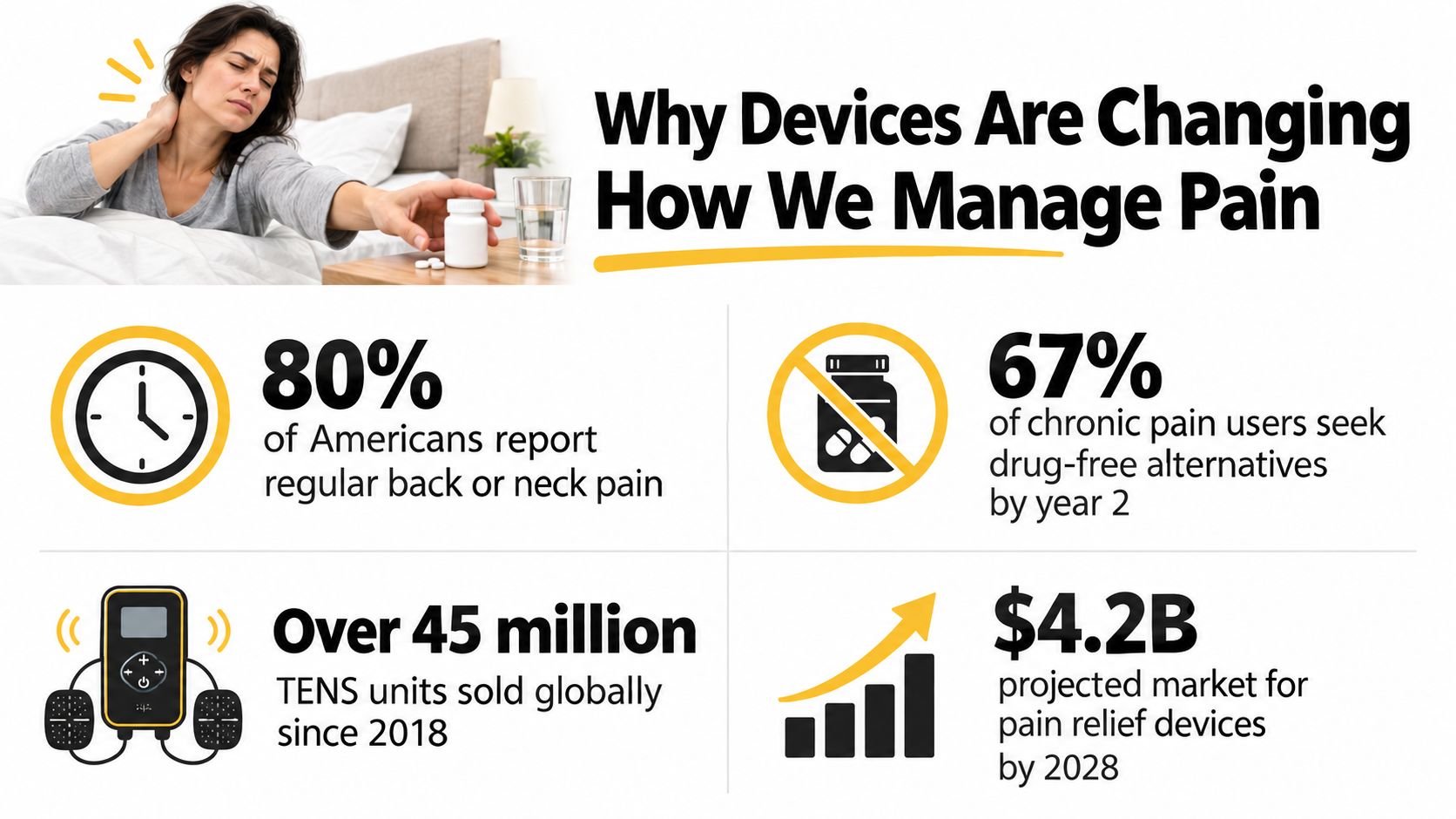
Why home use matters now
Convenience is part of it. Control matters more.
A good pain-relief device gives people a way to respond to recurring discomfort on their own schedule, whether that means loosening a tight shoulder after work, calming knee pain before a walk, or managing a familiar flare-up before bed. That makes home-use devices appealing in a way pills alone often are not. They are targeted, repeatable, and easy to keep within reach.
The broader shift toward home care shows up across health categories, not just pain products. Readers comparing practical tools for everyday self-management can also look at these health monitoring devices for everyday home use, because the same buying logic applies. The best products are the ones people will use consistently.
One clear recommendation. Stop shopping for the “best overall” pain device. Shop for the device that matches the pain pattern, body area, and routine of the person using it.
What buyers actually need help with
Too many articles treat this category like a simple top-10 list. That is lazy advice.
Buyers usually have better questions. Does this type of device help nerve pain, muscle tightness, joint stiffness, or post-workout soreness? Is the relief temporary or longer lasting? Is it safe to use at home without much setup? Is it a smart gift for a parent, partner, or athlete, or just another gadget that ends up in a drawer?
That is the useful angle. A strong guide should help readers match device type to pain type, understand what the evidence supports, avoid formats that overpromise, and choose something realistic for daily life. That is how shoppers make better decisions and waste less money.
How Pain-Relief Devices Actually Work
The market throws around a lot of labels that sound similar but do very different jobs. That's where shoppers waste money. A device that's great for nerve-based symptom relief won't necessarily be the right pick for muscle activation, and a heated pad won't replace a stimulation unit.
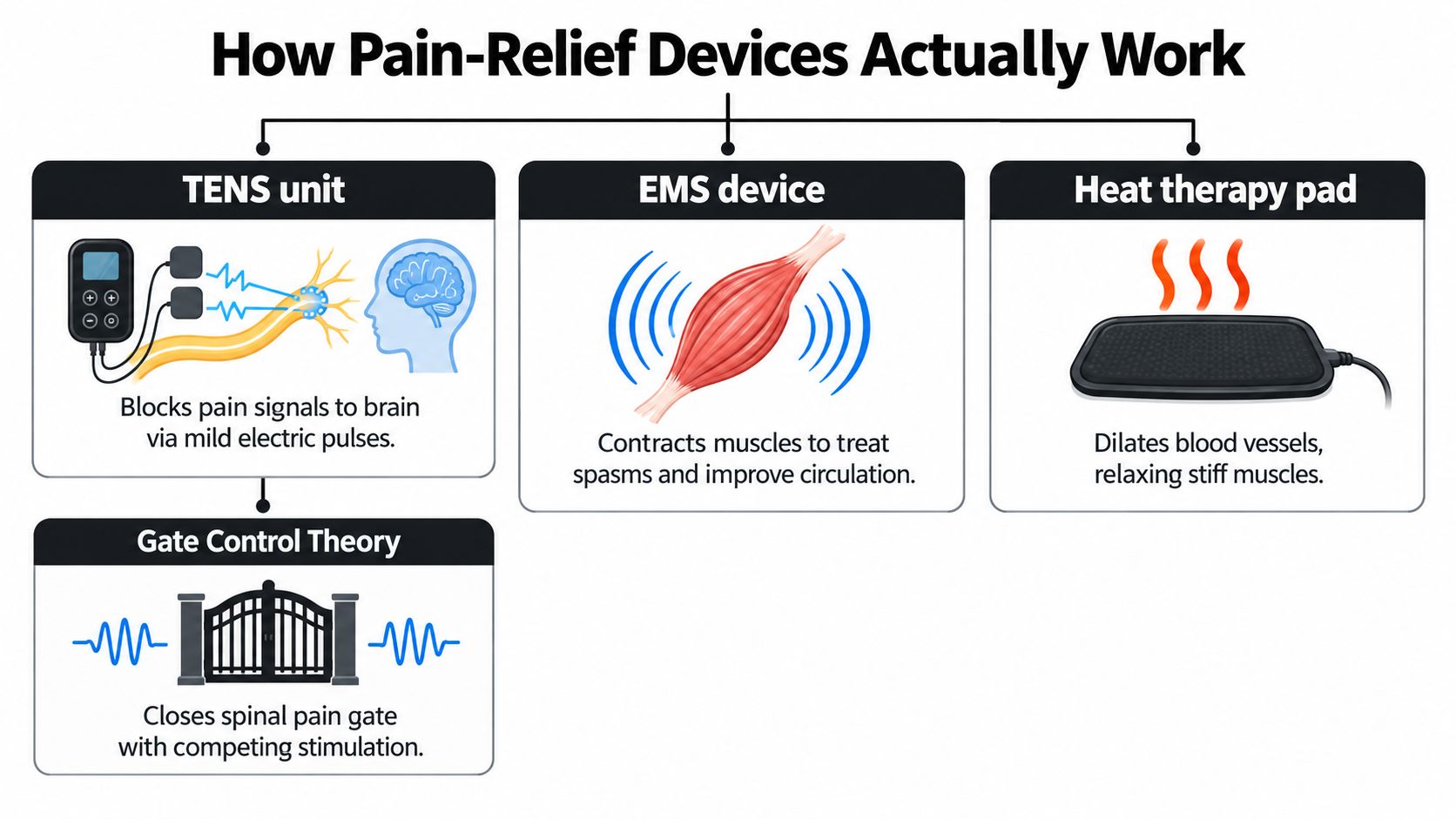
TENS devices
TENS stands for transcutaneous electrical nerve stimulation. In plain terms, it sends mild pulsed electrical currents through pads placed on the skin. It acts as a signal-jamming tool for pain messages. It doesn't fix the root cause, but it may make the pain feel less intense while the device is running or shortly after.
These are usually the most relevant devices for pain relief when a buyer wants targeted, portable, at-home symptom relief.
EMS devices
EMS stands for electrical muscle stimulation. This category focuses on creating muscle contractions. That can matter for spasms, muscle engagement, or recovery-oriented use, but buyers shouldn't confuse it with TENS.
A lot of combo units include both modes. That can be convenient, but only if the buyer knows which mode they need. Buying EMS for a pain problem when the goal was TENS-style nerve stimulation is a classic shopping mistake.
Heat therapy pads
Heat is simple for a reason. It works well for stiffness and tight, overworked muscles. The best analogy is thawing out a cold, guarded area before movement. A heated wrap or pad doesn't try to interrupt pain signals the way TENS does. It loosens and softens.
Heat often makes the most sense for:
- Morning stiffness: Especially in the neck, lower back, and shoulders
- Desk-related tension: When muscles feel rigid rather than sharply irritated
- Pre-movement comfort: Before stretching, walking, or light exercise
Massage guns and supportive gear
Massage guns and vibrating massagers work more mechanically. They apply percussion or vibration to soft tissue. That makes them useful for soreness, post-exercise tightness, and areas that feel knotted rather than electrically “zapped” or inflamed.
Supportive braces, wraps, and posture-focused supports play a different role. They don't create stimulation or heat. They reduce strain, improve positioning, and help people avoid re-triggering the same problem.
A buyer doesn't need the fanciest format. A buyer needs the format that matches the actual source of discomfort.
Understanding TENS Therapy and Its Clinical Evidence
TENS is the category consumers usually mean when they start shopping for pain-relief devices. It has history, wide recognition, and a much clearer evidence base than many trendy gadgets. That doesn't mean every product claim deserves trust. It means buyers should understand the basics before clicking “add to cart.”
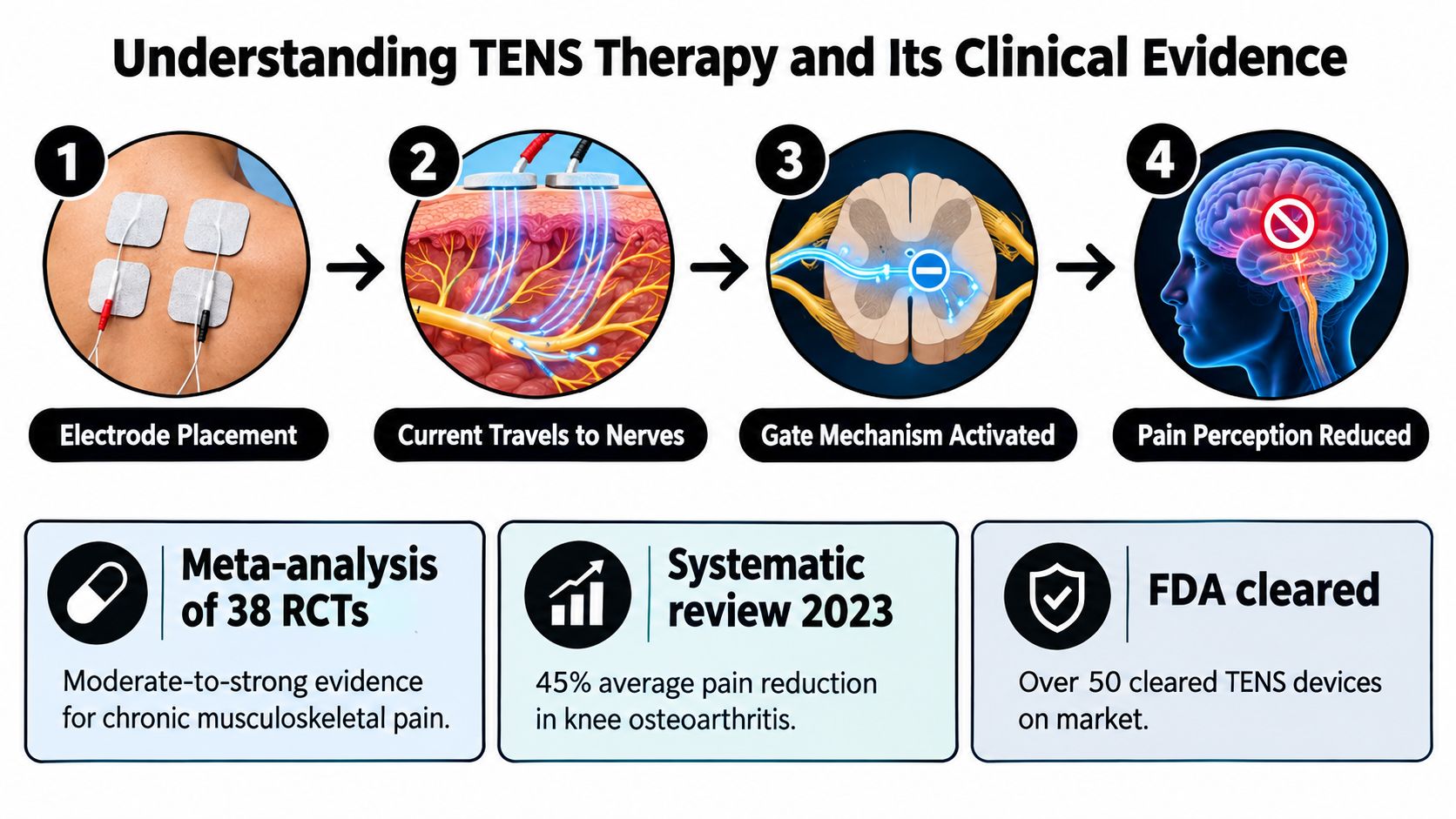
What TENS actually is
A BMJ Open review defines TENS as delivering pulsed electrical currents across intact skin to stimulate peripheral nerves, typically with a portable, battery-powered device using self-adhesive electrodes. The same source also notes that an FDA 510(k) summary classifies a TENS device as Class II under 21 CFR 882.5890 in this BMJ Open article on TENS.
That matters because it cuts through vague marketing. TENS is not magic. It's a recognizable device category with a defined mechanism and established regulatory pathway.
What cleared devices are commonly used for
An FDA-cleared device summary states that TENS devices are commonly cleared for temporary relief of pain associated with sore or aching muscles in areas such as the shoulder, waist, back, neck, arms, legs, abdomen, and bottom, especially when discomfort follows exercise or normal household work. Another cleared listing also states intended use for symptomatic relief and management of chronic intractable pain and as an adjunctive treatment for post-surgical and post-traumatic pain in this FDA 510(k) summary for a TENS device.
That's a useful reality check. Cleared use language is usually more conservative than product-page hype.
What the evidence says
The strongest evidence in this set comes from a 2022 systematic review and meta-analysis of 91 randomized trials involving 4,841 participants. It found that pain intensity was lower during or immediately after TENS compared with placebo, with an effect size of SMD = −0.96 (95% CI −1.14 to −0.78). The authors concluded there was moderate-certainty evidence for clinically important pain reduction during or immediately after treatment, and they reported no serious adverse events in the included evidence in BMJ Open's 2022 TENS meta-analysis.
Bottom line: TENS has meaningful support for short-term symptom relief. Buyers should expect help with pain intensity, not a cure for the cause behind the pain.
There's also a market reason TENS shows up everywhere. A 2025 smart wearable report said TENS devices held 34.2% of revenue by product type, while chronic pain applications accounted for 38.6%, with the global smart pain relief wearable market projected at USD 4.8 billion in 2025 and USD 11.6 billion by 2034 in DataIntelo's smart pain relief wearable market report. That kind of presence usually means shoppers keep finding practical use for the format.
Comparing TENS, EMS, Heat Therapy, and Massage Devices
Choosing between these categories gets easier once the buyer stops looking for a universal winner. There isn't one. A desk worker with lower back tightness, a runner with sore calves, and someone dealing with recurring shoulder tension shouldn't all buy the same device.
What each option does best
TENS is best viewed as a symptom-relief tool. It's a strong option when the goal is to reduce how intense the pain feels in a specific area. EMS is more about muscle contraction and activation. That can be helpful in the right context, but it's often the wrong first choice for a shopper who wants pain relief.
Heat therapy shines when stiffness is the main complaint. It's low-friction, easy to repeat, and often better tolerated by people who don't like electrical stimulation. Massage devices are strongest when tissue feels sore, overworked, or knotted and the person wants hands-on mechanical relief.
The biggest buying mistake in this category is confusing muscle recovery tools with pain-focused tools.
Pain-Relief Device Comparison
| Device Type | How It Works | Best For | Typical Price Range |
|---|---|---|---|
| TENS unit | Sends pulsed electrical current through pads on the skin to stimulate peripheral nerves | Recurring localized pain, sore or aching muscle areas, short-term symptom relief | Varies widely by format and features |
| EMS device | Creates muscle contractions through electrical stimulation | Muscle engagement, spasm-related use, recovery-focused routines | Varies widely by format and features |
| Heat therapy pad | Applies sustained warmth to the target area | Stiffness, tension, morning tightness, comfort before movement | Varies widely by size and design |
| Massage gun or vibration massager | Uses percussion or vibration on soft tissue | Post-exercise soreness, tight calves, shoulder knots, general muscle tension | Varies widely by power and attachments |
| Brace or support wrap | Stabilizes or supports the affected area | Joint strain, posture support, reducing repeat aggravation | Varies widely by body area and materials |
Quick matching examples
- Desk worker with lower back tension: Start with heat if the issue is stiffness. Consider TENS if the area feels persistently achy and flares during the day.
- Gym-goer with sore calves: Massage or vibration usually makes more sense than TENS first.
- Person with recurring neck and shoulder ache after chores or long driving days: TENS or heat are usually the smarter first comparisons.
- Buyer shopping for an older parent: A simple heated wrap or easy-button TENS unit is often a safer gift choice than a high-powered massage gun.
A useful shortlist comes from asking one blunt question. Does the area need calming, warming, kneading, or support? That answer usually narrows the category fast.
Safety Considerations and Realistic Expectations for Home Use
The usual home-use mistake happens fast. Someone buys a pain-relief device during a bad flare, turns it up too high, uses it on the wrong problem, then decides the whole category is useless. That is avoidable.
Safety matters more than features. Clear instructions, simple controls, and believable claims should decide the purchase before app extras or attachment counts do.
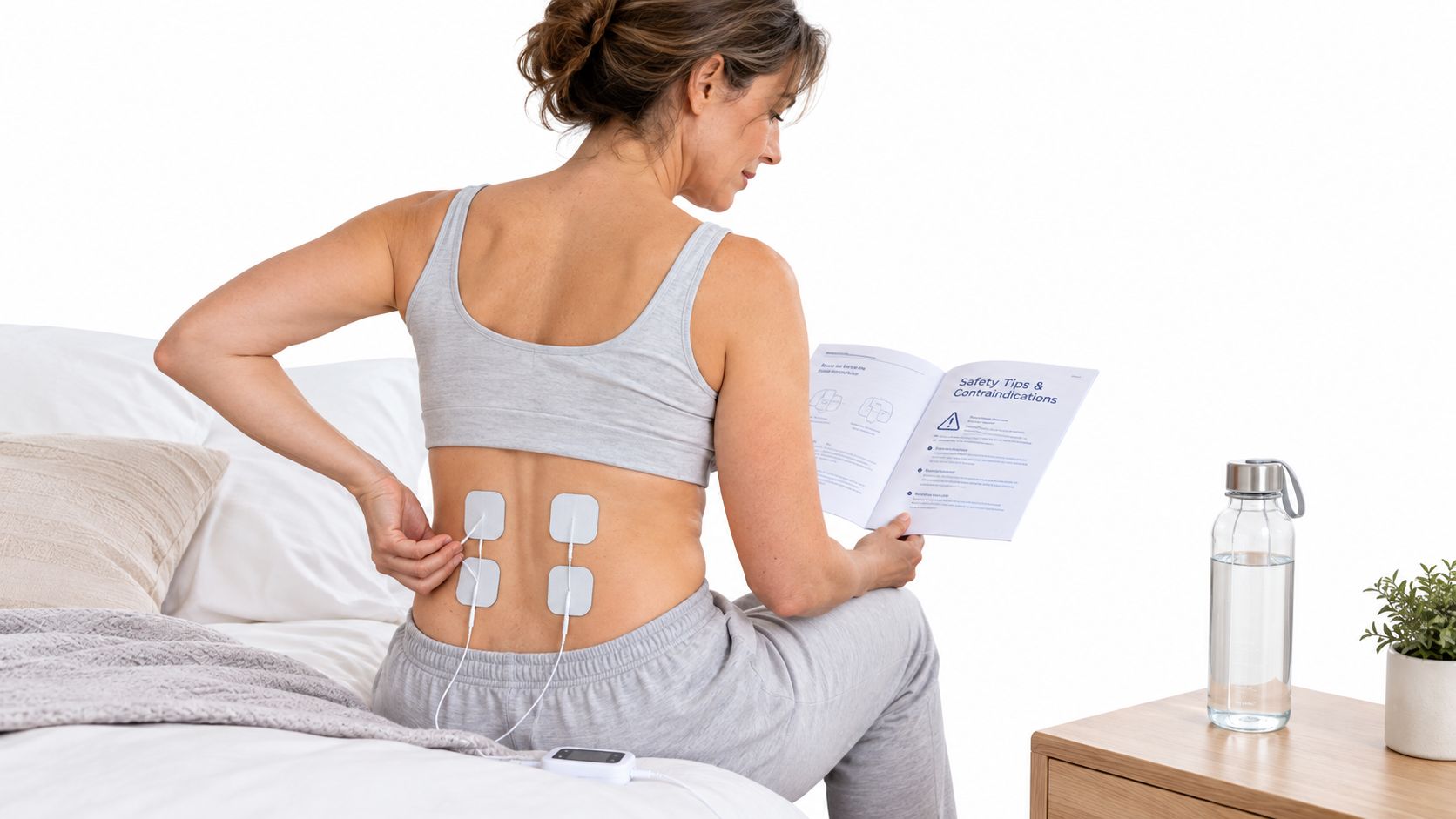
What home users should expect
Use the right standard. A home device should help you calm pain, ease tension, or make movement more comfortable. It should not be treated like a diagnosis, a cure, or a substitute for figuring out why the pain keeps returning.
That matters most with TENS. As noted earlier, TENS is best viewed as symptom relief. It can be useful for some recurring aches and some musculoskeletal pain patterns, but results vary by person and by condition. If you expect a complete fix, you will overspend and get frustrated. If you want repeatable relief you can use at home, it makes a lot more sense.
Where the safety profile looks reassuring
Evidence reviews on TENS for acute pain have found that it can reduce pain more than placebo in some cases, and the Cochrane review on TENS for acute pain also described it as safe for treating acute pain.
That is the practical takeaway for buyers. Home-use devices can be a sensible part of pain management when used as directed, with realistic intensity settings and basic common sense.
When to slow down and ask questions
Some pain should not be self-managed with a gadget first. Get medical advice before using a device if pain is unexplained, keeps worsening, follows an injury, or comes with numbness, weakness, swelling, fever, chest symptoms, or pain that wakes you up consistently.
Be more careful with pregnancy and implanted electronic devices. If that applies, do not guess.
Massage tools raise a different set of questions. Fit, pressure, and comfort often matter more than stimulation settings. If you are comparing those options, this guide to a neck massager device for daily tension relief is a useful contrast.
A few buying and usage rules prevent a lot of bad outcomes:
- Read the intended use: Marketing claims matter less than the actual use instructions and safety warnings.
- Start on the lowest setting: Stronger is not smarter. Build up gradually.
- Pay attention to timing: Relief during use or shortly after is a realistic win.
- Stop if the area feels worse: Skin irritation, sharp discomfort, or increased pain means stop and reassess.
- Do not treat mystery pain like a shopping problem: Some symptoms need evaluation, not another device.
Good home devices are support tools. Buyers who understand that usually make better choices, use them more consistently, and waste less money.
How to Choose the Right Pain-Relief Device for Your Needs
Most shoppers don't need more options. They need a clean decision filter. The smartest way to buy devices for pain relief is to match the tool to the pattern, not to the trend.
Start with the pain type
If the problem feels like stiffness, heat usually belongs at the top of the list. If it feels like a localized ache that keeps recurring in the same spot, TENS is often the first category worth comparing. If the issue is post-workout soreness or tight tissue, massage devices usually make more sense. If the area feels unstable or easily aggravated, support gear deserves more attention than electronics.
That first cut eliminates a lot of bad purchases.
Then check the lifestyle fit
Recent roundup coverage shows the category is moving toward compact, rechargeable, travel-friendly units and TENS-EMS combinations, with price points ranging from about $35 for entry wired devices to roughly $149 for app-guided wireless pods in Powers of 10's TENS unit roundup.
That matters because the “best” device on paper often loses if it's annoying to use. A wired unit may be fine for couch sessions at home. A compact wireless unit may be better for work travel, commuting, or quick use between tasks.
A simple buyer framework
-
Name the body area
Back, neck, shoulder, calves, knees, or something else. Device shape and pad placement matter. -
Name the moment it's needed
Morning stiffness, post-exercise soreness, long desk sessions, long drives, or evening recovery. -
Pick the lowest-friction format
The best device is the one a person will use consistently. -
Decide whether combo features help or distract
Some buyers benefit from TENS plus EMS in one unit. Others just need one reliable mode and simpler controls. -
Think gift-worthy, not just self-purchase
Pain-relief gadgets make practical gifts when they solve a visible daily annoyance without feeling overly personal or complicated.
A useful device beats an impressive device every time.
For readers comparing seated comfort tools with broader relaxation benefits, this look at a massage chair pad for everyday back comfort is useful because it serves a different kind of buyer than a small targeted TENS unit.
Making the Switch to Device-Based Pain Management
You wake up with a stiff neck, your lower back starts barking halfway through the workday, and the usual response is automatic. Grab a pill, wait, repeat. Device-based pain relief gives you a better home routine for the right kind of discomfort, especially if you want more control over when and how you get relief.
That does not mean every gadget deserves your money. Some devices earn a place in your routine. Some end up in a drawer after three uses. The difference is usually simple. Good buyers match the tool to the problem, choose something easy to use, and stop expecting one device to handle every type of pain.
What a smart decision looks like
A smart buyer usually gets these four calls right:
- Match the device to the pain pattern. Muscle tightness, post-workout soreness, recurring joint-area discomfort, and all-day posture strain do better with different formats.
- Keep the goal realistic. Aim for relief, better function, or less flare-up time. Skip miracle claims.
- Choose the format you will use. A device that fits your desk, couch, commute, or bedtime routine wins.
- Treat safety as part of the purchase. Clear instructions, quality pads or materials, and sensible settings matter as much as extra modes.
This category is not fringe anymore. Industry analysts at Grand View Research describe the broader pain management device market as a large, established home and clinical category, which lines up with what shoppers already see on retail shelves and gift guides alike: people want non-drug options they can use without overcomplicating life.
The takeaway that matters most
Buy for the pain pattern, not for the feature list.
That one rule will save you money. A basic heated wrap can be more useful than a complicated app-connected device if the issue is daily stiffness. A straightforward TENS unit can be a better buy than a bulky massage tool if the pain is small, localized, and recurring. A seat or cushion-based massager makes more sense for someone who wants passive comfort at home than for someone who needs portable relief at work.
This is also why pain-relief devices work surprisingly well as gifts. The good ones solve a repeated problem the person already mentions. Sore shoulders after long desk hours. Tight calves after training. An aching back during long drives. That feels thoughtful, practical, and much more likely to get used than a novelty wellness gadget.
Granted Solutions carries practical, gift-worthy products that make everyday discomfort easier to manage, from wellness gadgets to comfort-focused home accessories that fit real routines. Shoppers looking for smart, problem-solving tools can browse Granted Solutions for useful options that work well for personal use or thoughtful gifting.
Leave a comment