

Red Light Therapy Benefits for Face Explained Simply

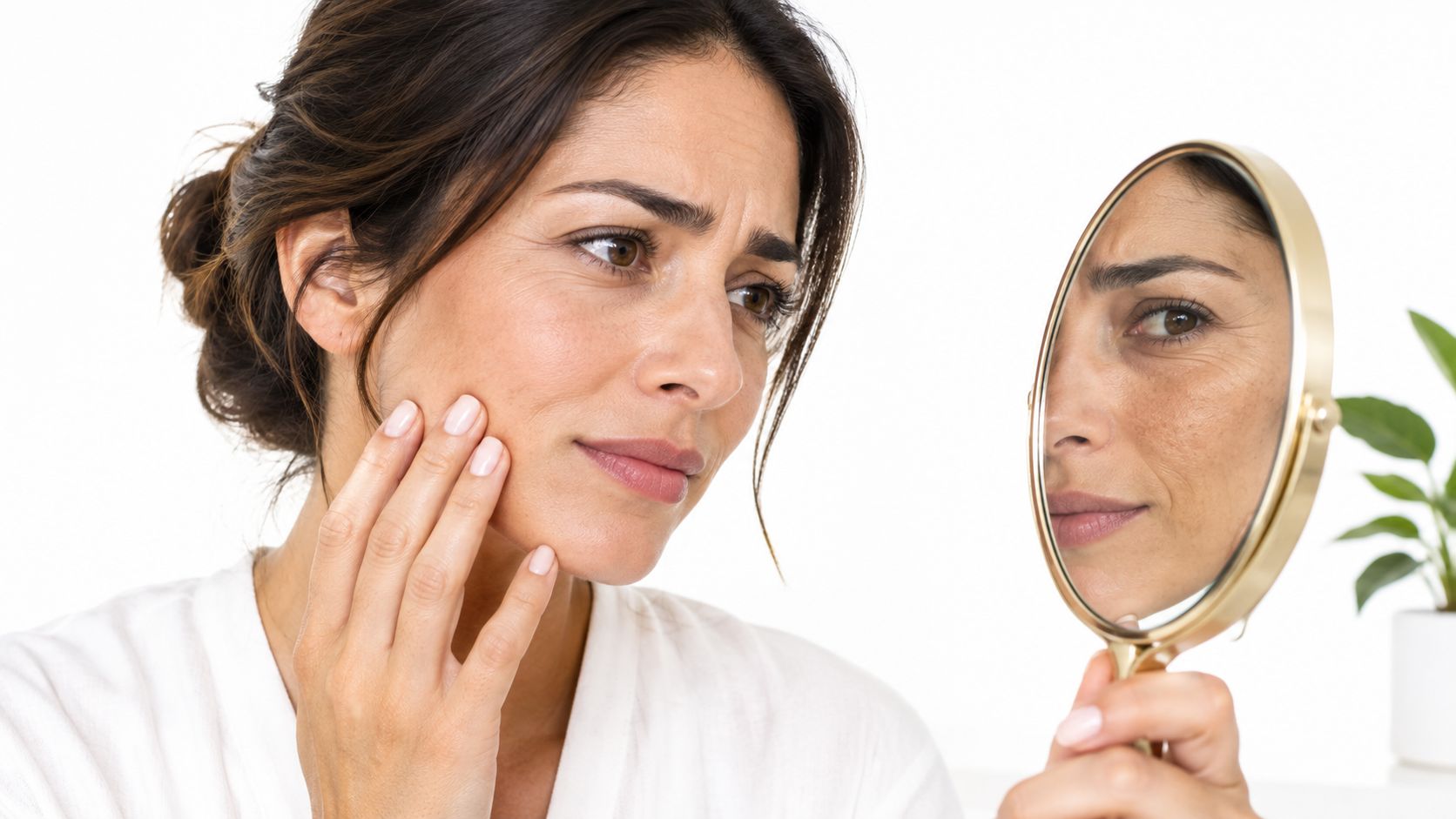
The morning mirror can make a simple skincare concern feel bigger than it is. Fine lines look sharper under bright bathroom light, the complexion seems dull after a short night, and a familiar routine of cleanser, moisturizer, and sunscreen may not feel like enough. Many busy adults want healthier-looking skin without adding harsh products or a complicated appointment schedule.
That's why red light therapy benefits for face routines have attracted so much attention. The treatment uses low-level red or near-infrared light, rather than ultraviolet light, and is designed to support gradual changes in the look and feel of facial skin. It's a gentle, non-invasive option to understand, but it isn't a miracle filter or a replacement for professional dermatology care.
This guide keeps the science practical. It explains what the light does, which facial changes have been measured, how long results can take, how to use a device consistently, and what to compare before buying. It also shows how a practical beauty and wellness retailer such as Granted Solutions can help shoppers narrow down useful gadgets without relying on exaggerated promises.
Table of Contents
- Introduction Why Your Face Might Love a Little More Light
- What Red Light Therapy Is and How It Works on Facial Skin
- Key Benefits for Your Face You Can Realistically Expect
- What Clinical Studies Actually Show About Results and Timelines
- How to Use Red Light Therapy on Your Face Safely and Consistently
- Choosing the Right Device and Getting the Best Value at Granted Solutions
- Final Takeaways and Your Next Step to Healthier Looking Skin
Introduction Why Your Face Might Love a Little More Light
Red light therapy is often presented as a quick answer to every visible sign of aging. Realistic evidence points to a more useful description: it's a maintenance-based skin-support routine that may help some people achieve a smoother, fresher-looking appearance over time.
The distinction matters. A device can fit into a quiet evening routine, but it can't erase every line, correct every uneven tone concern, or deliver the same result for every skin type. Facial skin changes slowly, and the most sensible approach treats red light as an adjunct to established habits such as daily sun protection, gentle cleansing, moisturizing, and professional guidance when a concern is persistent.
The phrase “red light therapy benefits for face” covers several outcomes that shouldn't be lumped together. A person may notice a softer appearance around the eyes, a more even complexion, or a smoother skin feel. Another person may see little visible change, especially if the device doesn't match the intended treatment parameters or the routine is too inconsistent.
The practical expectation: red light therapy is closer to tending a garden than flipping a light switch. Repeated, appropriate care matters more than one dramatic session.
Granted Solutions offers a variety of practical gadgets and wellness products, so shoppers can approach beauty technology as part of a broader everyday routine rather than as a standalone promise. The useful question isn't whether red light works. It's which benefits have credible support, what a home routine looks like, and which device details affect convenience and value.
What Red Light Therapy Is and How It Works on Facial Skin
Red light therapy, also called photobiomodulation, uses low-level light energy directed at the skin. The easiest analogy is a rechargeable battery. Skin cells already have systems that produce energy, and red or near-infrared light may help support those systems rather than forcing the skin through an aggressive resurfacing process.
Mitochondria, often described as the energy-producing structures inside cells, are central to this explanation. When facial skin absorbs suitable light, researchers study whether cellular activity and repair-related processes respond. Fibroblasts are particularly important because they participate in the production of structural materials such as collagen and elastin.
Common facial devices use visible red wavelengths around 630 to 660 nanometers, while near-infrared devices commonly use around 830 to 850 nanometers. Red light is generally positioned as the more surface-oriented part of a facial routine. Near-infrared light is marketed as a deeper-reaching companion, although the exact effect depends on the device's design, output, distance, treatment time, and the user's skin.
The cellular explanation in plain language
The light isn't scrubbing away the outer layer of skin. Instead, the proposed mechanism involves light absorption and cellular signaling. A dermatology review covering split-face and histology studies reported that 633 nm and 830 nm LED phototherapy increased dermal fibroblast activity, collagen and elastin synthesis, and mitochondrial and vimentin markers in human skin. The review also reported that some clinical effects persisted for up to 12 weeks after treatment stopped. The dermatology review details these findings.
Red light therapy doesn't replace the skin's normal processes. It aims to support the cellular environment those processes rely on.
The result is best understood as support for skin quality, not instant transformation. Someone interested in combining light therapy with a broader facial routine may also compare it with a copper peptides serum for face, while checking product directions and professional advice before layering skincare products.
Key Benefits for Your Face You Can Realistically Expect
A mirror may show a small change before it shows a dramatic one. Facial red light therapy is better judged through gradual shifts in fine lines, skin feel, and overall texture, alongside the measurements used in clinical research. A wrinkle-depth reading can confirm that researchers detected a change under controlled conditions, but it cannot promise the same visible result for every person.
Fine lines and wrinkles
Wrinkle softening is one of the clearest areas of interest. In a controlled facial photobiomodulation trial, treatment twice a week for three months produced a 15.6% decrease in crow's-feet wrinkle depth. The trial also reported a 13.6% improvement in the R0 firmness-related parameter and a 26.4% increase in dermal density by the first month. The full clinical trial reports these measured outcomes.
In daily life, that may look like fine lines appearing less pronounced in certain lighting, or skin feeling more supported when touched. The shift is gradual and usually subtle. It is different from procedures designed to remove or deliberately injure the skin's surface.
Firmness and elasticity
Firmness is not one single switch. Researchers can measure related features separately, and those measurements may not change together. The findings above support measurable changes in a firmness-related parameter and dermal density, while individual facial responses still vary.
A device also needs to fit the routine. A comfortable mask, a simple timer, and a storage spot that keeps the device visible can make regular use easier. Extra settings have limited value if they make treatment feel like a chore.
Texture and complexion
The same controlled trial reported better skin complexion, improved skin feel, reduced roughness, and higher collagen density. These results match the practical changes many users hope to notice, such as a more even appearance and smoother-feeling skin under the fingertips.
Red light therapy sometimes appears in discussions of acne-related calming and redness. Those concerns can have different causes, so outcomes vary by person. Persistent acne, sudden irritation, or ongoing redness calls for appropriate skincare or dermatology assessment rather than relying on light therapy alone.
What it may not do
Red light is not a replacement for every hydrating step. In a randomized, split-face trial, researchers reported improved quality-of-life questionnaire scores but no meaningful improvement in skin hydration or viscoelasticity. A person could therefore notice a wrinkle-related change while still needing moisturizer and other routine basics. The split-face trial describes the wrinkle and hydration findings.
For shoppers building a simple routine, an alcohol-free toner guide can help with product selection. The goal is a manageable set of compatible steps, used consistently long enough to judge whether each one helps.
What Clinical Studies Actually Show About Results and Timelines
Clinical evidence offers a calmer picture than advertising. Facial changes tend to be incremental, with wrinkle-volume reduction among the more consistent outcomes studied. Improvements in hydration, elasticity, and overall complexion are less predictable, so one favorable measurement should not be treated as proof that every concern will change.
A randomized, split-face clinical trial published in 2023 enrolled 137 women aged 40–65 with skin phototypes II–IV and Glogau photoaging types II–IV. After 10 sessions over 4 weeks, red light at 660 nm produced a reported 31.6% reduction in periocular wrinkle volume on the treated side, while amber light produced a 29.9% reduction. The published split-face trial provides the study design and results.
The result applies to that study design, not automatically to every home device or user. Output, fit, exposure distance, schedule, baseline skin condition, and consistent use can all shape the experience. The trial also found no meaningful improvement in hydration or viscoelasticity, so moisturizer and other routine basics still have a role.
A snapshot of measured outcomes
| Study Focus | Key Measured Change | Timeframe |
|---|---|---|
| Periocular wrinkles with red light at 660 nm | 31.6% reduction in wrinkle volume on the treated side | 10 sessions over 4 weeks |
| Periocular wrinkles with amber light | 29.9% reduction in wrinkle volume | 10 sessions over 4 weeks |
| Crow's-feet depth | 15.6% decrease | Twice-weekly treatment over 3 months |
| Firmness-related R0 parameter | 13.6% improvement | Twice-weekly treatment over 3 months |
| Dermal density | 26.4% increase | By the first month in the controlled trial |
The useful takeaway is the pattern, not a single percentage. Red light therapy can provide adjunctive help, working alongside sun protection, sensible skincare, and appropriate dermatology care. A cosmetic-dermatology review describes benefits as modest and gradual for select uses, while results for skin rejuvenation and anti-aging vary. The review discusses evidence-backed marketing claims and realistic expectations.
Broadband light is not automatically better. One controlled study found that broadband polychromatic light did not outperform red-light-only treatment. More colors and extra features may sound appealing, but shoppers should check whether a device's specifications support a tested, repeatable routine. A practical choice is one you can use consistently and evaluate over time, rather than one that promises an instant transformation.
How to Use Red Light Therapy on Your Face Safely and Consistently
A home routine works best when it's simple enough to repeat. Independent facial treatment guidance commonly places sessions at 10 to 20 minutes per area, with skin-rejuvenation routines often scheduled 3 to 5 times per week. Device instructions should take priority because output and recommended distance differ between products.
Clinical facial phototherapy has used red-band exposure in the range of 611–650 nm, at 5.9–13.3 mW/cm², for 12–25 minutes, delivering about 8.5–9.6 J/cm² per session in the red band. The controlled facial phototherapy trial reports these treatment parameters. These figures show why repeated, low-dose exposure is more relevant than chasing the brightest or hottest device.
A practical routine
- Prepare the skin. Begin with a clean, dry face. Remove makeup, sunscreen, and products that the device instructions say could interfere with exposure.
- Set up the device. Follow the manufacturer's distance and timing instructions rather than guessing. A mask may sit directly against the face, while a panel or handheld device may require a specific gap.
- Keep the session comfortable. Use the recommended eye protection, especially when the product supplies shields or tells the user to wear them. Stop if there's unusual pain, strong burning, blistering, swelling, or persistent irritation.
- Finish with familiar care. Moisturizer can support comfort, while daily sunscreen remains important for protecting the appearance of facial skin. Red light isn't a substitute for sun protection.
When caution makes sense
Photobiomodulation consensus material describes side effects as generally mild and temporary, including discomfort, burning, blistering, edema, and erythema, while severe harms are rare. The evidence-based consensus reviews reported safety considerations and side effects.
People with light-sensitive conditions, those taking light-sensitive medications, and anyone with an unexplained rash or active irritation should seek professional guidance before starting. Skin phototype can also matter, especially for people concerned about redness or dark spots. A dermatologist can help assess whether the device and dose are appropriate for sensitive skin or darker phototypes.
For more ideas that support a manageable routine, the skin care tools collection guide can help shoppers think about storage, ease of use, and how a device would fit into everyday habits.
Choosing the Right Device and Getting the Best Value at Granted Solutions
A device's appearance can be less important than its specifications. Buyers should start with wavelength coverage, treatment control, facial fit, and whether the routine feels easy enough to maintain.
FDA-cleared LED facial masks commonly specify red wavelengths around 620–637 nm and near-infrared wavelengths around 850–854 nm. One clearance listing includes a 10-minute automatic treatment mode, while another labels use at 10 minutes per day, 3 times per week. The FDA clearance document shows these device specifications.
Masks, panels, and handheld devices
| Device Type | Useful Strength | Possible Limitation |
|---|---|---|
| Face mask | Hands-free coverage and simple timing | Fit may not suit every face |
| Panel | Flexible positioning and broader use | Requires a stable setup and attention to distance |
| Handheld device | Targeted access around areas such as the eyes or mouth | Smaller coverage can make sessions less convenient |
A mask may suit a busy adult who wants a repeatable routine while reading or relaxing. A panel can work better for someone who wants flexible positioning, but it demands more attention to setup. A handheld tool may appeal to a shopper who prefers targeted treatment, though the smaller treatment area can make consistency harder.
What creates better value
A sensible comparison checklist includes:
- Wavelength information: Look for clearly stated red and, when included, near-infrared ranges rather than vague “multi-light” language.
- Timing controls: Automatic presets can remove guesswork and help a routine stay consistent.
- Fit and coverage: A device should sit comfortably and illuminate the intended facial areas without constant adjustment.
- Instructions and safety details: Clear directions should explain use, distance, eye protection, cleaning, and cautions.
- Storage and upkeep: A device that's easy to store and wipe clean is more likely to remain in regular rotation.
Granted Solutions is one place shoppers can browse practical beauty and wellness gadgets alongside other everyday products. Its catalog also includes broader categories such as Beauty & Health and a Trending Now area, which can help gift shoppers compare useful personal-care devices without treating a light mask as a guaranteed cosmetic result.
Final Takeaways and Your Next Step to Healthier Looking Skin
Red light therapy may support a smoother-looking complexion, softer fine lines, improved skin feel, and measured changes in firmness-related outcomes. The evidence is more convincing for gradual wrinkle-related improvement than for universal hydration or dramatic transformation.
A practical routine uses the device as directed, keeps sessions consistent, and treats comfort and safety as part of the purchase decision. Wavelengths, fit, treatment controls, eye guidance, and clear instructions matter because the category includes devices with different designs and outputs.
The most realistic position is simple: red light therapy can be a useful supporting tool for facial skincare, but it doesn't replace sunscreen, moisturizer, appropriate treatment for persistent concerns, or advice from a qualified professional. A device should earn its place by being easy to use repeatedly, not by making the loudest promise.
Granted Solutions brings together practical beauty, wellness, and everyday gadgets, including gift-friendly options for shoppers building a simpler self-care routine. Visit Granted Solutions to browse the Beauty & Health selection and compare useful products with convenient shopping, free shipping, secure checkout, and a 30-day return policy.
Leave a comment